
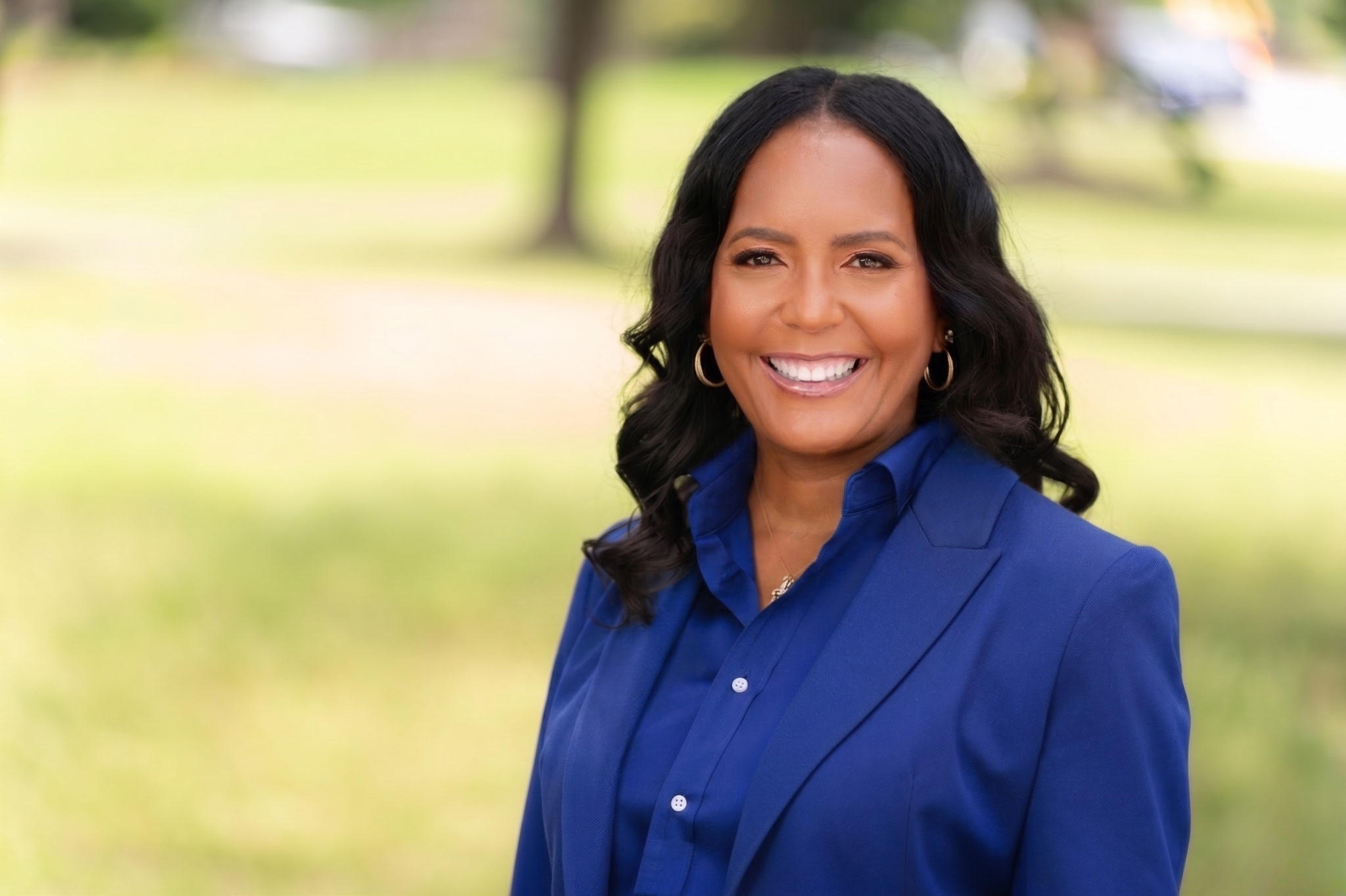
Democratic gubernatorial candidate and former Atlanta mayor Keisha Lance Bottoms is targeting rural voters with the promise to improve healthcare and the education of students in Oglethorpe County.
“One of my priorities as governor will be empowering rural Georgia and making sure rural communities have the resources and opportunities they need to thrive,” Bottoms wrote in an email to The Oglethorpe Echo on Aug. 23. “I will be focused on expanding access to healthcare and protecting rural hospitals, investing in education … and building more affordable housing.”
Bottoms and her Republican opponent, healthcare executive Rick Jackson, spoke at the 2026 Georgia Congressional Luncheon on Aug. 5. During the event, hosted by the Georgia Chamber of Commerce and held at The Classic Center, the candidates shared their policies, focusing on Medicaid expansion and data centers.
Oglethorpe County voters favored Bottoms in the May primary, with 411 votes to Michael Thurmond’s 332.
Bottoms has campaigned on her plans to invest in education, aiming to raise the average starting salary for teachers from $43,000 to $60,000.
“Investing in Georgia’s education means providing educators with a salary that shows them how much we value the work they do,” Bottoms wrote.
In Georgia, minimum teacher salaries are determined by the state’s salary schedule and based on years of experience, education and certification. The state funds a portion of this base salary through a formula established by the Quality Basic Education (QBE) Act.
Enacted in 1985, the law uses enrollment to determine how much to pay out for employee salaries and other expenses, then subtracts the “local fair share,” the amount the state expects districts to contribute.
The QBE hasn’t been significantly updated since its adoption, and pressure on local budgets has increased as districts increasingly rely on local funding to cover expenses.
Oglethorpe County Board of Education Chair Becky Soto, who also is The Echo’s business manager, noted that several necessary teachers aren’t funded under the QBE, and if minimum salaries were to increase, the school budgets would have to make up the difference with local funds.
“A very good example of that is art, music and PE here in Oglethorpe County,” Soto said. “Our state allotment gives us one PE teacher. Well, we have three schools, so there are a good number of teachers that are necessary to our schools, but aren’t covered on that state allotment sheet.”
Soto said the district has struggled with updates to insurance and retirement benefits that are unfunded by the state.
“The cost of that has increased exponentially, millions of dollars in the last five years,” Soto said. “Every dime of that has had to come from local coffers, which, in cases like Oglethorpe County, where you don’t have the sales tax base, comes from the property owner.”
To implement a higher minimum salary without putting strain on property owners or school district budgets, Bottoms plans to modernize the QBE.
“This would reduce rural counties' reliance on the local tax base and close the gap between what rural and wealthier counties can raise locally, by increasing the state's share of school funding,” Bottoms wrote.
She didn’t elaborate on the specific details of these updates in her response.
Bottoms has also pushed Medicaid expansion as a way to improve healthcare access, an issue that affects many rural communities. Georgia remains one of 10 states that hasn’t expanded Medicaid under Affordable Care Act guidelines, which provides coverage to nearly all adults with incomes up to 138% of the Federal Poverty Level.
Critics have cited this as a reason for rural hospital closures, arguing that expanding coverage would reduce unpaid medical debt, which harms these hospitals.
“Ensuring more Georgians have access to the healthcare they need isn’t a partisan issue,” Bottoms wrote. “When places like St. Mary's Sacred Heart Hospital closes their labor and delivery unit, it affects the whole community, including counties like Oglethorpe, who already have to travel far distances for care.”
Full expansion has been opposed by the Republican-controlled General Assembly for over a decade, and Bottoms has been questioned over alternative plans, if the legislature won’t pass it.
Should she have to navigate a split legislature, Bottoms wrote she plans to “invest in broadband, telehealth and mobile clinics, and grow the rural health workforce by expanding loan repayment, building residency and training partnerships and offering targeted incentives to expand access to affordable health care.”