
Sides drawn over soil amendments
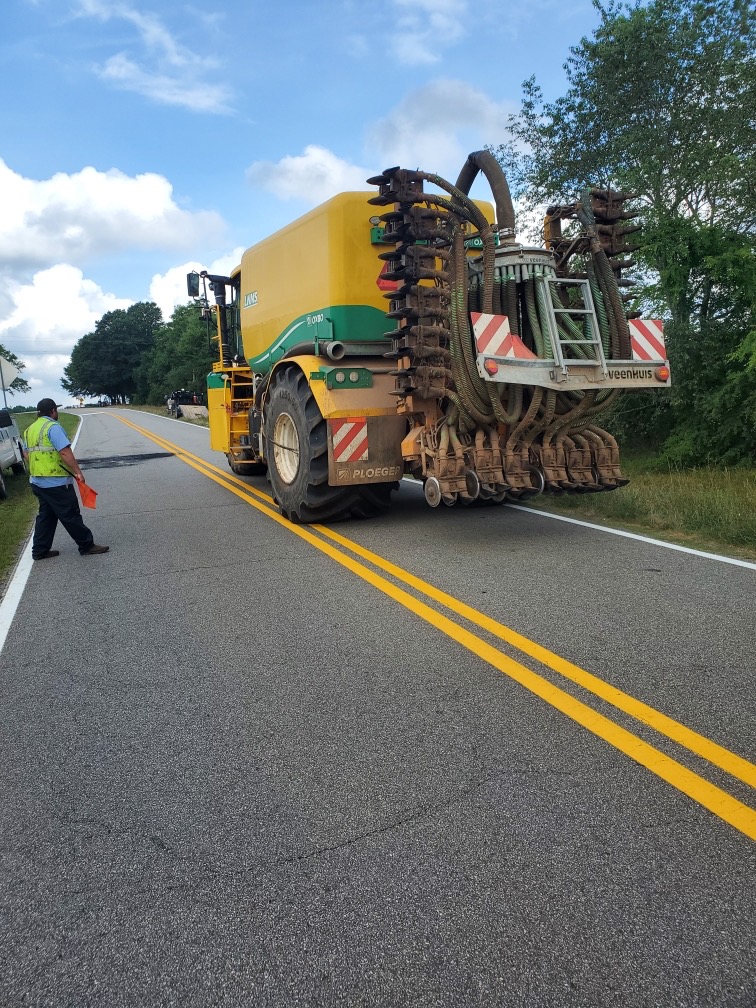
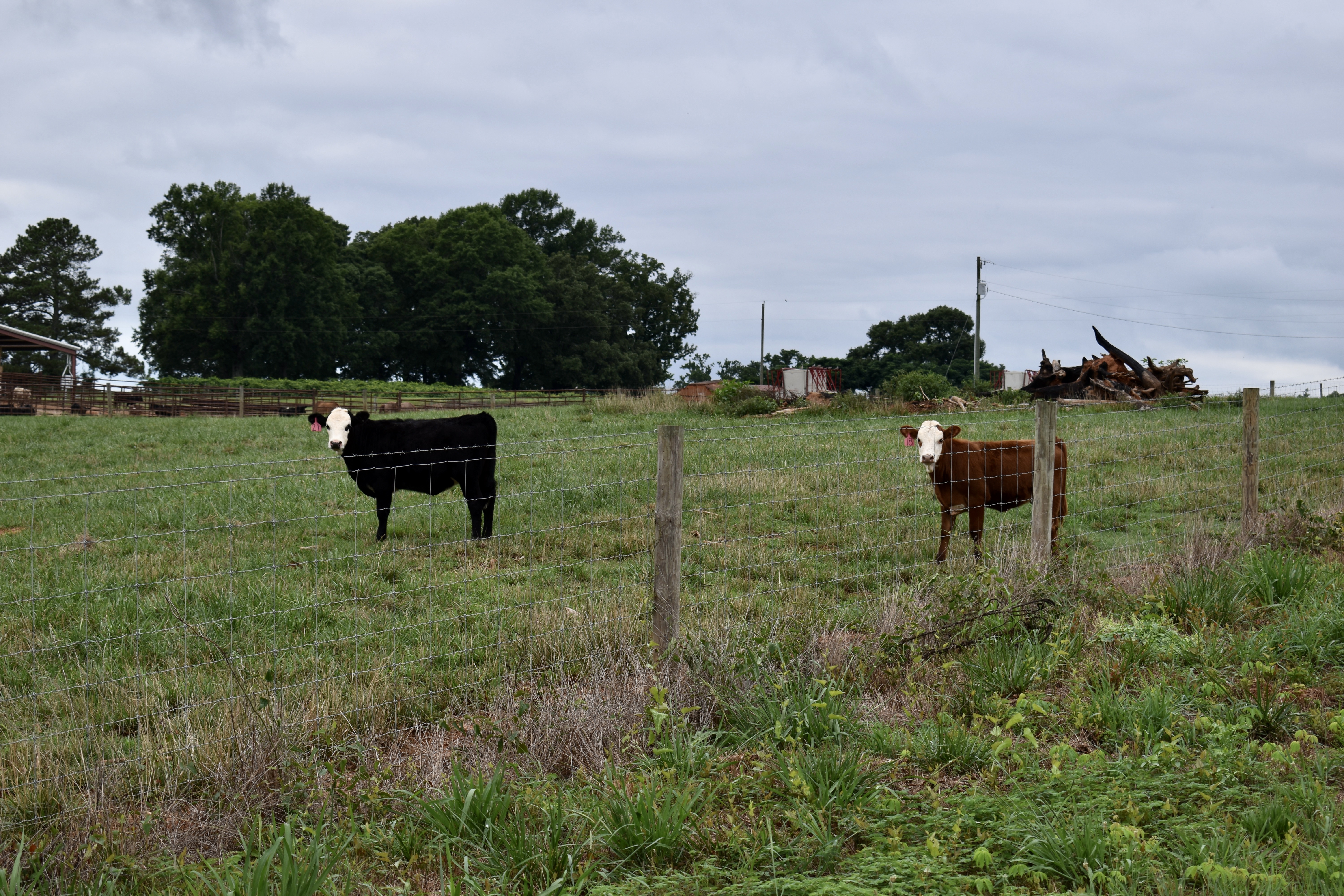
Dave Wynne, who owns 150 acres on Will Wynne Road, said he has dealt with the overwhelming smell from two nearby farms for about six years. The amount of flies and 18-wheelers coming down his road have increased the past three years.
“It’s to the point now where I don’t feel comfortable inviting people to come to my farm because it stinks,” Wynne said.
The foul odor and the flies originate from what are called soil amendments, usually a form of food or sewage waste that several farmers in Oglethorpe County use as substitute for fertilizer on their fields.
Most folks forgo the more formal name and just call it sludge, from which is the bane of Oglethorpe and other counties throughout Northeast Georgia every summer.
Wynne and other opponents of sludge, who far outnumber the proponents, worry about its longterm effects on their soil and water, often complain about the smell and vigorously plead with county and state officials to make changes to the laws that will prohibit sludge from being applied in their counties.
Between the smell and what Wynne estimates as “12 or more” semi-trucks he claims have run him off his road, Wynne said he has considered taking legal action, but won’t out of fear of being countersued.
“So you’ll wake up and it’ll be a heavy kind of foggy morning. And it’s just the whole thing. It’s heavy with the smell of sludge,” Wynne said. “And it has a unique smell (that) is very different than putting chicken manure on your field. It’s got a really sweet, sickening smell.”
An ongoing issue
Oglethorpe County Commission Chair Jay Paul said he’s heard about and dealt with sludge since about 2009, when he worked for the Georgia Department of Natural Resources. So sludge isn’t new to Oglethorpe and other area counties.
He said complaints come and go through the Board of Commissioners office, but that over the past few weeks he’s heard more debate on the topic. He attributes this to the rise in fertilizer costs, making soil amendments more attractive, as well as the recent dry weather.
“There are a few areas that have not been previously dumping (sludge), that are now — and I call it dumping — (but) are now applying soil amendments,” said Donna Blanton, a vocal opponent of sludge and of those who use it.
Blanton has become the face of sludge activism in Oglethorpe County after her involvement with a lawsuit.
Rickey Turner, former own er of Recyc Systems in Colum bus, Georgia, sold his waste management company to Denali Water Solutions last year.
He said sludge cases highlighted in the media often have to do with “poor management” by the providers and that these cases do not represent users of soil amendments as a whole. Those are examples of human greed and not a reflection of the quality of soil amendments.
“The nutrients that would be in that water from a poultry plant will be identical to the nutrients that you would buy in a bag of fertilizer,” Turner said. “Nitrogen is nitrogen, phosphorus is phospho rous. I don’t care where it came from or how it was manufactured.”
Regulations
Companies involved in providing and transporting the waste are required by law to be registered with the Georgia Department of Agriculture. Those who use sludge are not engaging in any illegal activity.
Georgia Department of Agriculture Commissioner Gary W. Black said his department collects data pertaining to soil amendment contents submitted by the companies looking to dispose of the waste. The department then evaluates the data and decides whether to approve or disapprove the label.
Blanton terms this as an ineffective form of self-policing because companies are only required to send in a new analysis if there’s a major change in the contents.
“We’re capturing much more data than they used to, so that if there were to be a complaint or problem down the road … we’re in a better position for traceability and source verification,” Black said. “We’ve really improved, I would say, in the last three years.”
While it is possible to submit an open records request to investigate the contents of soil amendments, Derrick Williams, program manager for the Georgia Department of Natural Resources, inferred that it is unlikely that one can mine the exact contents of soil amendments from a given county, let alone, each individual truck.
The state agriculture department requires companies to register the soil amendments and have them do laboratory analysis with results that mainly point toward things that may be good for the soil, Williams said. He added that it’s not a “full scan” of everything.
A common criticism to this kind of argument rests in the fact that there is no singular formula for what constitutes food waste, or a soil amendment. Samples can vary from company to company, even from among trucks at one specific company.
While Black said it’s unusu al for the state Department of Agriculture to not investigate a complaint within 24 hours, residents have raised concerns about the reliability and consistency of the samples being submitted by the companies. In other terms, why can’t the state implement preventative measures instead of waiting for problems to arise?
“Should we monitor you ev ery time you put fertilizer on your yard at home?” asked Black, rhetorically. “Soil amendments are safe, legal products.”
Sludge in use
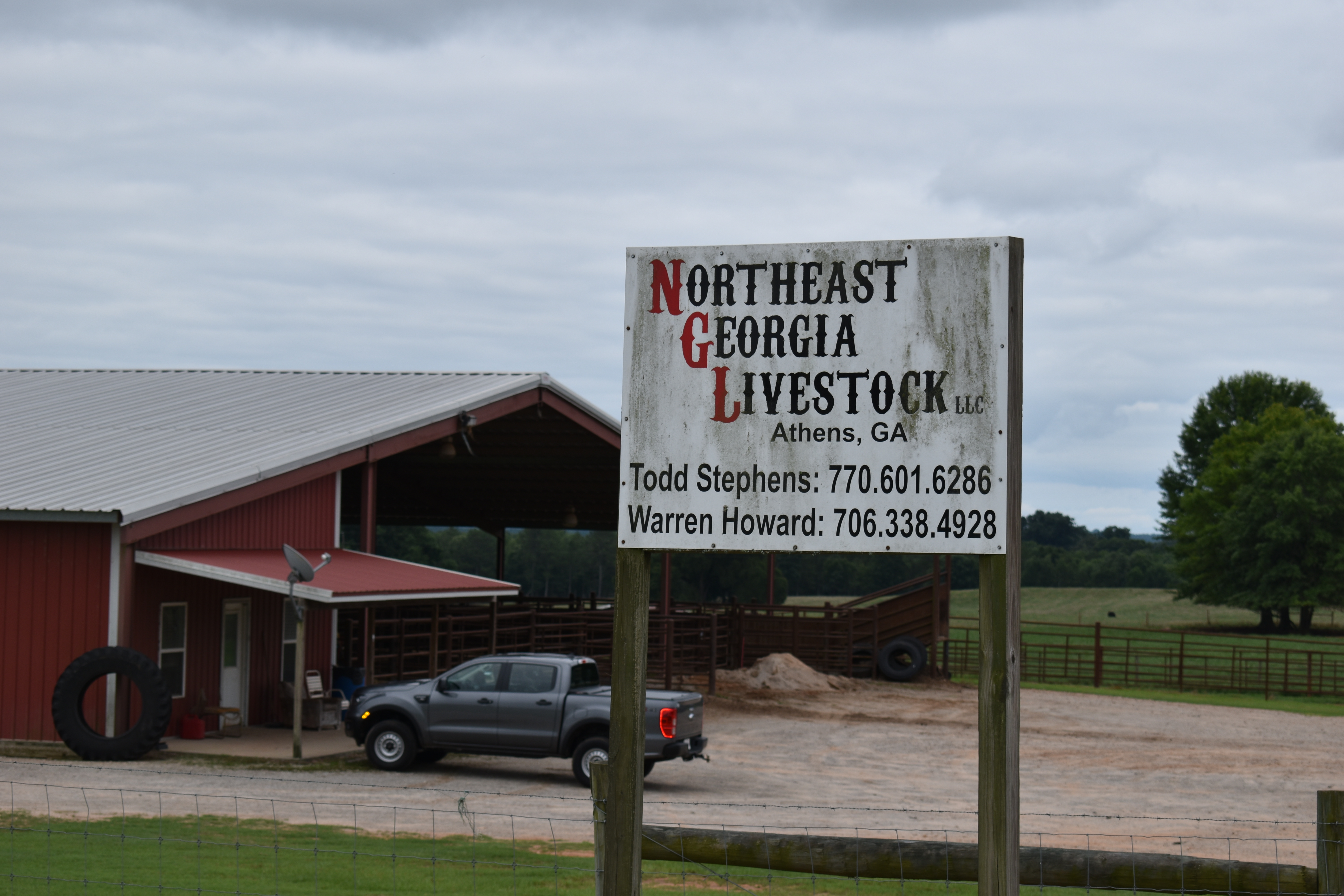
Todd Stephens, co-owner of Northeast Georgia Livestock, said he has used biodegradable food waste, a form of Georgia Department of Agriculture-approved soil amendment, for approximately three years.
Stephens, who lives in Smithonia, owns three farms, but says his livestock and hay farm on Thaxton Wynne Road is the only property where has used this type of soil amendment.
Stephens said he uses the product specifically for hay on his 120-acre property, and he’s not paid by a farm or company to accept the product.
“I mean, (food waste), it’s free. Fertilizer, you have to pay $850$1,000 a ton,” Stephens said.
When asked about the benefits of soil amendments, Stephens admitted that its nutritional equivalence to fertilizer is debatable. What’s not debatable, however, is the economic disparity between the two options.
If money wasn’t an issue, Stephens said he would opt for chicken litter as the ideal option for treating his land. With inflation and fuel prices, and the fact that food waste is an EPA-approved product, soil amendments are the most feasible option.
Stephens does not call the registered food waste “sludge,” al though Blanton characterizes him as one of the new users of sludge.
“(Food processed waste) can mean it comes from a chicken rendering plant. It’s got particles of chicken flesh, it stinks,” Blanton said. “It has chemicals from the cleanup at the plant. It is not good for the environment. It has no beneficial value, you know, to growing crops. It’s just a waste.”
Stephens emphasized that while people are quick to criticize on Facebook, no individual has di rectly contacted him about the issue.
In Wilkes County, a property in the county caused a fish kill of 1,700 due to a soil amendment leak on June 17. Wilkes County Commission Chairman Sam Moore said there is a bigger issue with the farms that accept large amounts of soil amendments over a long period of time, rather than farmers like Stephens who use them on a minimal, or one-time basis.
Regardless of this, Moore expresses concern for the lack of transparency that creates both positive and negative misconceptions over sludge and soil amendments.
“It’s really not about one particular form or one particular incident,” Moore said. “It’s just an ongoing thing that needs to have some regulation because those trucks run seven days a week, 24 hours a day … (and) we’ve never seen any paperwork from them coming into our counties.”
Adjustments to come
The new regulations for Georgia soil amendment laws are under consideration as the Georgia Department of Agriculture and the Environmental Protection Division try to come to agreement on terms and conditions. The process has taken over a year to finalize.
Since the last update to Georgia’s soil amendment laws — HB 1057 — in January 2021, the agriculture department has used state funding to employ an agrono mist to approve nutrient management plans as well as an inspector to oversee the program. Prior to the last update, the agency did not have the staffing to do so.
Nutrient management plans are only required by those farms receiving instead of providing soil amendments. Transportation companies have more liberty in deciding what information they disclose to the public.
Moore said his county as well as Oglethorpe County has made multiple unsuccessful attempts with the agriculture department and Georgia General Assembly to come to an agreement for giving counties some power in monitoring what is entering on these trucks.
Even if there are nutrition al benefits to soil amendments, there should be limits put in place to prevent abuse, he said. The amount and frequency that soil amendments are being used in the county depend on the area. The county does not keep record of the amount or total acreage where soil amendments are present because they don’t have the authority under current legislation.
“It’s not gonna be legislated out of existence, but I do think it’s getting more critiqued for, especially in light of the recent event in Wilkes County,” Paul said.
Paul said greater power should be given to local governments to regulate or increased supervision needs to take place on behalf of the department of agriculture.
Wynne said his concern as a property owner is that it’s going to pollute the water with runoff.
“And there’s nobody’s watching to see if that’s … happening,” he said.