
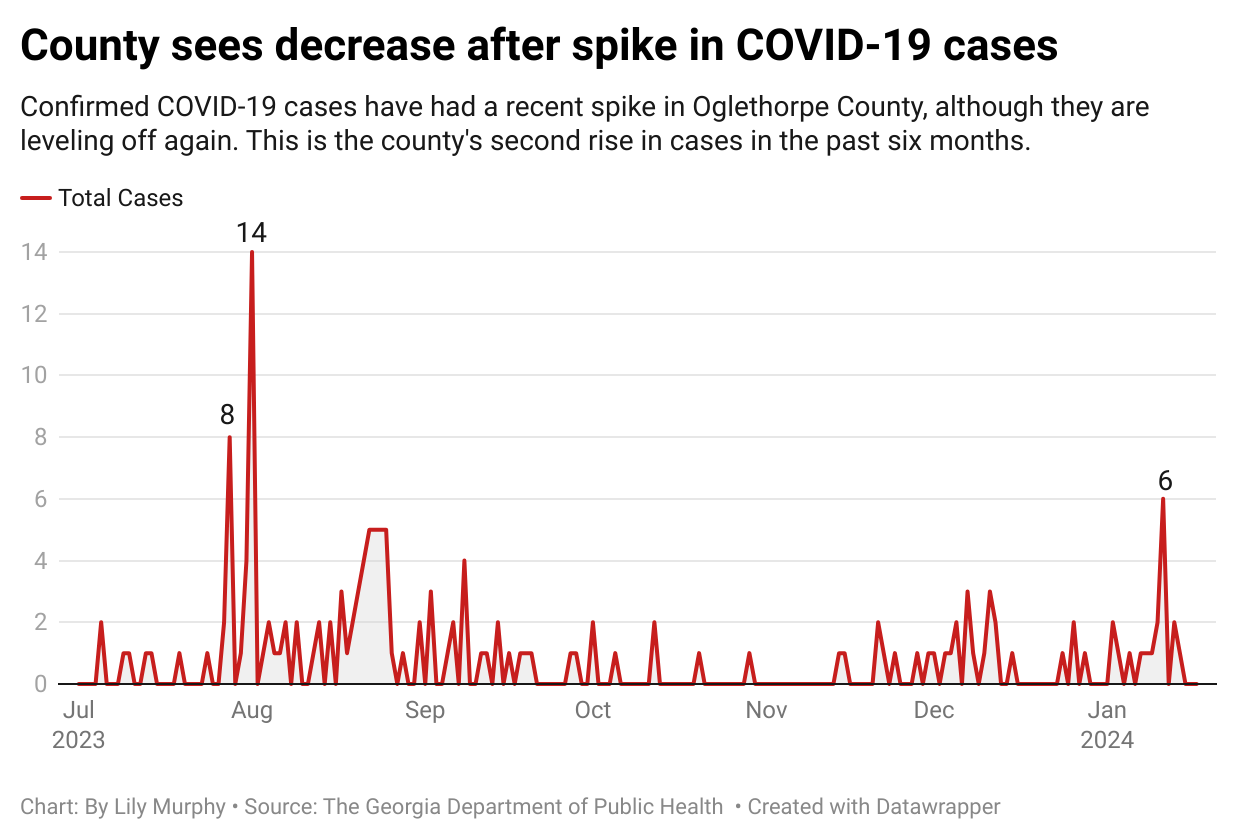
COVID-19 and flu levels in Oglethorpe County have leveled off after a post-holiday spike.
There were six confirmed cases of COVID-19 in Oglethorpe County as of Jan. 11, but only two confirmed cases on Jan. 15, according to the Georgia Department of Public Health.
Tina Shehee, a family nurse practitioner at MedLink Oglethorpe, said the increase in both illnesses at the beginning of January was both common and expected.
“I think the spike just came from families getting together, just the way that communicable diseases transpire after big family get-togethers,” she said.
Oglethorpe County has had a total of 2,905 confirmed COVID-19 cases since the start of the pandemic in March 2020.
Within Oglethorpe County schools, the flu spiked before the break, district nurse Kristina Turner said. She said she’s since seen a decline in absences due to flu-like illness.
Students aren’t required to report a positive COVID-19 test, so that data is tougher to track. The school district also doesn’t have vaccination requirements for the flu or COVID-19.
“The health department came onsite to give flu shots to all of our staff back in the fall,” Turner said. “So we encourage it, certainly for our staff, but it's not required for anybody.”
Flu shots are offered at MedLink Oglethorpe, Skrip Shoppe Pharmacy and local physician offices.
Skrip Shoppe doesn’t offer the COVID-19 vaccine. MedLink Oglethorpe does, but there’s a waitlist that requires calling ahead and waiting for a return call once the vaccinations are ordered. To contact, call 706-521-3113.
The last COVID-19 spike was last Aug. 1, with 14 confirmed cases in Oglethorpe County, according to Georgia DPH. Since then, cases have stayed below five per week until the spike this January.
The decline in flu has been a trend throughout the state of Georgia.
Flu cases went from 10 to eight between the first two weeks of January, as seen on the Georgia DPH’s Weekly Flu Report.
Flu hospitalizations within metro areas also had a steady decline, going from 279 to 187.