

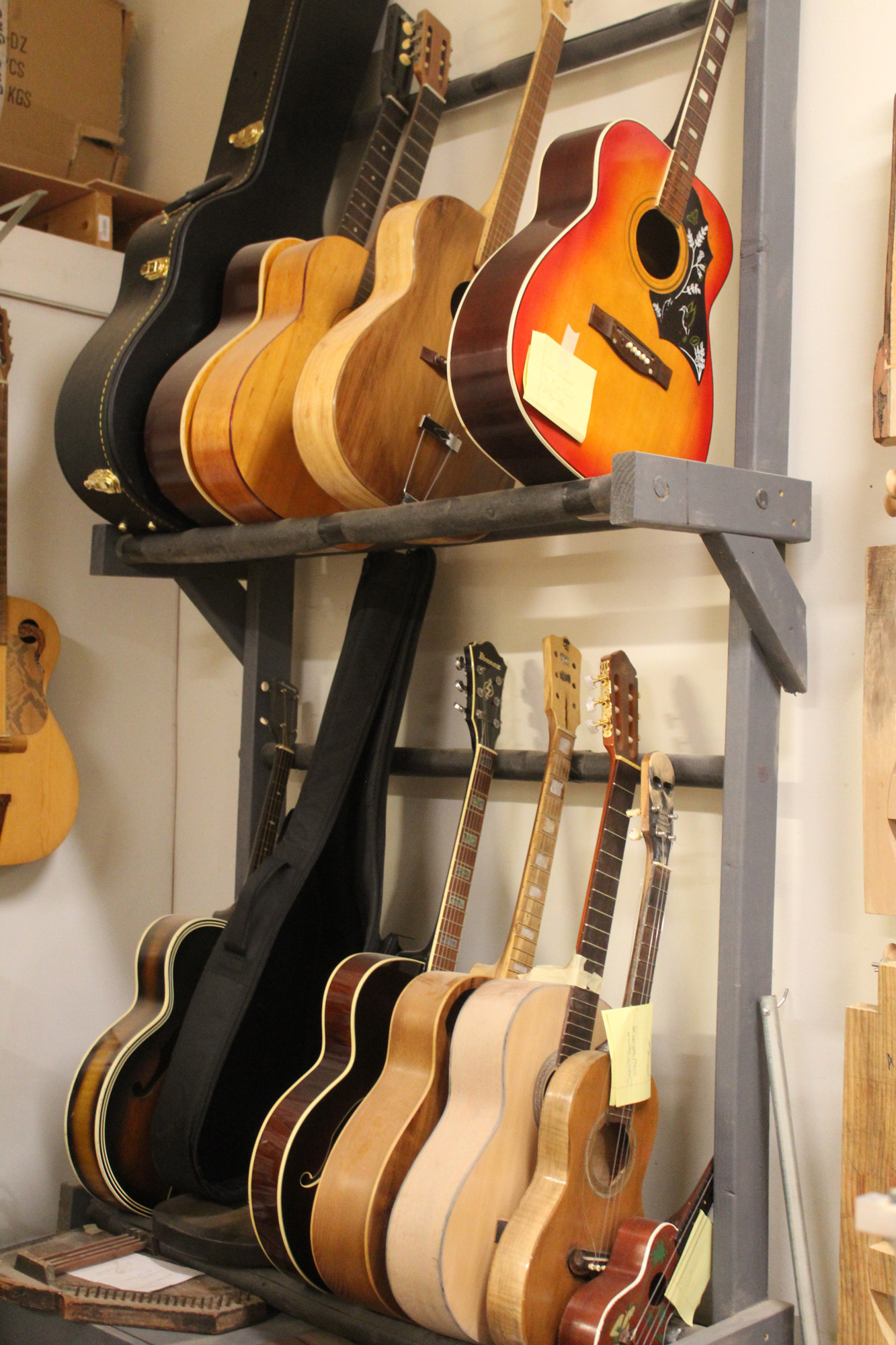
Jason Booth's guitars come to life from locally sourced pieces of dead wood, leading to a one-of-a-kind sound for each instrument.
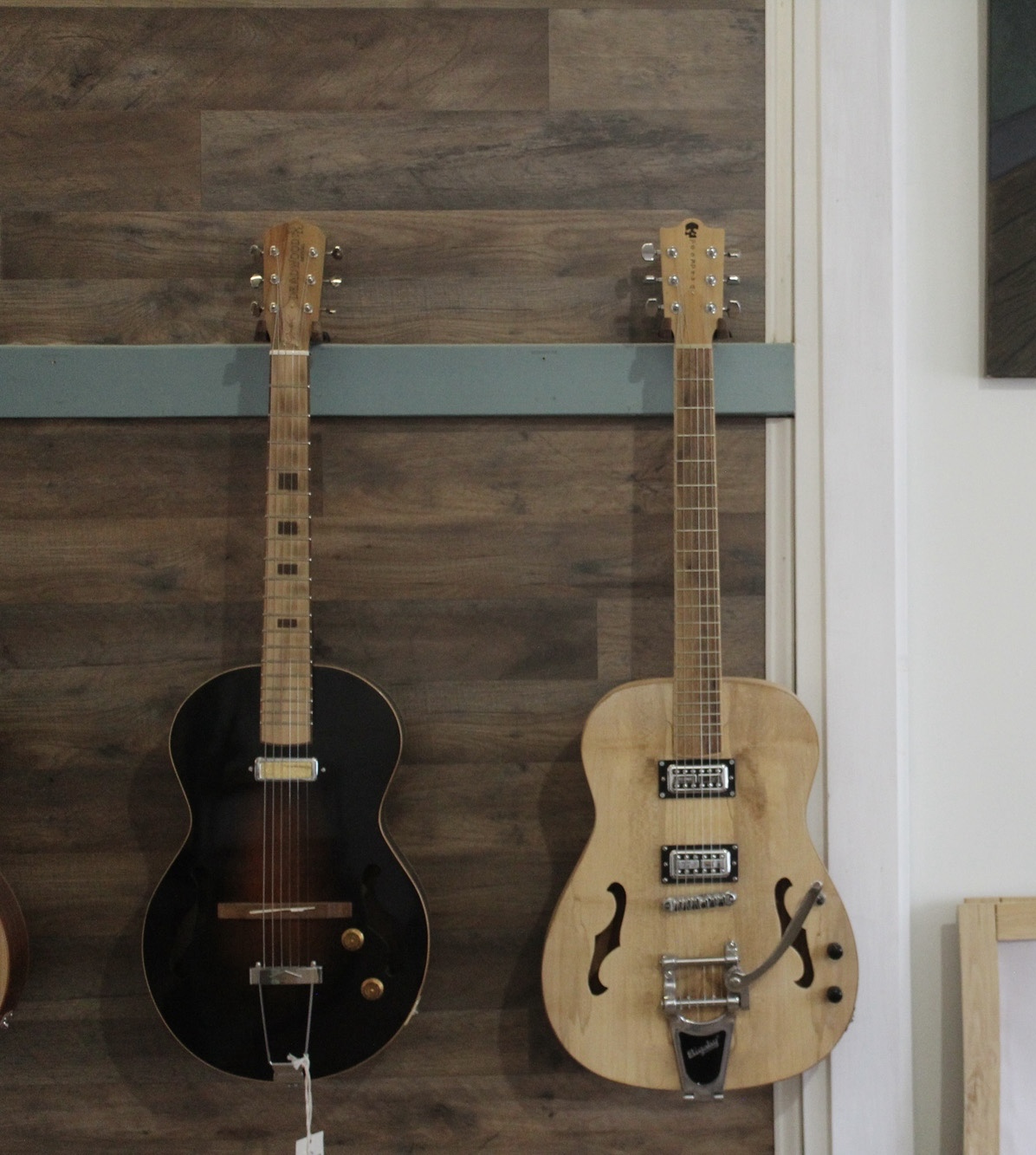
For local musicians and long-time clients like Michael Doke, a guitarist for the Rick Fowler Band, the unique sound and distinctive wood patterns of the instruments set them apart from the rest of the major guitar brands.
Having collected over 10 Deadwood guitars, Doke uses them almost exclusively, claiming they have the best sound of any guitar he has ever used or heard.
“I’ve got friends that are singer/songwriters that have expensive guitars and I listen to them play and they don’t sound as good,” Doke said.
Booth hasn't copied other guitar companies, but he’s modeled several of his instruments after existing models from Gibson. He’s modified them to make them more compatible for the blues style.
Doke first went to Booth when he wanted a body for an electric guitar, but he wanted it made out of eastern cedar.
“My mother and grandmother always had these big old pieces of furniture that were just cool looking and they were all made of eastern cedar,” Doke said.
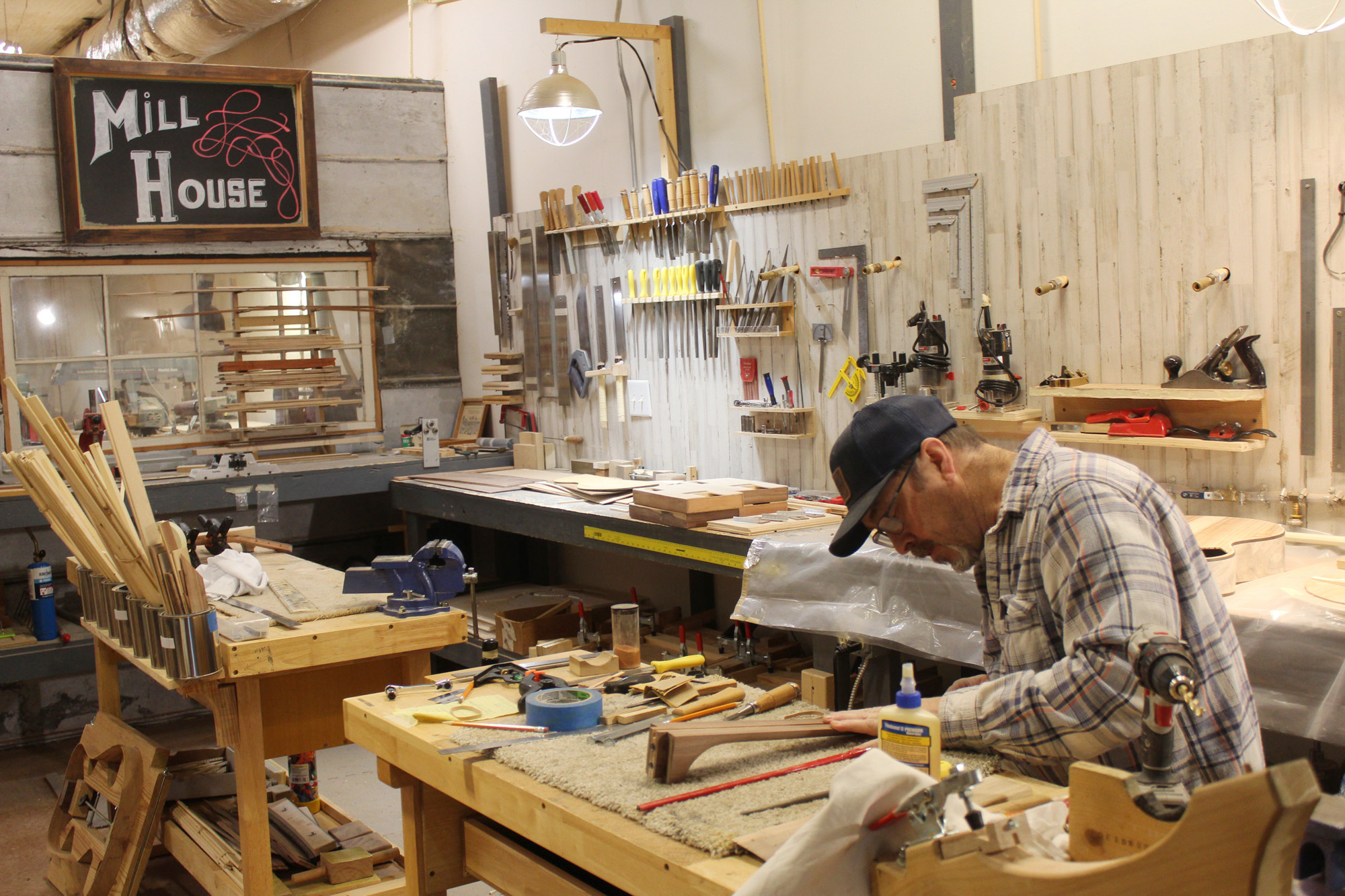
Booth learned to play guitar in college in his spare time between classes. Years later, after he was married and started a family, he was working in construction when he decided to put his building skills to the test.
He bought a book and taught himself how to build a guitar.
“Through the years, I’ve just sort of developed my own style and trial and errored my way through the building process,” Booth said.
When Booth first started his company, the inspiration for his instruments came from the blues, his favorite genre of music.
“I’m a fan of all of it, but blues really is kind of where my soul is,” Booth said.
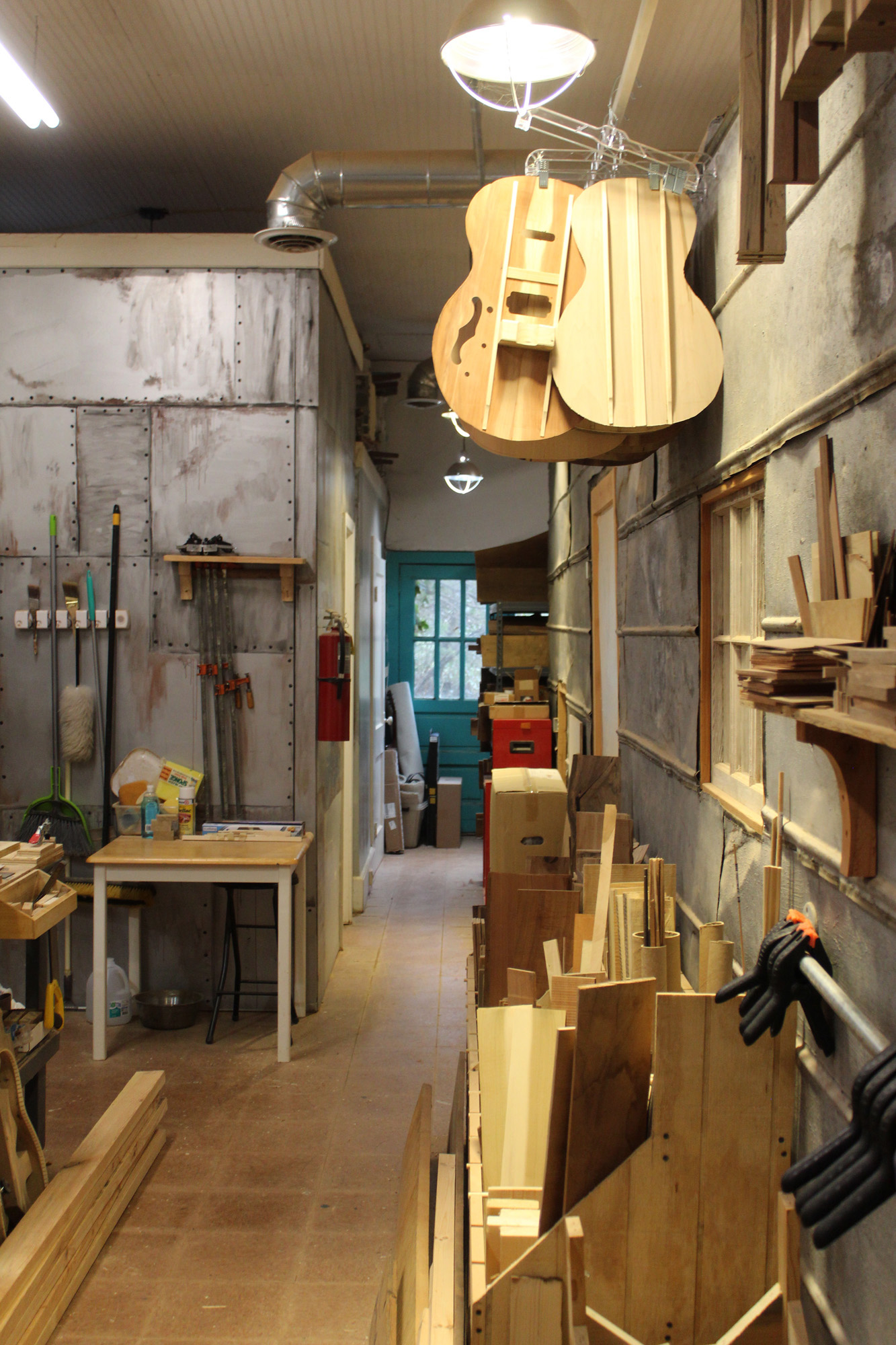
The lengthy process to create one of his guitars begins at the sawmill, where the dead wood is sliced into two thick slabs. Booth takes the wood to his storage location, where he stores the wood for at least two years to dry it out.
After the wood has dried, it’s brought into the shop and the humidity levels are checked to ensure that it is ready to be used for construction of a guitar. If the humidity levels check out, the wood is sliced again, milled and sanded to make all the parts.
“I’ve been stacking wood for a long time now so I’ve got stuff that’s been there for 10 years or so,” Booth said.
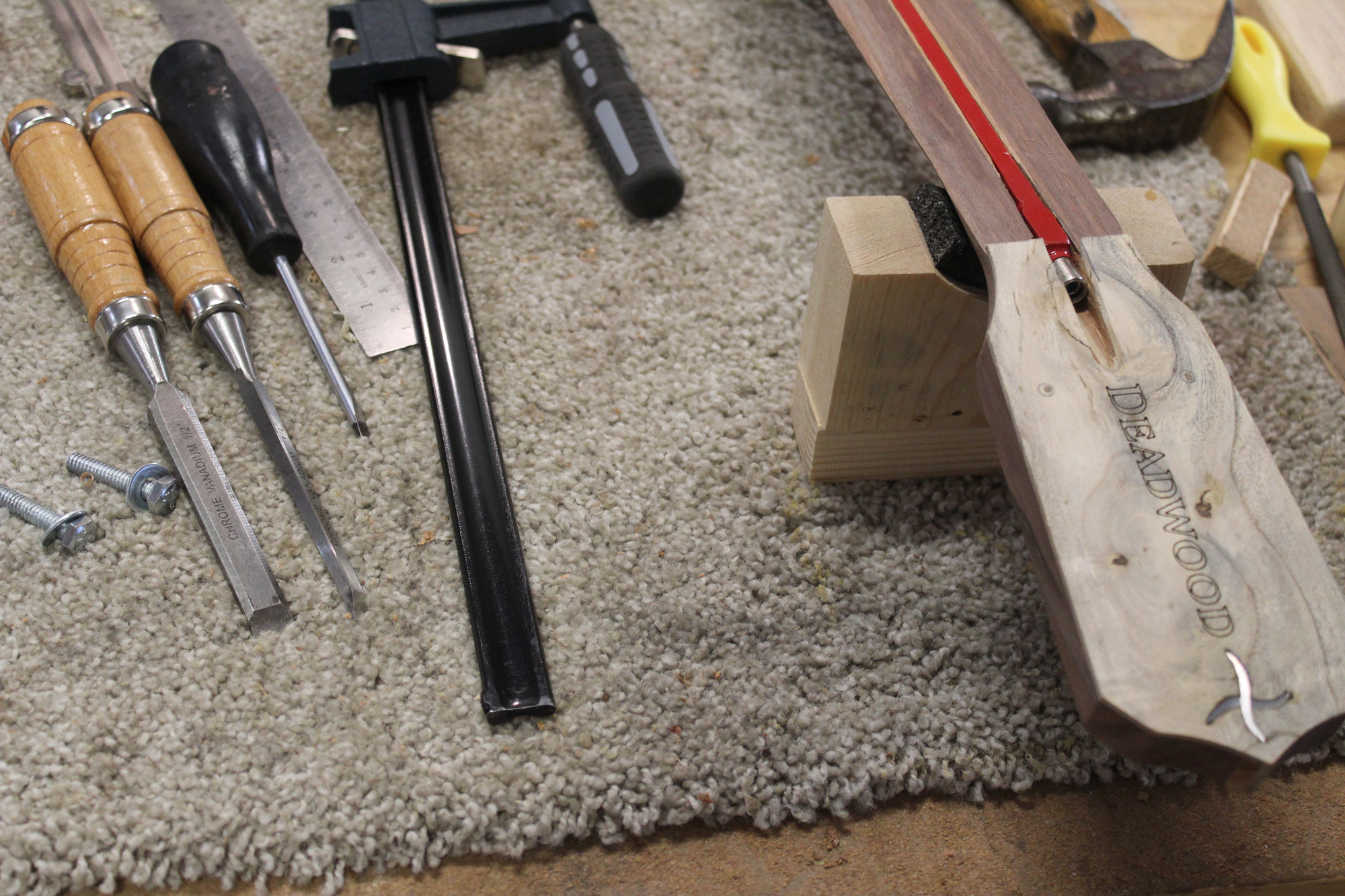
All of the parts, such as the neck, the fretboard and the body are all created individually and then assembled in the shop to make the finished product.
A Deadwood guitar costs about $1,500, on average, but can increase in price with specific customizations. Booth makes most of the guitars with help from apprentices.
The company is growing with Booth making and selling about 30 to 50 guitars per year, which he sells out of Lexington and Dahlonega, Georgia.
“It’d be nice to see and hopefully one day have it become something that is a bigger company than a little shop here in Lexington,” Booth said.