
Lexington’s John Fortuna has spent time the past year working on his final resting place

Lexington artist John Fortuna’s property is sprinkled with his handiwork.
His home, a 1,200-square-foot geodesic dome, he hand-built with his brother’s help.
Inside, the space is covered with his award-winning artwork. In his yard are two more domes he’s built to house his peacocks and chickens.
In his garage is his car, a sleek 1967 Volkswagen Beetle he helped fix up.
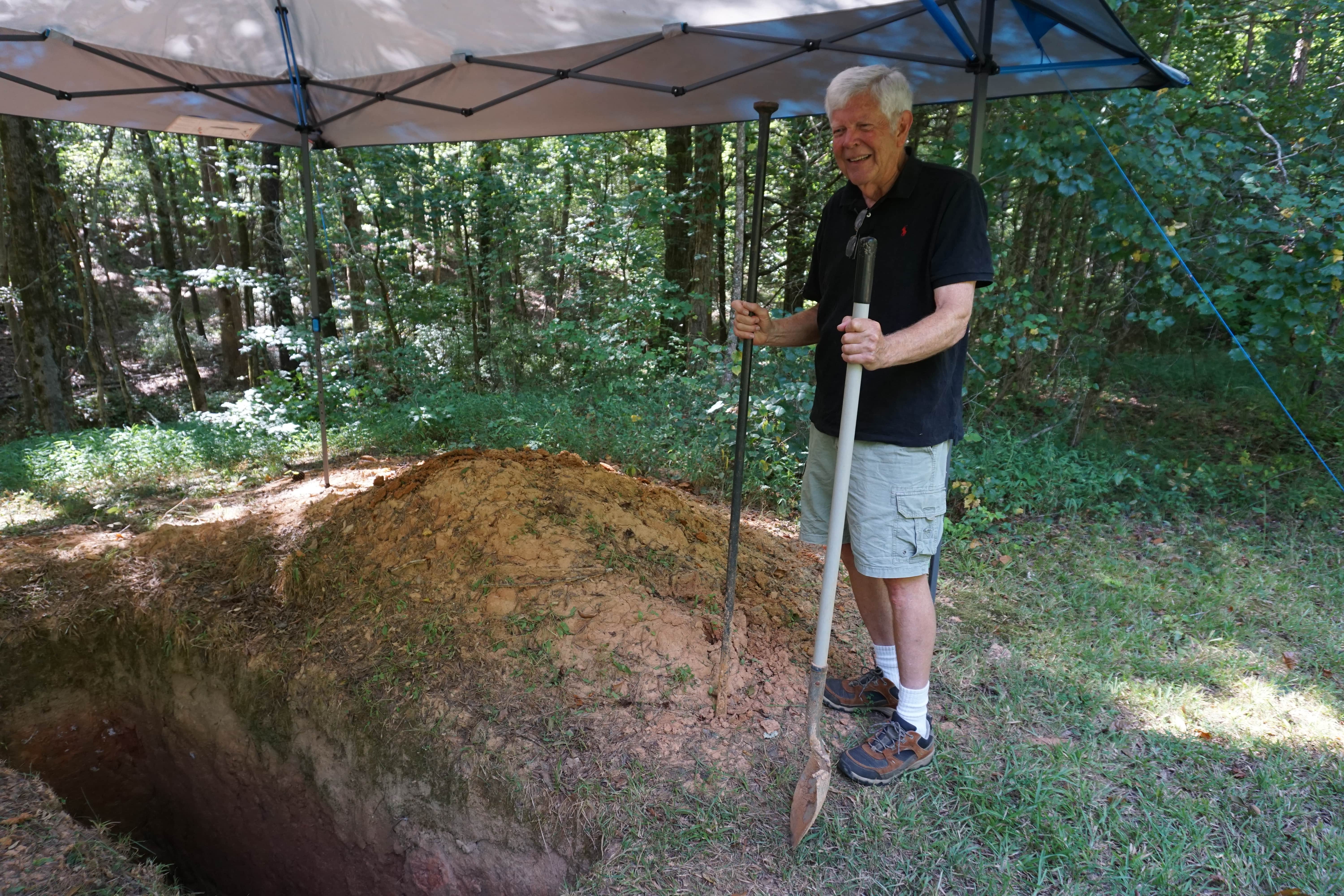
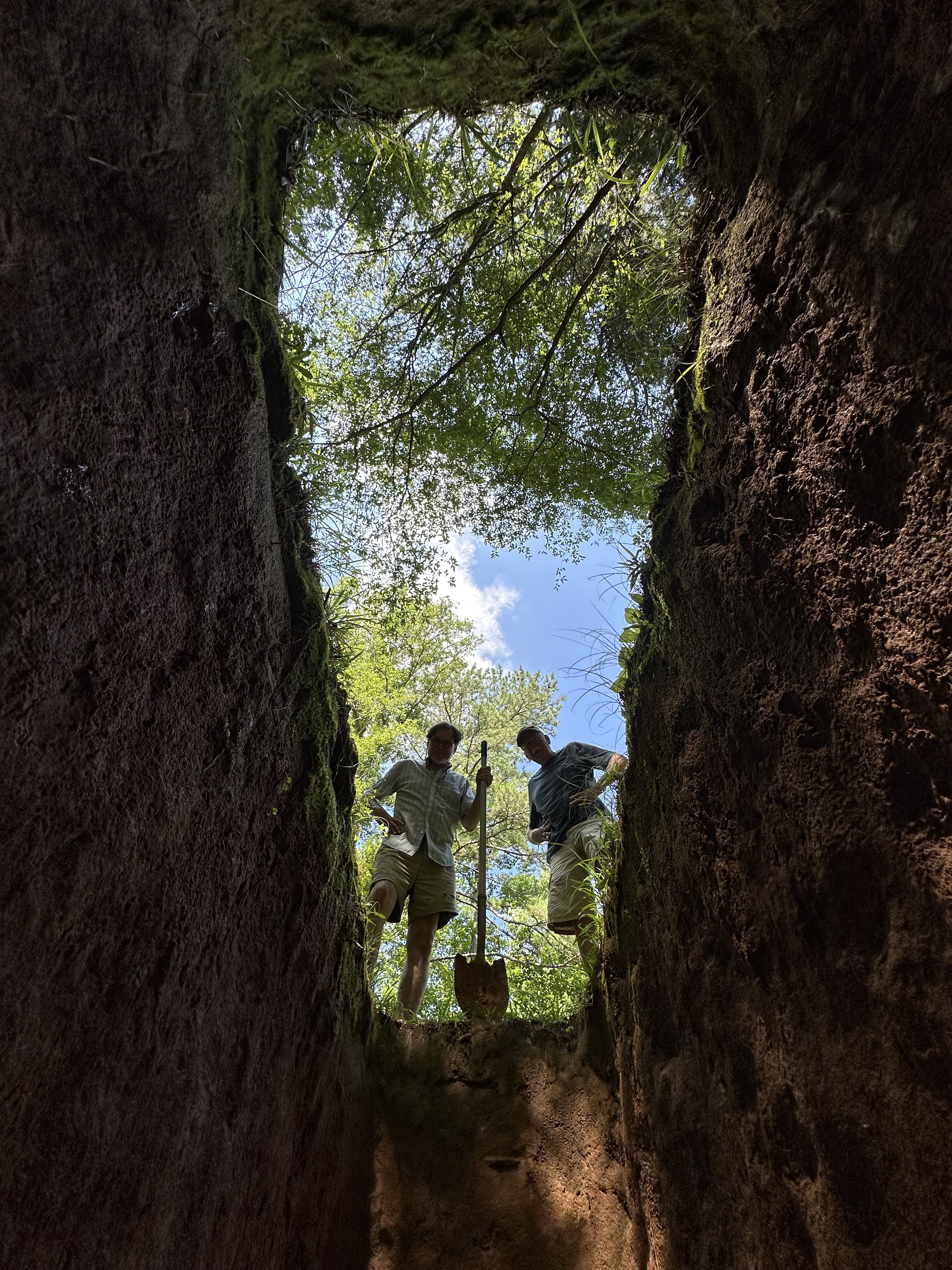
Toward the back of his property lies his latest project — a perfectly rectangular 7.5-foot by 3-foot by 5½-foot hole.
For the past year, Fortuna’s been digging his own grave. He’s still got about half a foot to go.
Fortuna, who is 76, is in good health. He has a vibrant life filled with friends and art. He has no plans to die soon, but he’s not bashful about the inevitable.
“I wouldn’t say that I’m excited, but I think it’s kind of neat that from my grave, you can see the dome that I built,” he said. “And that’s kind of a fun thing for me.”
When asked if building his own home inspired him to dig his own grave, he said, “Well, I wonder if it shows that I’m cheap.”
Fortuna said his girlfriend had a strong reaction to him digging the grave, as did some of his family members, but his children and many of his friends are happy to indulge his morbid curiosity.
“I think I am the least shocked by it,” said Laura Fortuna, John’s daughter. “My thoughts were more, I’m happy that he is handling his mortality and understanding, and thinking about his next step. I also just love his property. My brother got married there. He built that house, and it feels fitting to me that that’s going to be the place where I get to visit him forever.”
In her free time, Laura volunteers with the Order of the Good Death, a nonprofit organization dedicated to making sure everyone has a “good death.”
The Order advocates for removing the stigma around death and dying, helps people navigate the funeral industry and has also been involved in helping legalize “green” or natural burial methods.
In July, Georgia became the 13th state to legalize human composting, in part due to The Order’s advocacy.
Both Laura and her father are comfortable talking about death, and Laura has even looked into becoming a death doula, someone who provides spiritual and emotional support to people who are dying, like a birth doula, but in reverse.
Part of this openness around death, Laura said, comes from having experienced a lot of sudden death at a young age.
While she was growing up, Laura’s uncle died of a heart attack, her grandfather died from a viral infection and her brother died in a train accident in Germany.
“I think having all of those things happen within a six-year span sort of opened both my father’s and my eyes to, like, it’s around every corner,” she said. “It could happen at any time.”
Laura lives in Brooklyn and said she participates in “death cafes” in the borough’s Green-Wood Cemetery.
“Death is a very taboo topic that a lot of people shy away from and think that it’s graphic in a way, but we’re all going to die,” Laura said. “We’ve found lots of ways to sanitize that for ourselves, to make ourselves ignore it, which then becomes so much more shocking when it does eventually happen.”
Now, Laura considers herself a member of the growing death positive community. A friend in The Order even sent her a shirt that says, “Death Positive” on it, which she hasn’t quite felt comfortable wearing out of fear of making others uncomfortable.
But the idea of having more open and compassionate conversations around dying is something she can get behind.
Considering the average cost of a funeral in the U.S. is nearly $8,000, according to the National Funeral Directors Association, and the growing concern over the funeral industry’s environmental impact, these conversations are becoming more important than ever.
John is conscious that, speaking in national averages, he’s approaching the end.
“Just wait until you get old,” he said. “You can feel your body doing things that are different. I mean, you know something is up. I’m not saying I’m going to die really soon, but I can tell that there’s a difference.”
To him, he thinks it is more strange that he would pay thousands of dollars to have someone else cremate him than it is to be wrapped in his mother’s quilt and lowered into his hand-dug grave by his loved ones.
He believes in reincarnation and wants his body to become tree food while his soul moves on to its next life.
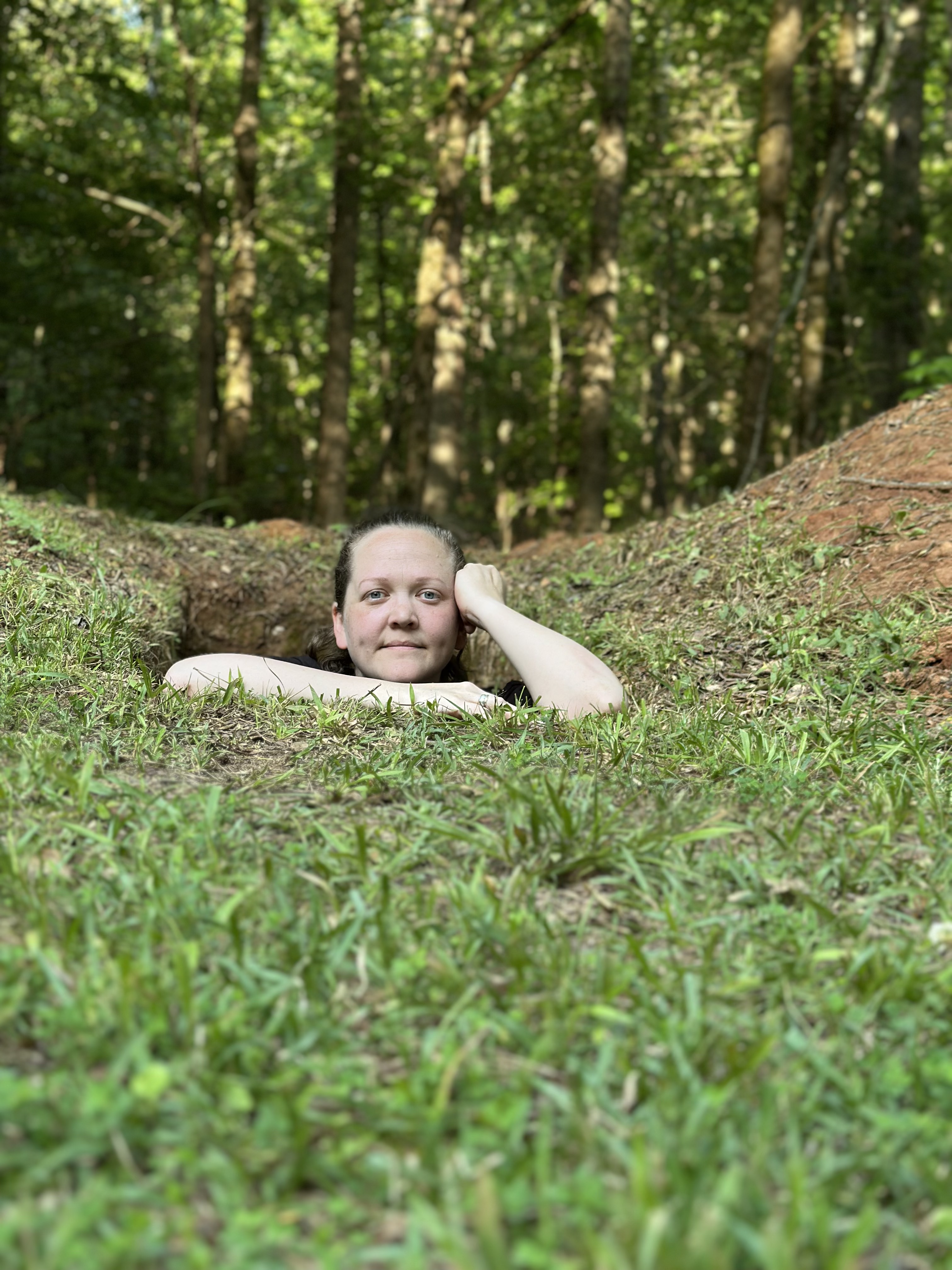
“How many billion people do you think are in holes like that in the whole United States?” John said. “I thought, ‘Oh my God, if I die, my bones will be here for eternity,’ but until they just go away, I don’t know anybody else who’s laid in their own grave and can say they know what it felt like.”
In October, John plans to host a Halloween party and expects some of his guests might like the gag of going 6 feet under for a second or two. For now, and for the foreseeable future, though, the hole has a pop-up tent covering it while he digs the remaining few inches through the hard Georgia clay.
“He knows he’s gonna die, and he sees it around every corner,” Laura said. “I’m not certain it’s gonna be that quick because he says the great irony of digging his own grave is it’s keeping him healthy, so he’s living longer.”
Online home tour
See a tour of John Fortuna's dome home on The Echo’s YouTube