
How to donate blood
Go to redcross.org/give-blood in order to find a blood donation event near you.
The No. 1 goal for Oglethorpe County EMS is to save lives. The addition of whole blood could save even more.
In fact, receiving whole blood products during pre-hospital treatment could save 37% of patients from severe trauma injuries, which is why EMS plans to start providing it.
“I think that understanding that, while it may be on the expensive side of a project to do, and yeah, we’re not going to use it every day, that it should be something that’s looked at as vital for us to have to help our community stay safe,” said Josh Robinson, EMS director.
Robinson is working with Piedmont Athens Regional Medical Center and the regional Regional Trauma Advisory Committee to secure the blood products.
“It’s new, and it’s quickly becoming a standard,” Robinson said.
Oglethorpe County EMS had 13 severe trauma cases in the past two years where whole blood was needed. Madison County had 10 cases in 2025 where patients would have benefited from whole blood.
“It’s something that when you need it, you’re going to wish you had it,” Robinson said.
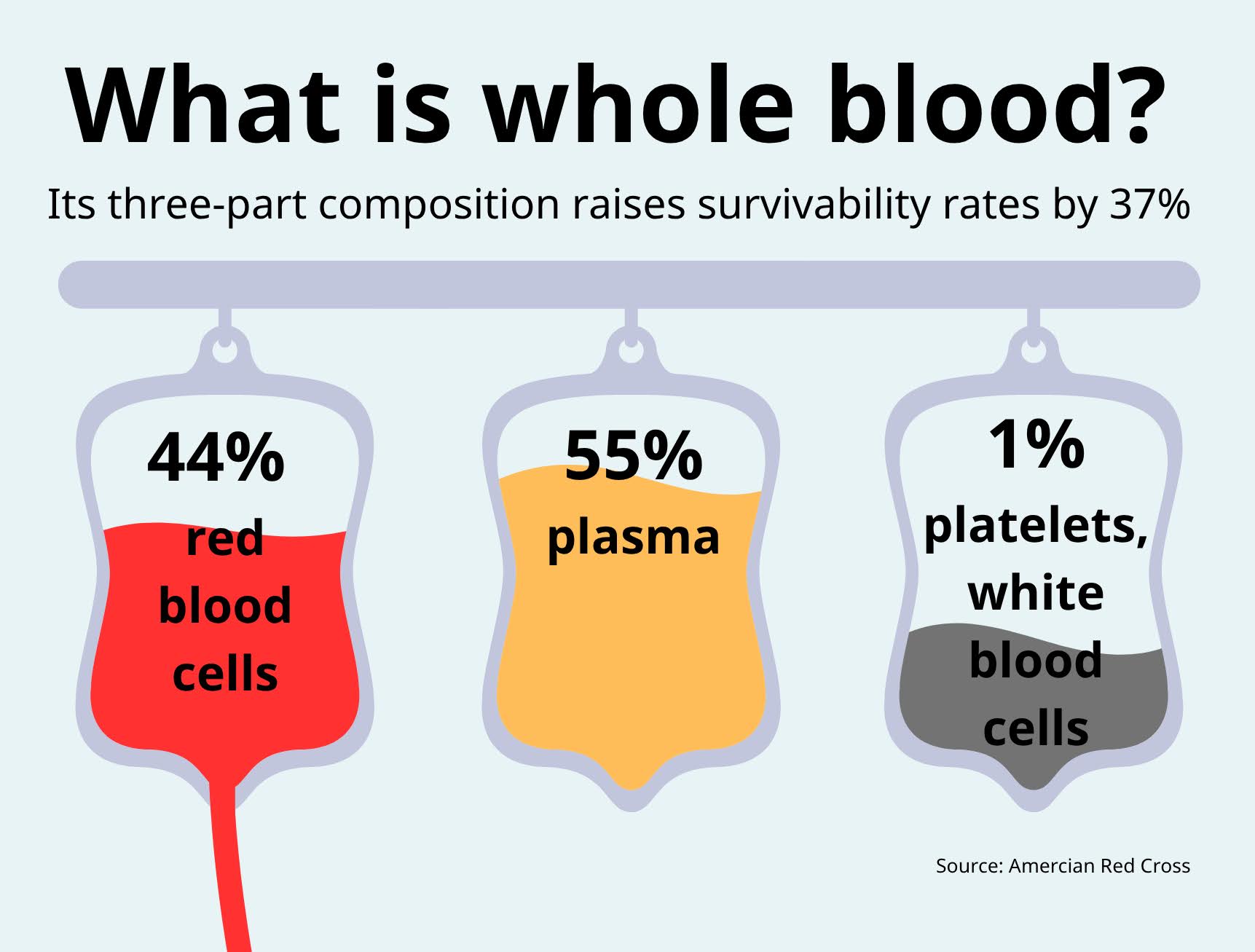
Robinson said blood transfusion training will become part of the “scope of practice” for all paramedics and EMTs. It’s not included in standard paramedic training and considered a post-licensure paramedic skill.
The data behind the push for whole blood products speaks for itself.
According to the National Institute of Health, trauma-related injuries are the leading cause of death for Americans between the ages of 1 and 46, which leads to 60,000 fatalities per year in the U.S. With the addition of whole blood transfusions during pre-hospital treatment, the 24-hour mortality drastically increases.
This is especially important in Oglethorpe County, where the nearest hospital can be more than 20 miles away.
“We do have sometimes, such a long transport distance, being able to give them something that can maintain them until they get to the hospital is very crucial,” Robinson said.
Supplying this life-saving treatment comes at a cost. Depending on the equipment, startup costs range from $8,000 to $10,000. To help fund this project, Robinson is applying for the Safe Streets and Roads for All grant through the U.S. Department of
Transportation.
Despite a nationwide blood shortage, he is confident EMS will be able to secure the whole blood products needed. To combat this shortage, EMS plans to hold blood drives to give back to the community.
He hopes to have the funding, equipment and necessary blood supply by late summer, early fall.
“It’s a process that takes a little bit to get going, but once we get there, we’ll be good to go,” Robinson said.