
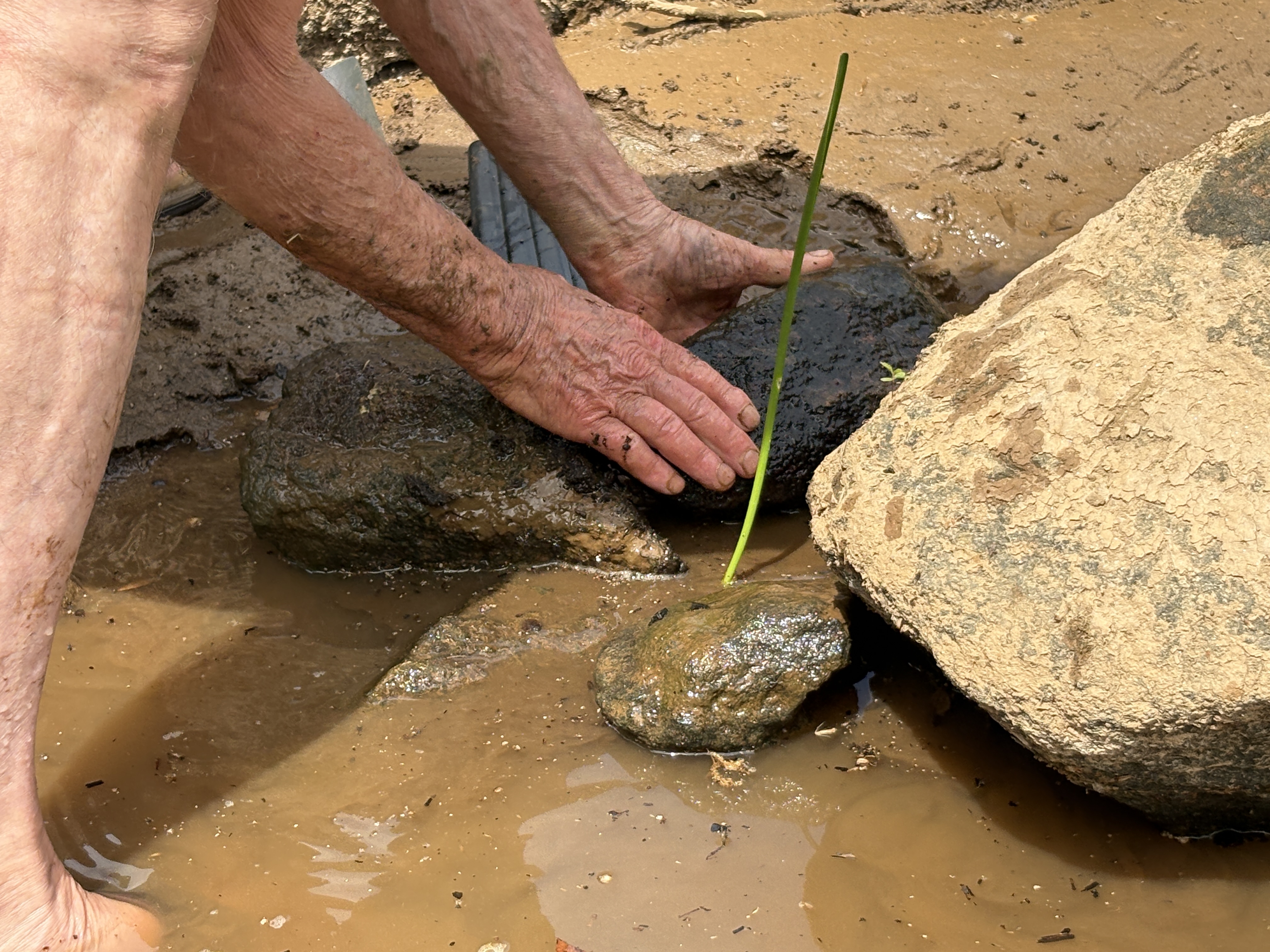
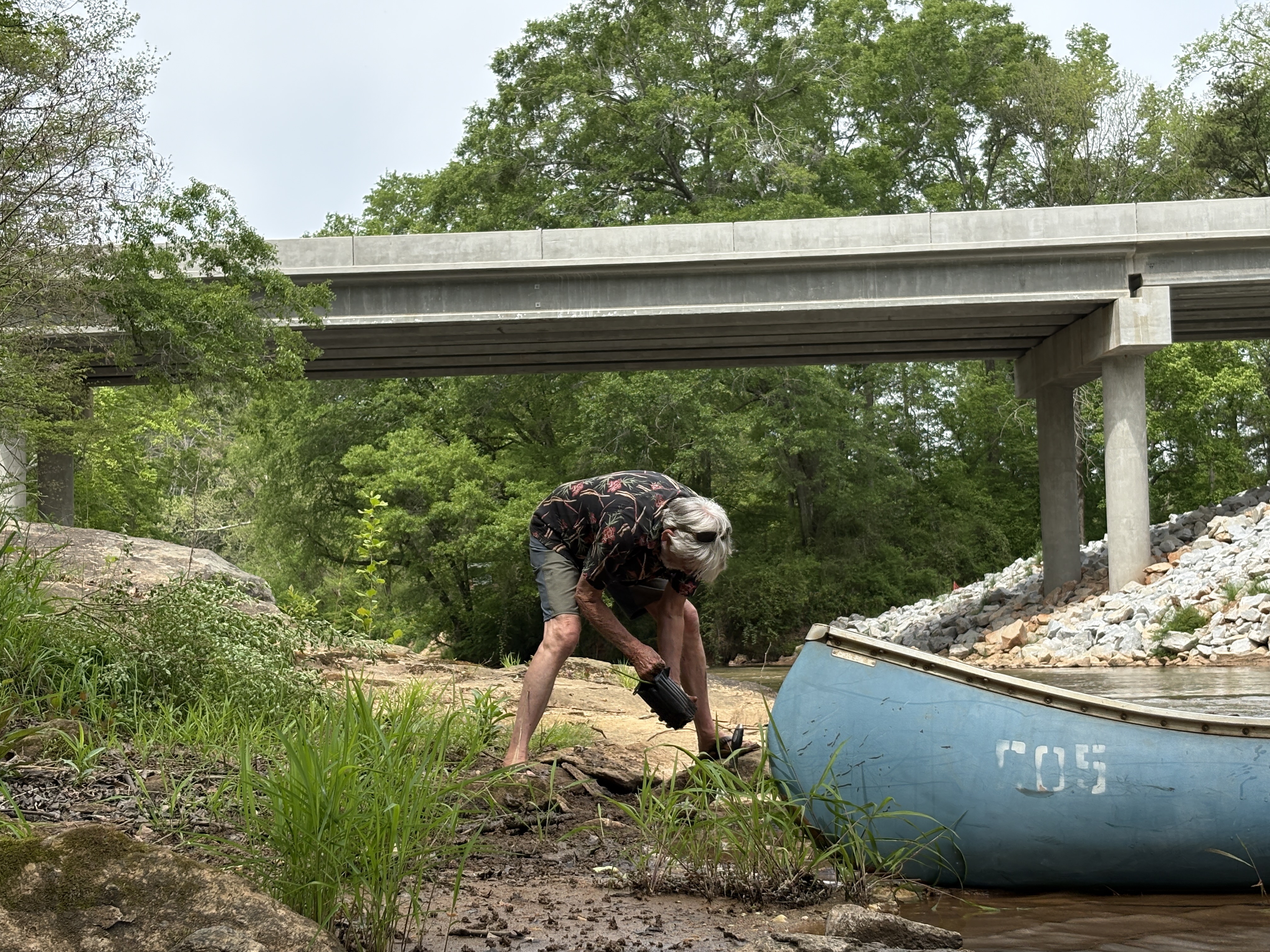
Michael Moody stood on a shallow rocky bank of the Broad River in April. Around him, water lapped at his feet as he worked with his hands to plant a shoal lily into the watery soil of the riverbank.
He was one of many people striving to increase the population of the plant because it not only beautifies the banks but also helps to minimize pollution in the river.
Moody, who died in late April, owned the Broad River Outpost in Danielsville and made this act of planting shoal lilies part of his life’s work to passionately preserve the waterway.
“These plants were once common across the Piedmont from Alabama to North Carolina in the shoals of rivers and creeks,” Moody said during a trip down the Broad River on April 13. “Water-powered mills and electric power generating along with sediment choking the plants due to bad farming have all but wiped them out. I've been playing around trying to reestablish them in the upper Broad.”
This measure seems small but is vital for not only the health of the river, but the health of the animals and plants that rely on it. Shoal spider lily, or hymenocallis coronaria, is a plant native to the rocky shoal of the Piedmont region.
In a typical year, shoal lilies bloom from early May to late June and are perennial. The plant has a striking appearance that produces white spider-like flowers with six long petals and a yellow-green center.
While on the upper section of the Broad River, Moody showed a thriving shoal lily he planted the previous year. The plant near ready to bloom had natural offset bulbs that had taken root.
He then planted more around the area and jokingly deemed it “shoal lily shoals.”
One of the biggest threats to the species is pollution, particularly runoff that can alter water quality as well as disrupting the conditions that the lilies need to survive. However, Moody wasn’t the only one trying to solve river pollution through the repopulation of this plant.
Kris Irwin, board member of the Broad River Watershed Association, said human impact on the river remains a concern.
“We need to have people respect this resource,” Irwin said. “Because it’s a gem in the state of Georgia.”
Irwin pointed to both everyday misuse, such as dumping and larger-scale threats. Industrial development along the Broad could lead to discharge that couldn’t be cleaned, she said.
This could create what is known as a “wastewater shed,” which is water downstream of any source of pollution.
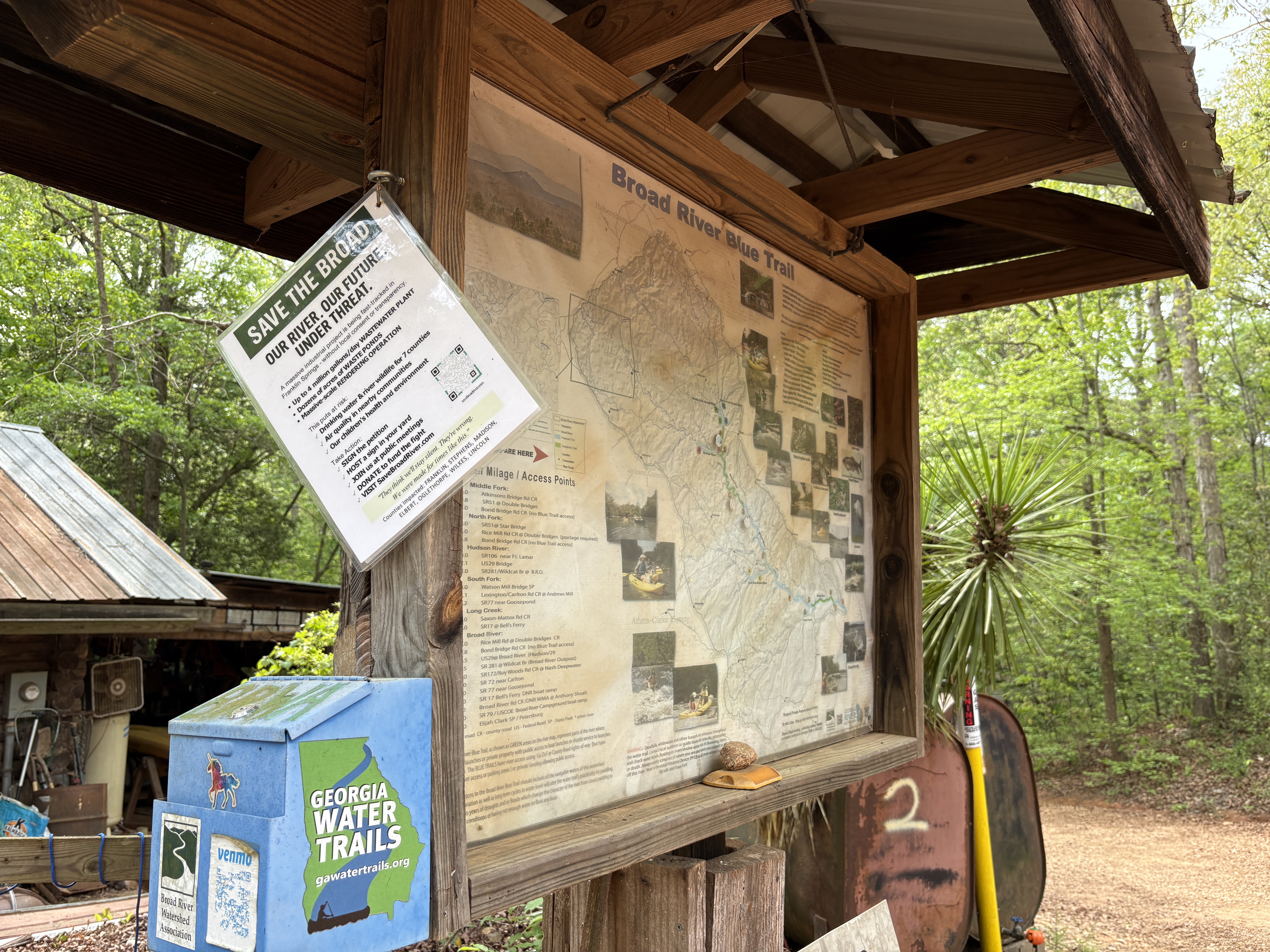
“The major problems with the wastewater treatment plants and rendering plants, pet food plants, industrial waste, etc., are just now coming to the watershed,” Moody said. “They are not in operation yet. We are trying to show how bad they'll be to the river due to the ridiculously low standards allowed by the Georgia EPD.”
Efforts to restore the shoal lilies, Irwin said, could also help protect the river in another way.
“It's like a little shield that says, hey, you can’t draw any more water. You can’t dump that because this rare plant downstream is going to be impacted somehow,” she said.
To begin its conservation efforts of the lily, the BRWA started working with the Georgia Department of Natural Resources in June 2025.
To do so, they went through the process of retrieving a permit to begin propagating seeds.
Data on the shoal lily remains limited, but Irwin said the population remains stable.
“There is much work to do to expand throughout the watershed,” Irwin said in an email.
Em Horne, associate conservation botanist at Georgia DNR, has been working closely with the shoal lily population. She hopes working with partners like the BRWA will produce data on what is working and what isn’t.
“Because at the end of the day, conservation is everyone working toward the same thing, and it’s really important for all of us to work on that together, rather than separately,” Horne said.
Like others, she wants to see the shoal lily population continue to grow and encourage participation of working with partners with the same goal.
“As a conservation botanist, I think our main priority is to protect the populations that are already existing instead of putting our efforts towards making new ones,” Horne said. “But that's not to say that that's not a really important conservation strategy when there are threats that are affecting our populations that are hard to address.”