
Two more seminars will be held this year, including one on food plot planting on April 11 and one on hunting white tail deer on Aug. 22. Turkey season in Georgia starts March 28 (private land) and April 4 (public land), and ends May 15. The limit is two gobblers per person with a daily bag of one.
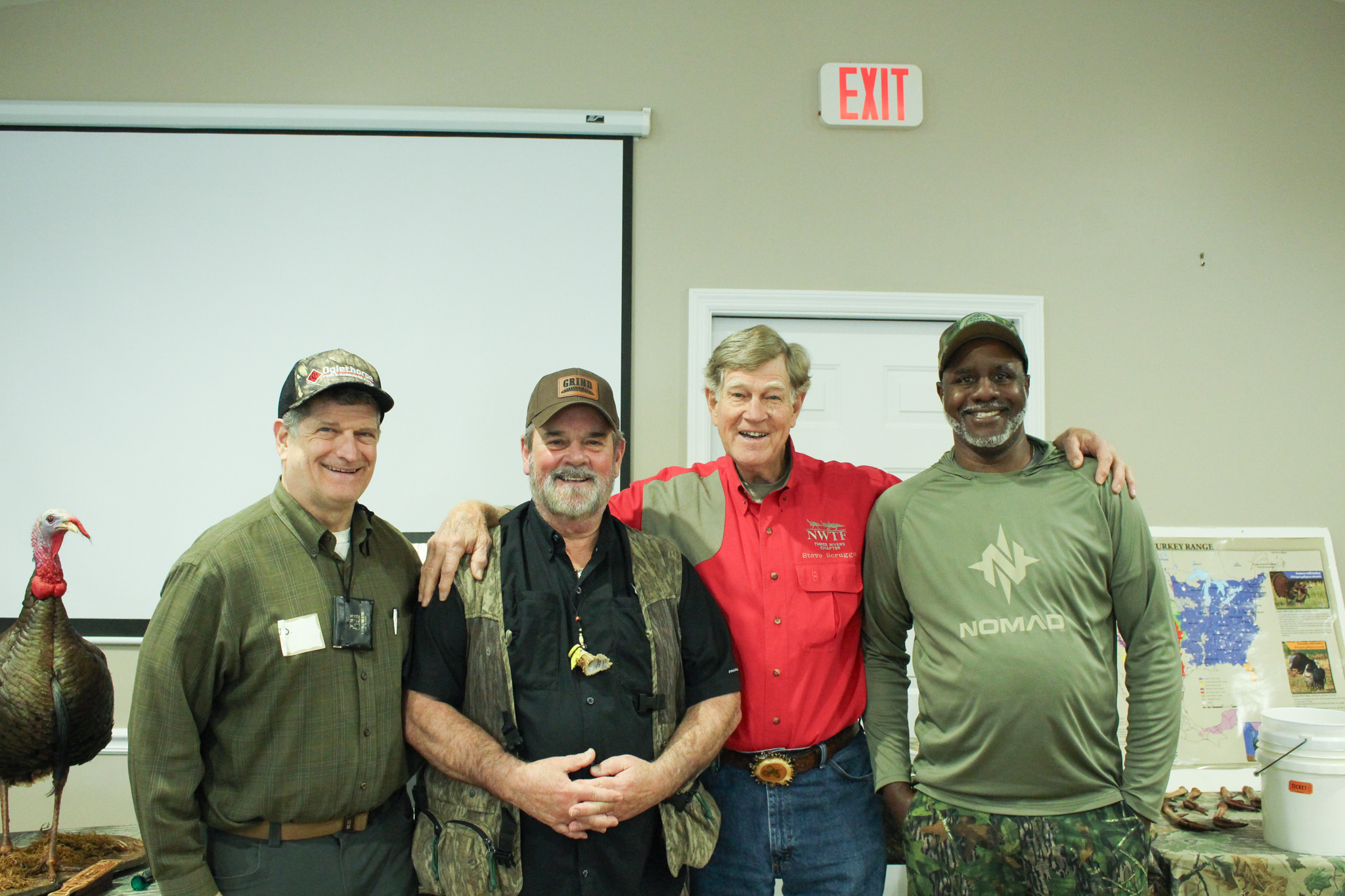
It was September 1992, and Steve Scruggs was leading a “wild day” at Lake Allatoona. Kids were running around, splashing each other with water and learning about the outdoors.
As they ate lunch, a boy approached Scruggs and told him that he was having the greatest day of his life.
“I can’t put a price tag on that,” Scruggs said, “But it changed my life.”
More than three decades later, Scruggs is still creating those moments, now through a seminar like the one held Saturday at the Oglethorpe County Farm Bureau.
He is a part of the Big Track Hunting Club in Philomath.
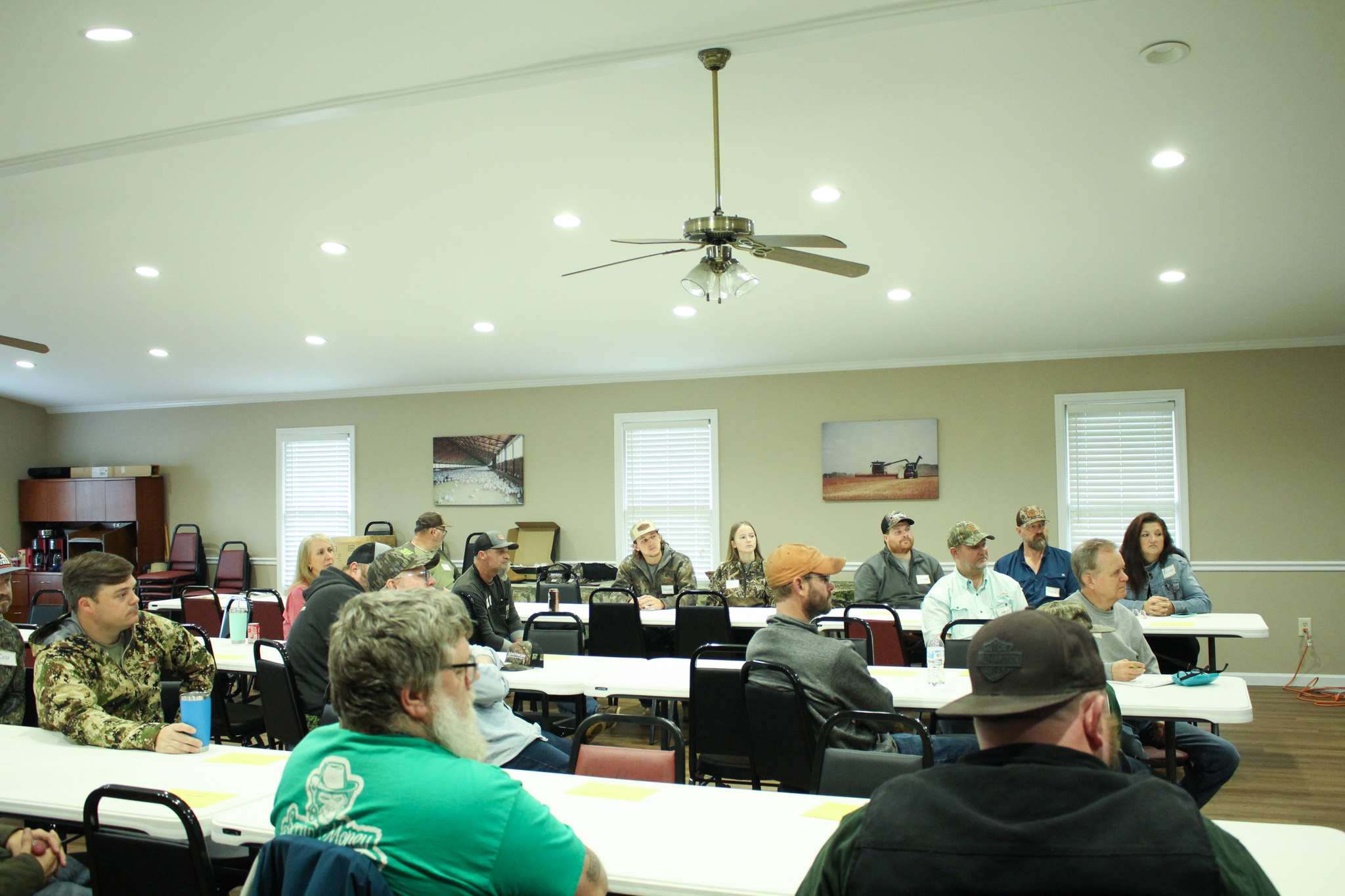
More than 20 people attended the Wild Turkey Hunting Seminar hosted by a partnership of Oglethorpe Feed and Hardware Supply and Hardigree Wildlife Sanctuary in Watkinsville.
“I'm not gonna lie, we were a little hesitant,” said Stewart Sanders, who helps run Oglethorpe Feed and Hardware Supply. “It's a pretty big commitment from us, but his persistence and the vision … we just took a chance.”
Scruggs, executive director of Hardigree Wildlife, proposed the idea to Sanders to hold three seminars focusing on outdoor education.
During this first seminar, Scruggs emphasized the importance of sharing the sport of hunting and outdoor education with younger generations.
“We need to reach down to the next generation,” Scruggs said.
There had been a 31% decrease in turkey hunting participation in 2022. An estimated 38,810 hunters hunted turkey in 2024, which is only a 3% increase.
From 9 a.m. to noon, people listened to demonstrations from avid and experienced turkey hunters on different strategies from preparing for a hunt to using calls to attract turkeys.
Brantley Ellis and Rylee Mitchell, who are from Hull, attended after seeing the event on Facebook.
Ellis, 19, started turkey hunting when he was younger. Mitchell, 17, is beginning to get into hunting.
One thing Ellis learned was changing to a higher position when calling a turkey.
“He said get higher than the turkey where it’s roosted, or if it’s on the ground, try and get higher and call to it,” Ellis said.
Farmington’s D.D. Quillian showed what he packs for a hunt. Items included a camouflage vest with a built-in back pad and a small stool with a seat cushion.
“If you’re gonna be still, you gotta be comfortable,” Quillian said.
Quillian also talked about strategies in having a successful hunt.
“If you hear one gobbling, you want to get into a position that’s above him or on the same level as he is,” Quillian said.
Stanley Wymbs, who is a turkey competition caller from Hull, showed different calls, including slate calls and box calls.
“It can make or break a hunt,” he said, “If you don’t put life to it.”
Slate calls feature a round disc that, when rubbed with a striker, will produce a turkey call.
These discs can be made of slate or glass, which all produce different sounds.
Wymbs showed the difference in tone between the two.
“You call a more higher pitch,” he said.
Terry Rohm, who is from Buckhead, near Lake Oconee, stressed the importance of engaging the younger generations and teaching them about the importance of hunters. He’s on the board of directors for Turkeys for Tomorrow as well as a member of the National Wild Turkey Federation's Grand National Hall of Fame.
“This is a family deal,” Rohm said. “It’s family. And I’m kind of disappointed there’s not no kids here. And that’s our job, is to give back and get kids here.”
He talked about how turkey hunting doesn’t need to be focused on just killing a turkey, but having fun. Rohm said there shouldn’t be unneeded pressure when it comes to hunting.
“Don’t let somebody tell you you gotta do it this way,” he said, “Do it the way you want to hunt and enjoy it.”