
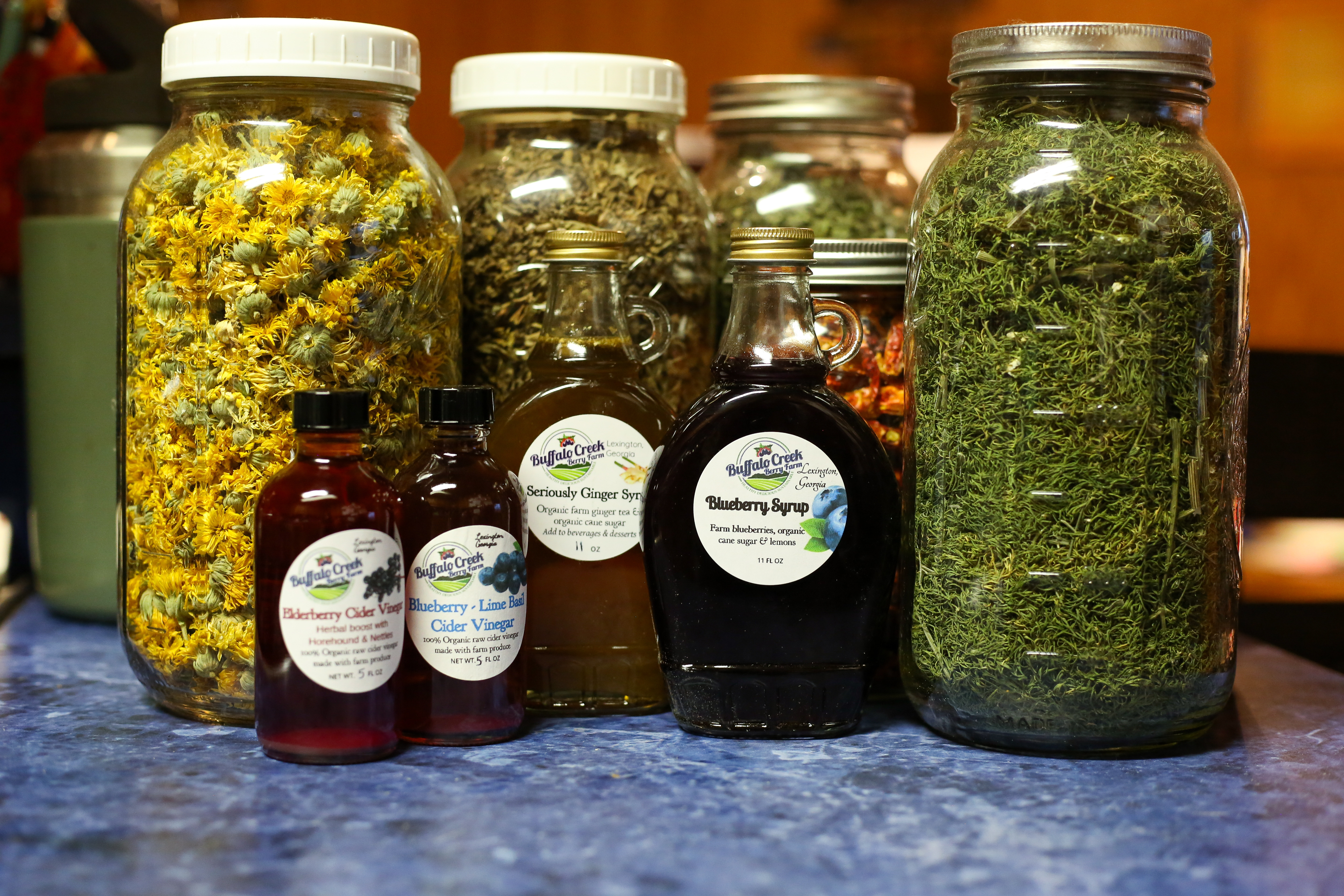
Cameron Phillips passes a steaming cup of tea with lemon, ginger, turmeric, black pepper and honey — all grown in his backyard.
“Black pepper makes the turmeric more bioavailable,” Phillips said, as Laura Pallas, his wife, gingerly sips on a mug of her own.
Bioavailability is a concept that the husband and wife team work to instill into all 23 acres of Buffalo Creek Berry Farms (bcberryfarmga.com). Located in the outskirts of Lexington, their goal is to grow their products as naturally as possible without synthetic pesticides and herbicides.
“We wanted to grow food as medicine,” Phillips said. “And we believe that to produce medicinal quality food, it can't be done through synthetic pesticides and fertilizers.”
The couple began to execute their plan in 2017, after spending a few years living on his biodynamic family farm in Victoria, Australia. Now, Buffalo Creek Berry Farms is certified Demeter Biodynamic.
Biodynamic is a form of organic farming that’s based on sustainable farming methods and regenerative agriculture. According to the Demeter Association, a biodynamic certification “requires the creation and management of a closed system minimally dependent on imported materials, and instead meets its needs from the living dynamics of the farm itself.”
“That's just the way we want to live,” Pallas said. “We don't want to put those chemicals into the soil or be around them.”
In order to keep their farm biodynamic, the couple employs science-based farming methods.
One technique is Korean Natural Farming, a practice that involves culturing indigenous microorganisms from the local environment. Other methods include using organic soil and plant amendments, worm castings and state-of-the-art leaf tissue analysis to better understand potential deficiencies and where to focus plant nutrition.
Phillips and Pallas use these modern-day practices for all the products that come from Buffalo Creek Berry Farms, but their focus is berries, including blueberries, strawberries, blackberries, mulberries and elderberries. The farm also produces a variety of vegetables and medicinals, such as turmeric and ginger.
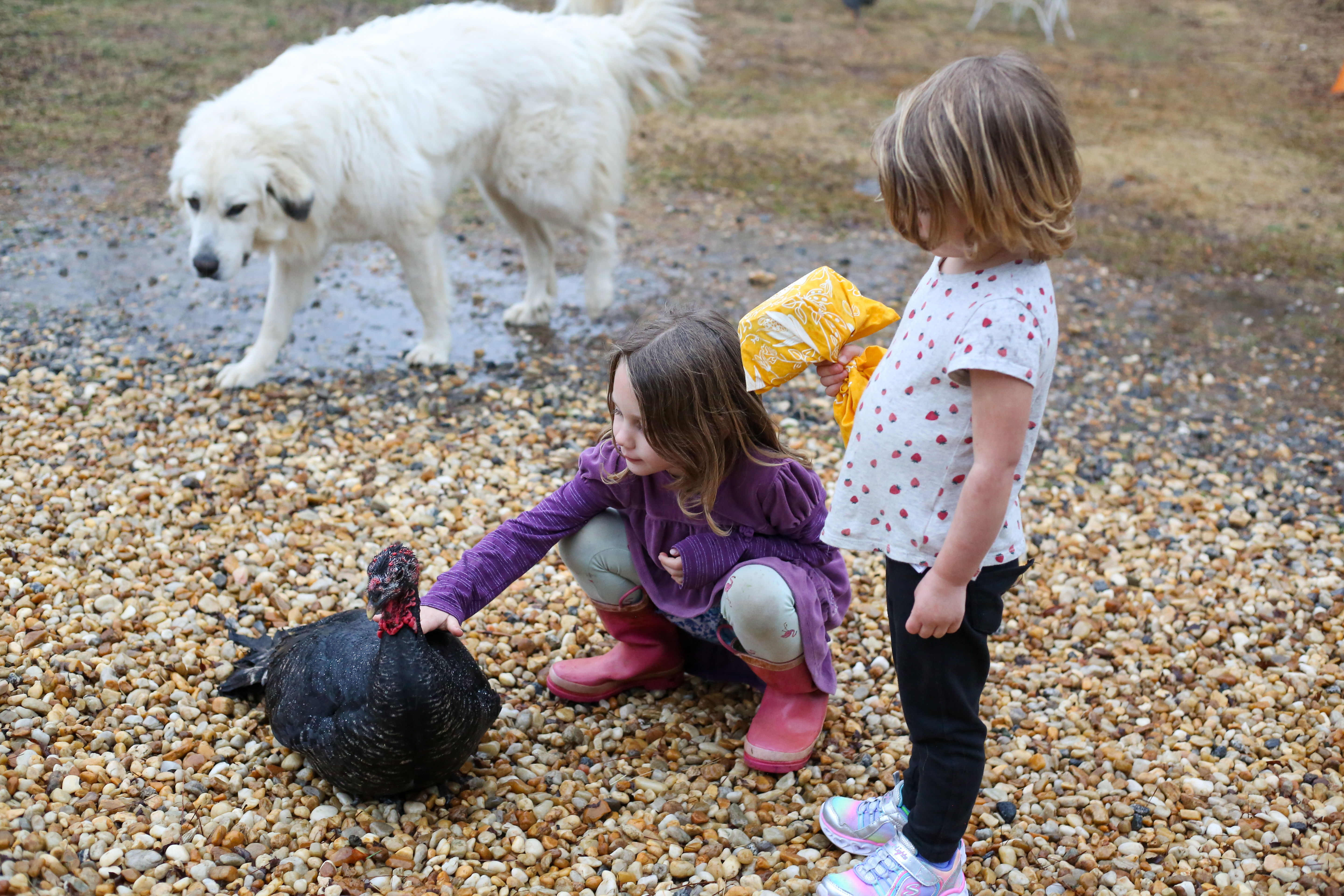
To round out the farm, the couple has a beehive, cows, sheep, chickens, guinea fowl and two turkeys, nicknamed Rose and Fussy by the couple's daughters, Elise and Savannah. Their two Great Pyrennes, Michael and Peppa, serve as livestock guardians.
While the farm initially started as a U-pick berry operation, the couple had to incorporate the livestock and vegetables after a series of setbacks. The farm had a massive dieback in blueberries due to poor draining soil and a series of wet winters. Last year, the farm lost its berry crops due to frost. In order to survive, Pallas turned to producing preserves, vinegars and canned goods, including salsa and minced garlic.
“We made it through by the skin of our teeth,” she said. “I dropped everything, you know, we didn't sell to any restaurants or anything like that. And it was just going to the market. And that actually simplified life.”
Now, the couple's main profit comes from attending the Freedom Farmers Market in Atlanta, where vendors are required to be organic or naturally grown. The couple has found the majority of their success there, as the market provides them access to customers looking for naturally grown food.
“Health and wellness is a passion,” Pallas said. “So we've been able to maintain the fact that we don't use herbicides and pesticides. But that means that we have to travel to Atlanta, where people will pay for it, so that we can continue trying to build ourselves up as a sustainable farm.”
While finding the majority of their success in Atlanta, the couple still hopes to provide farm service to Oglethorpe and surrounding counties.
With strawberry season approaching in April, the couple is considering doing a strawberry U-pick, depending on how many crops they yield. They also hope to provide more farm tours, which allow people to come to the farm and learn about sustainable farming.
“I think we both have a desire to learn what's working for people, what's not working and testimonies,” Pallas said. “And it's encouraging.”