
Harvest season is upon us.
Fields have been cut. Hay has been baled. Apples and squash are ripe for the picking.
And for many farmers and homesteaders, now is the time to slaughter their animals.
A once common practice among rural folks across the country, it’s increasingly rare for Americans to know the experience of raising an animal and then eating it.
Despite this, meat consumption per capita has steadily risen in the U.S., according to the USDA. This growing gulf between food, the people who grow it and the dinner table isn’t optimal, many in the farming community say.
Earlier this month, a collection of chefs, farmers, neighbors and friends gathered at Sandy Cross resident Hannah Ramirez’s farm to do something about it.
“You should have a relationship with your food,” she said. “You shouldn’t just look at a pack of meat from a grocery store and be like, ‘OK, this is what I’m going to consume.’ ”
On Oct. 14, Ramirez hosted what Atlanta chef and Georgia Farm Bureau partner Cam Floyd has dubbed Fall Harvest Day, a farm-to-table initiative he created to bridge communities and teach chefs and small-scale farmers how to kill and process animals.
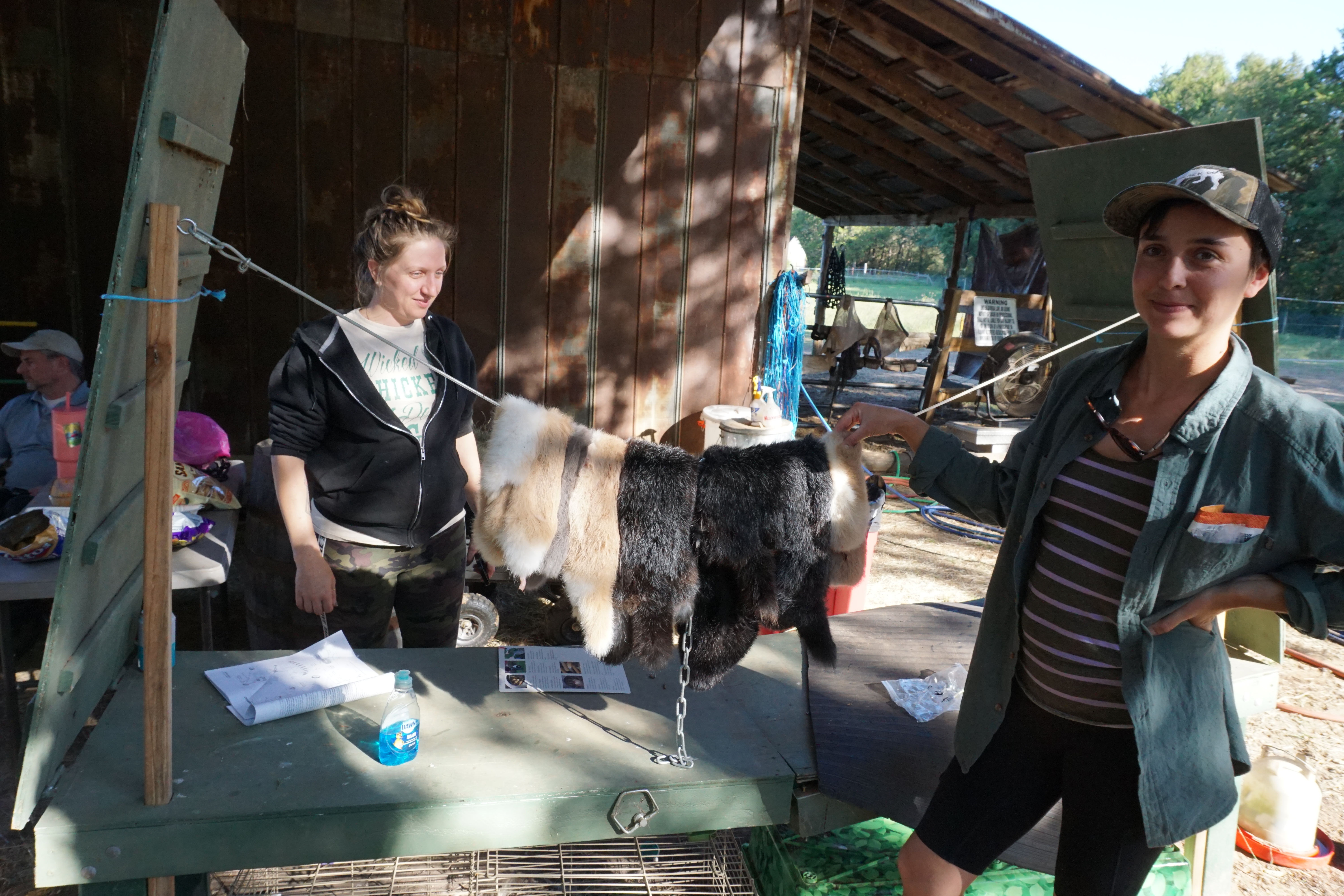
Ramirez, who owns and runs Renaissance Farmstead, has been a participant in Harvest Day the past few years, traveling to other farms to teach people how to raise and process rabbits.
This year was her first time hosting.
“I love to teach,” she said. “I’m really passionate about teaching people about rabbits, and how sustainable they can be and how processing them doesn’t have to be scary or difficult. You just have to be respectful of the animal. And I think that it’s super important to bridge the gap between producer and consumer.”
Floyd started Harvest Day as a way to instill passion and respect for cooking in his employees and connect his city-slicker chefs with the rural farmers who raised his restaurant’s food.
He said he noticed a dramatic difference in the way his chefs would handle meat they had killed and butchered after attending a Harvest Day at one of his partner farms.
“The original structure was: you kill an animal, you take it back to the restaurant, you cook it,” Floyd said. “And what we saw was people who were so much more delicate and more caring about what they were cooking, how they seasoned it. They were terrified to overcook it because they took the animal’s life.”
Harvest Day has evolved into something different.
Part educational event, part community outreach, part employee retention strategy, part networking event and part cultural exchange, it serves as a multi-pronged approach to address the growing disconnect between consumers and their food systems.
Ramirez, along with several other small farmers come to Harvest Day, in part, to share knowledge on how to raise and process their animals. They also share manpower, taking turns breaking down one another’s animals — a job that’s physically and mentally exhausting.
And with Floyd’s restaurant resources, the event also gives the farmers a cost-effective way to harvest meat to feed their families.
For many homesteaders and small farmers, the time and money it takes to bring their animals to processing facilities, which may be hours away, is too large of a burden to shoulder.
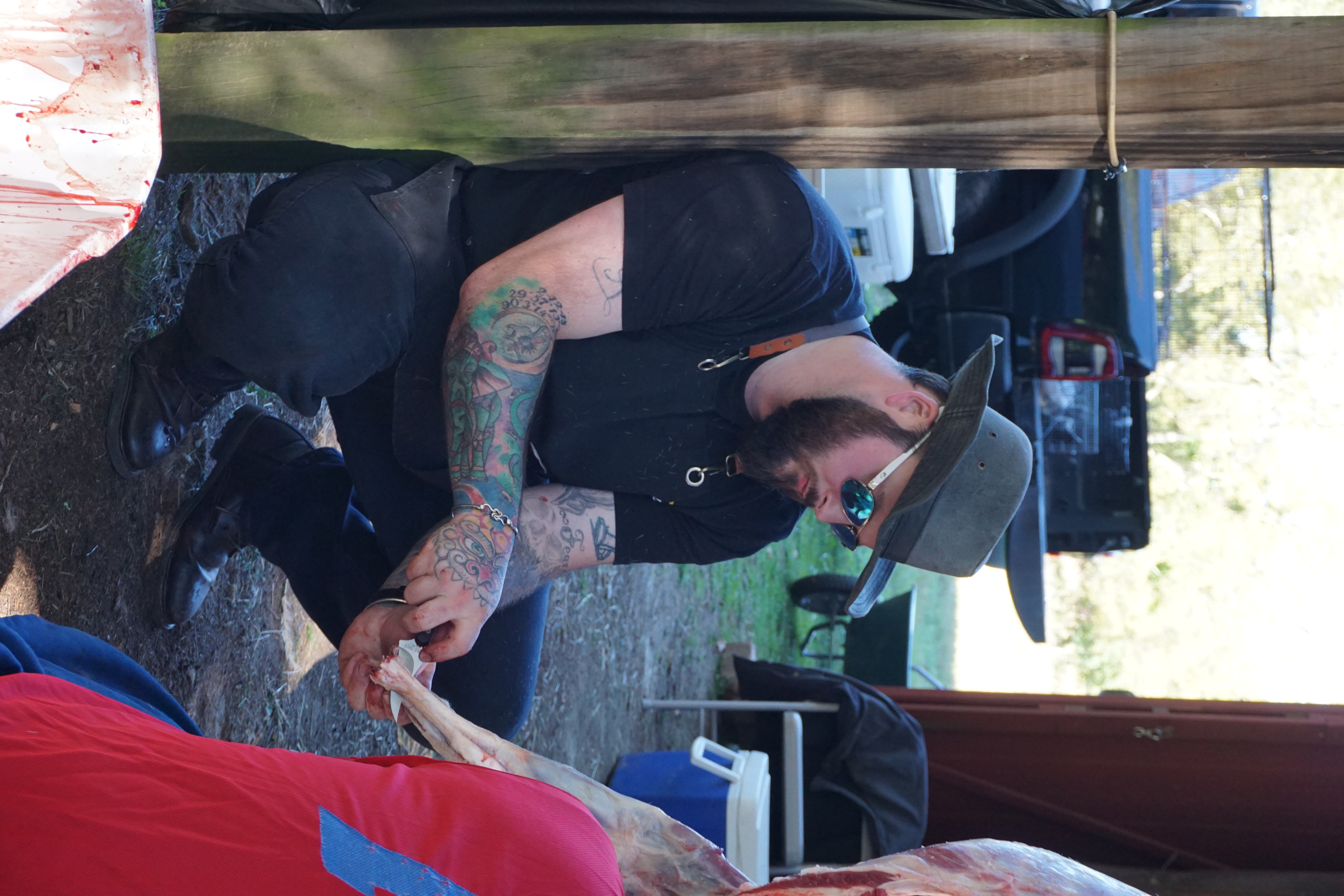
At Harvest Day, they learn how to kill and process their animals and animals other farmers bring. Floyd will then take the animals to his restaurants in Atlanta to hang them in his industrial walk-in fridges — a step known as “dry aging,” which is crucial for developing tenderness and flavor in the meat.
Whitney Carnes helped process several animals. She runs an IT consulting company in addition to Tumble Tree Farm in Arnoldsville, where she grows produce and raises chickens, geese and rabbits.
Carnes said it’s important for people to know what it really takes to put meat on their table.
“People are so separated from what’s realistic in terms of what is actually involved in eating meat,” she said. “It takes an animal dying for you to have dinner. And people don’t think about it that way. They think about going to the grocery store and seeing plastic and styrofoam and sanitary containers.
“Animals have guts and there’s blood, and it can be scary, but having that connection with the food you eat is, I think, a really beautiful thing.”
Douglasville couple Taylor Millar and Adam Strobel started farming animals during COVID-19, and the two share Carnes’ sentiments.
Strobel is one of Floyd’s bartenders at Sweet Auburn Barbecue in Atlanta, and before meeting Millar and coming to Harvest Day, he had little connection to the farming community.
Now, with Millar, they raise several kinds of animals at their homestead. Strobel said killing an animal is incredibly difficult for him, but that it’s important not to disassociate from the difficult feeling that comes with harvesting meat.
“It’s really important that you aren’t OK with it,” Strobel said. “But I understand why I’m doing it and why it needs to be done. It should always be hard. Everyone here values every animal they have. They all have great living conditions.
“I like to tell people that our animals’ worst day is their last day.”
And the advantages of eating meat like the kind that was processed at Harvest Day are threefold. It tastes better, it’s better for the environment, and it’s better for the animals, those in attendance said.
“What you get in the store is nothing like what we’re processing here, and what we’re doing here,” Ramirez said. “You’re getting a much higher quality product. And if you’re eating small and local, you’re helping the environment.”
The end of a Harvest Day usually involves a bonfire, a family meal, and several libations. Processing animals is hard work, Floyd said.
And beyond the practical applications of Harvest Day for his chefs and the farmers they meet, is a feeling of camaraderie that grows out of the shared labor.
“It opens minds,” Floyd said. “You see the people from the city, you see different races, you see different beliefs. They’re all on one farm. They’re all busting their tails, getting covered in mud. They’re all bloody and dirty and willing to do the work. And the reality is, our respect for each other as human beings often comes out of that work ethic.”
Alex Perri is a master’s student in journalism at the University of Georgia. She previously worked at the Transylvania Times in Brevard, North Carolina.