
Owners recommend working with system, not fighting it
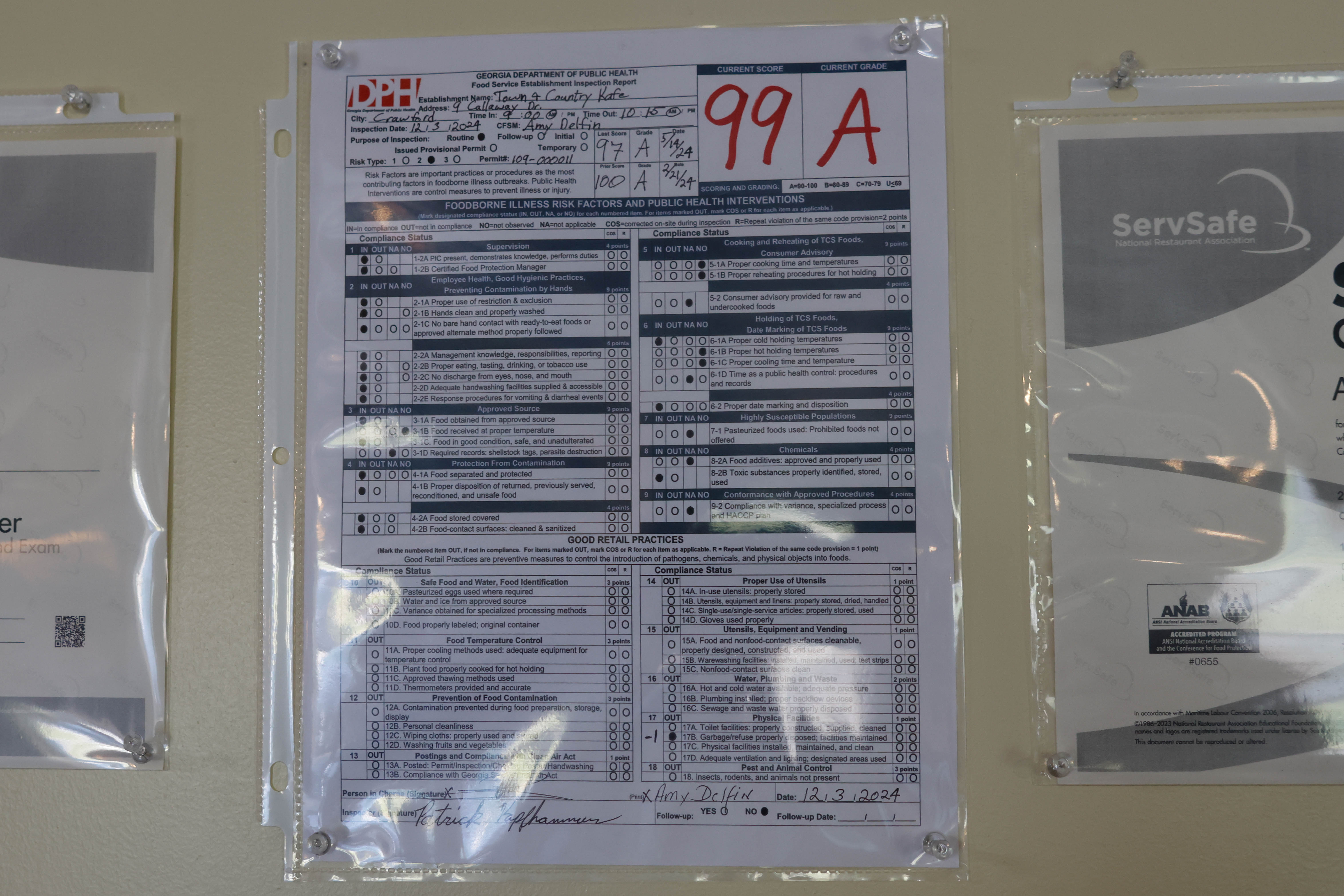


Town and Country Kafe received a 99 out of 100 after its biannual health inspection in December. The one point deducted was due to a missing drain plug on the dumpster, something most wouldn’t consider replacing, co-owner Willie Torres said.
“I reached out to the people who dumped out the dumpster once a week,” Torres said. “(They said) ‘Do you know, sir, you’re the first person in 500 dumpsters that I’ve picked up that asked for that drainage plug?’”
The Georgia Department of Public Health Northeast Health District has approved eight food service permits in Oglethorpe County, including Crawford Pizza (2023) and La Cabana De Don Juan (2022) in the past three years.
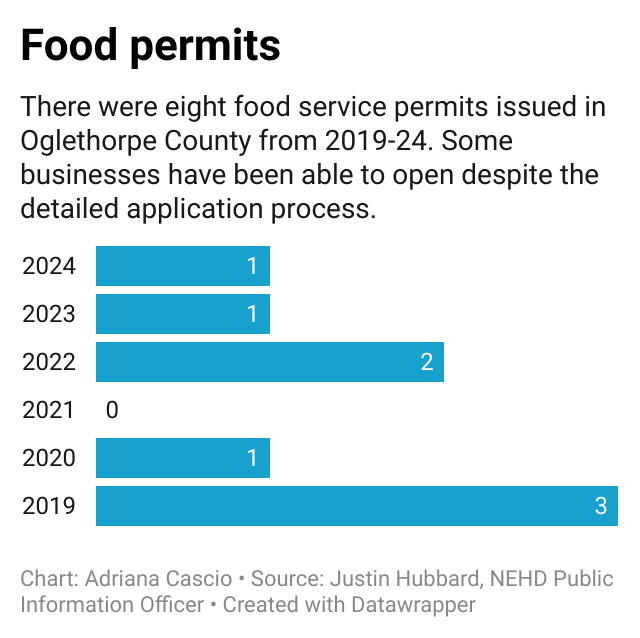
However, those permits can be challenging to obtain.
Torres and co-owner Amy Delfin-Torres spent 18 months working with the health department before their restaurant’s grand opening in February 2024. Following their food service permit application and initial health inspection, they received an itemized list of required building renovations.
Leo Lazo, owner of Pupuseria El Mana 2, held what he thought was an official grand opening for his new Salvadoran restaurant in Oak Tree Plaza on March 19.
The next day, however, the health department called to inform him that it was illegal for him to open. Lazo said he still had fees he needed to pay and had failed to obtain a permit.
Pupuseria El Mana 2 is now open.
Restaurant businesses in Oglethorpe County have sometimes struggled to open due to specific challenges for county owners in meeting the Georgia Department of Public Health Northeast Health District’s requirements. Still, there are specific health department requirements in place for a reason — to ensure consumers have quality and safe foods and medicines.
“(Health inspectors) get a bad rep, but they’re doing their job,” Torres said. “(New business owners) don’t want to do it because it’s going to cost money. So, nothing ever gets accomplished.”
Sewage and water
Oglethorpe County faces unique water and sewage disposal issues because it’s a rural county, which means there is less availability for sewer and public water, according to Justin Hubbard, the public information officer for the Northeast Health District.
Torres said they hired two companies to redo the building’s plumbing: one to fix the interior plumbing and another to redirect the interior plumbing to the city sewage.
“They had to go and bring heavy machinery to bring pipes all the way around the cul-de-sac and to connect us to city sewage,” Torres said.
This operation cost them thousands of dollars, he added. They had to either connect to city sewage or add another septic tank.
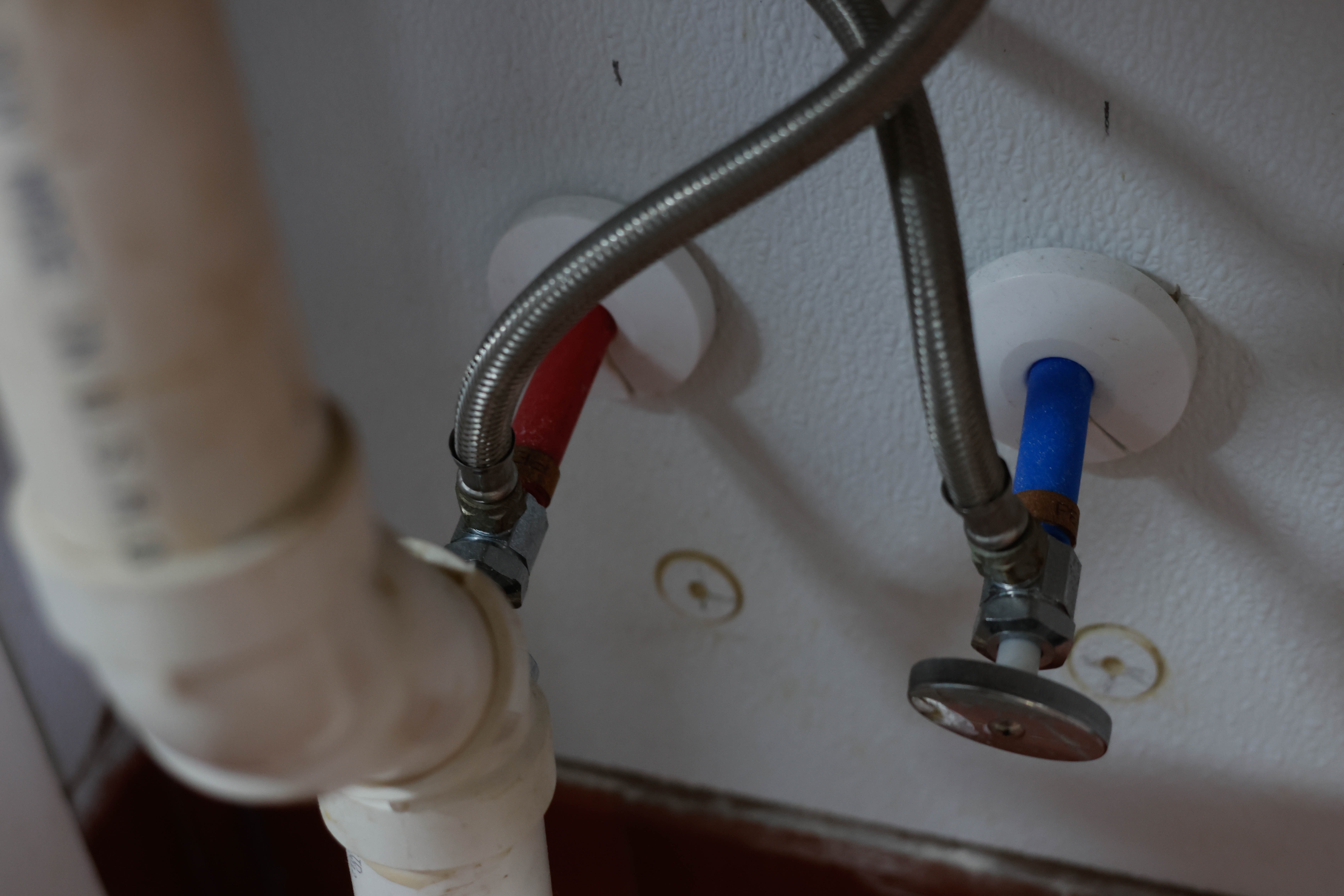
“(We redid the plumbing) because with the health department, it was required,” Delfin-Torres said. “It was not that we wanted to.”
Delfin-Torres said it wasn’t a good idea to only use a septic tank because they require more maintenance. A restaurant produces a lot of waste and water, which is typically too much for a standard septic tank. It wouldn’t be able to clear out quickly enough and would back up in the building’s pipes.
“With the sewer, you just connect — you pay once, and it’s ready. You don’t have to worry about it,” Delfin-Torres said. “Once you go with the sewer, it’s easy for the health department or for us to get approved by the health department.”
Permit application
A food service business looking to open must submit a permit application, Hubbard said. The application can be found on the Georgia Department of Public Health (DPH) website (dph.georgia.gov).
A facility isn’t considered “pass/fail” throughout the permit application review process, Hubbard said. Instead, restaurants are measured at a “satisfactory compliance” level for their food service permits.
This means all businesses “may take as long as is necessary to complete their application,” he said.
Applicants are informed which portions of their application remain incomplete or non-compliant. They are then given “unlimited opportunities” to make corrections and resubmit until they meet all requirements.
“County environmental health specialists are available to consult with individuals considering opening restaurants to ensure they are aware of state regulations and requirements and to answer questions about the application process,” Hubbard said in a statement to The Oglethorpe Echo.
Food safety inspections have a long history, but Upton Sinclair’s “The Jungle,” exposing unsanitary meatpacking, prompted congressional action. This led to the 1906 Pure Food and Drug Act, prohibiting misbranded or adulterated food and drugs and establishing the foundation for the FDA, according to the U.S. Capitol Visitor Center.
The 21-page permit application asks several questions, from the name of the establishment to whether there is an emergency action plan. There are also additional documents that the permit requires:
- Proposed menu (including seasonal, off-site and banquet menus).
- Manufacturer specification sheets for each piece of equipment shown on the plan (include water heater specifications).
- Site plan showing location of business in building; location of building on site including alleys, streets; and location of any outside equipment (dumpsters, well, septic system — if applicable).
- Plan (drawn to scale) of food establishment showing location of equipment, plumbing, electrical services, and mechanical ventilation
- Equipment schedule.
- Water supply and sewage disposal.
- Documentation that the proposed facility complies with all other provisions of laws that apply to the location, construction and maintenance of food service establishments and the safety of persons therein.
Because of Oglethorpe County’s water and sewage disposal issues, Hubbard said it’s especially important for restaurant owners to note if their establishment will be on a well or septic system because additional permits would then be required.
“The Department of Public Health cannot approve construction of a food service establishment if the water supply is not approved or if the septic system is not properly sized or designed,” Hubbard said in a statement. “Water and sewage disposal can be more of an issue in rural counties such as Oglethorpe, where there is less availability for sewer and public water.”
The DPH recommends those seeking approval to consult with their local environmental health office prior to any equipment purchase, land purchase or lease commitment. Otherwise, any missing information could cause delays.
Health inspection
In addition to a permit application, new businesses hoping to open must undergo a series of inspections by the local health department. Patience, cooperation and dedication are key to achieving a successful health inspection score, Torres said.
“Every time (health inspectors) would show up, we (would) listen to them,” Torres said. “We wouldn’t argue with them and we would do exactly what they asked of us. We wouldn’t cut corners.”
Torres and Delfin-Torres spent 18 months working with the health department because they wanted to achieve a perfect score for their grand opening. TCK accomplished that goal and also kept a 100 at their check-in six months later.
The health department’s requirements to reach satisfactory compliance are directly influenced by the restaurant’s menu. Inspectors provide specifications on refrigerators, freezers, fryers, sinks and several other appliances.
After receiving the itemized list of renovations following their initial permit application, Torres proactively sought approval at each stage to reach satisfactory compliance and prevent any major complications.
“Every time we would make a major advancement, we would reach out to (inspectors),” he said. “We would do that back-and-forth so we wouldn’t catch them by surprise and they wouldn’t surprise us.”
For example, Torres waited to cover new plumbing with drywall until inspectors viewed and approved the renovation. He said if he didn’t do this step, he would’ve needed to tear the walls down and start over.
While they were eventually successful, TCK’s work with plumbing and kitchen redesigns highlighted how much of an investment this was for the owners.
“We used all of our savings to go into this,” Torres said. “I believe that if you’re going to do something, you got to give it 100%. We went all in because we’re in it for the long game.”
The health department performs routine inspections after a business’ grand opening. Typically, the inspectors visit once every six months, Torres said. Even minor changes can make a major difference in score.
Delfin-Torres said being first-time restaurant owners was difficult and sometimes discouraging. They moved to Oglethorpe County not knowing who to contact in order to successfully open their restaurant.
But, TCK successfully opened its restaurant through collaboration with the health department, navigating financial hurdles and Oglethorpe County’s sewage and water issues. While meeting requirements can be costly for new businesses, cooperation increases their chances of success, Torres said.
“If they tell you to jump, start jumping,” he said. “Don’t even worry. Just start jumping, and they’ll tell you how high.”