
The historic Arnold Cotton Gin in rural Georgia is on the market for $169,900 after nearly 50 years of family ownership by brothers Frank and Randy Patman.
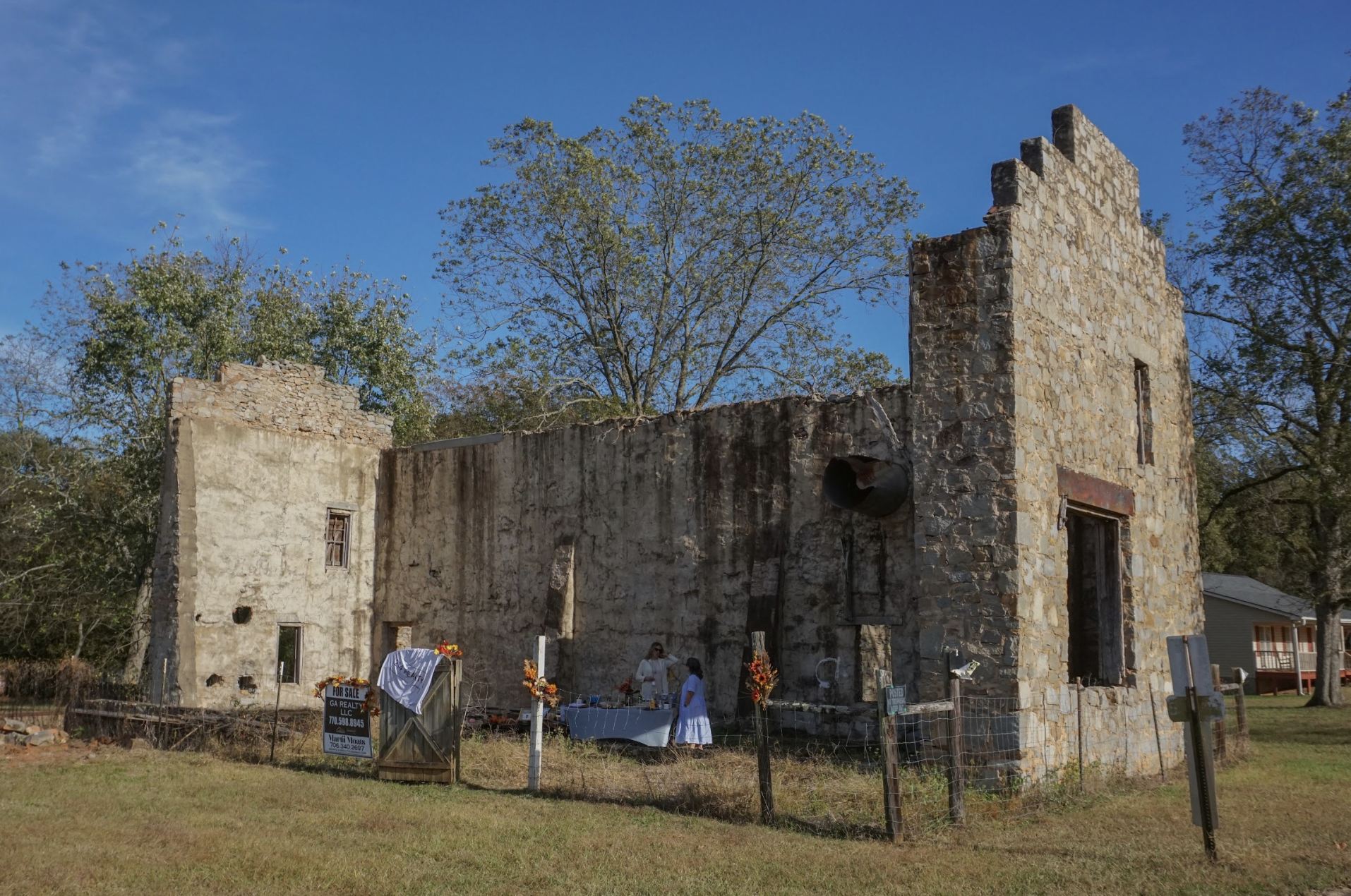

It’s golden hour on a warm fall evening, and realtor Martii Moats is standing inside what used to be the Arnold Cotton Gin.
Once owned by Nathaniel Dowdy Arnold, the gin was a hub for commerce and trade along the railroad in Arnoldsville (Arnold’s namesake).
The structure has since deteriorated and only a few walls remain. However, they’re sturdy enough to build on, said Randy Patman, stone mason and part-owner of the gin.
Moats, Randy and his brother Frank have big dreams for the historic property.
The ruins, which sit on 1.03 acres, are on the market for $169,900.
Moats said it was tough to find comparable sales in the area because the building is so unique, but that other cotton gins across the South have been renovated and turned into breweries.
“It’s important to keep all history alive,” Frank said. “Not only Arnoldsville history or local history, it’s history in general that we’re losing.”
Typically, the ruins are fenced off from the public, but on Oct. 24, Moats held her first open house inside the walls, where few get to go nowadays.
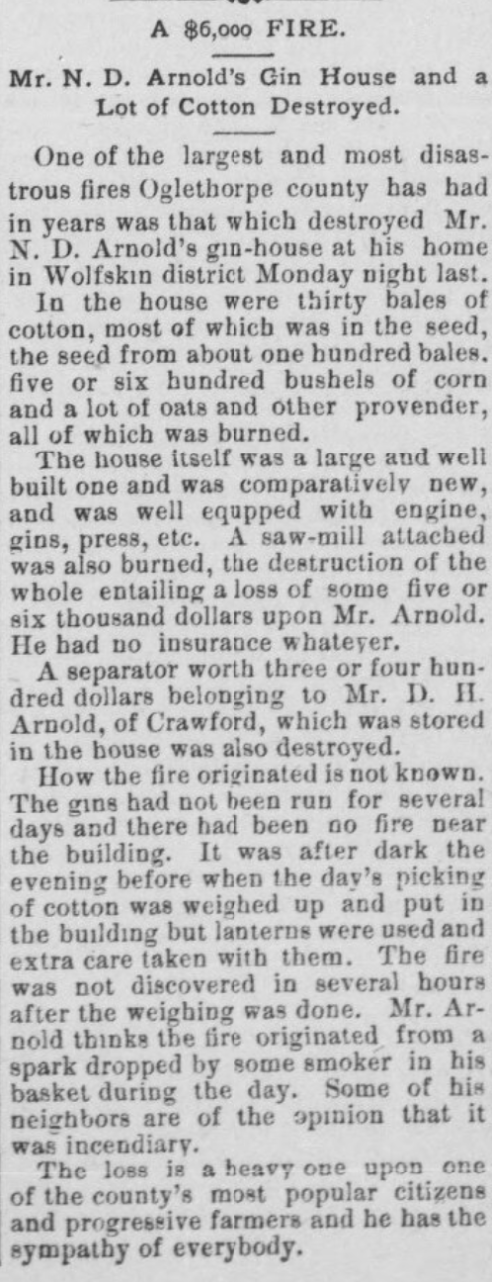
Among a spread of sparkling cider and hors d’oeuvres were a smattering of photographs and newspaper clippings — the only pieces of history known today about the building’s origins.
Estimates of the property’s age vary, but most agree it was built in the late 1800s. Legend has it that a tornado destroyed the original building in the early 1900s. It was then that the stone walls were erected.
Frank and Randy have several old pictures and newspaper clippings, pieces of Arnoldsville history, hanging by the register in Crossroads Odds and Ends, their antique store and flea market. The two have family roots in the area.
Moats said the property is connected to city water and sewer. She and the Patmans hope the property will attract a buyer who wants to keep its historic architecture intact and make it into something cool.
The Patmans have been reluctant to sell, but the brothers agree it’s time to “pass the football and let someone else run it,” Randy said.
“We could probably sell it for $30,000, but somebody might just tear it down,” Moats said. “The price is negotiable, but they set it at a premium to show that there is a value.”
In the 1950s, the Patmans’ grandfather, Jess Aaron, operated the boiler room inside the gin.
He would wake up early in the morning to light the steam engine for the day. Aaron also used the little boiler room as a workshop where he wove oak splint baskets for storing cotton and sharpened tools like hoes and axes for other farmers in the community. Aaron and his wife, Winnie (the Patmans' grandma), raised 15 kids and their first grandson together.
“I guessed he looked for any way to stay out of the house,” Frank said.
Frank and Randy’s dad purchased the property where the gin and a handful of buildings sat in 1976.
The gin had already been abandoned, but that didn’t stop the Patmans from putting it to good use.
The brothers grew up playing in and around the cotton gin and its warehouse, where the family stored bales of hay, old trucks and farm equipment.
Randy remembers playing with friends, throwing spools at each other on the property when he was a child.
As adults, Frank and Randy begged their dad to invest in the gin and turn it into a business, like a restaurant or apartments, but their dad never took them up on the idea. Now, the Patmans hope a new buyer can revive their dream to make the Arnold Cotton Gin into a gathering place for the community.
Moats envisions a microbrewery, event venue or rest stop along what could become the Firefly Trail. Back in the day, the gin was the center of action in the once-busier business district.
With the possibility of the Firefly Trail coming through the county, Moats is hopeful that the through traffic will spark new interest in Arnoldsville and the cotton gin.
Still, letting go is hard for the Patmans. For Frank, selling the gin is like selling a little piece of his heart.
“We would love to be 25 years old again and be able to go out there and (renovate) it ourselves, but you know, I face the mirror every morning and the floor every morning when I get out of bed, and neither one of them is what they used to be,” he said.
Alex Perri is a master’s student in journalism at the University of Georgia. She previously worked at the Transylvania Times in Brevard, North Carolina.