
Fortuna finds peace, efficiency in his geodesic house
WATCH: Tour John Fortuna's Geodesic Dome House in Lexington
Camouflaged down a dirt path off Crawfordville Road are three dome-shaped structures around an acre-wide pond.
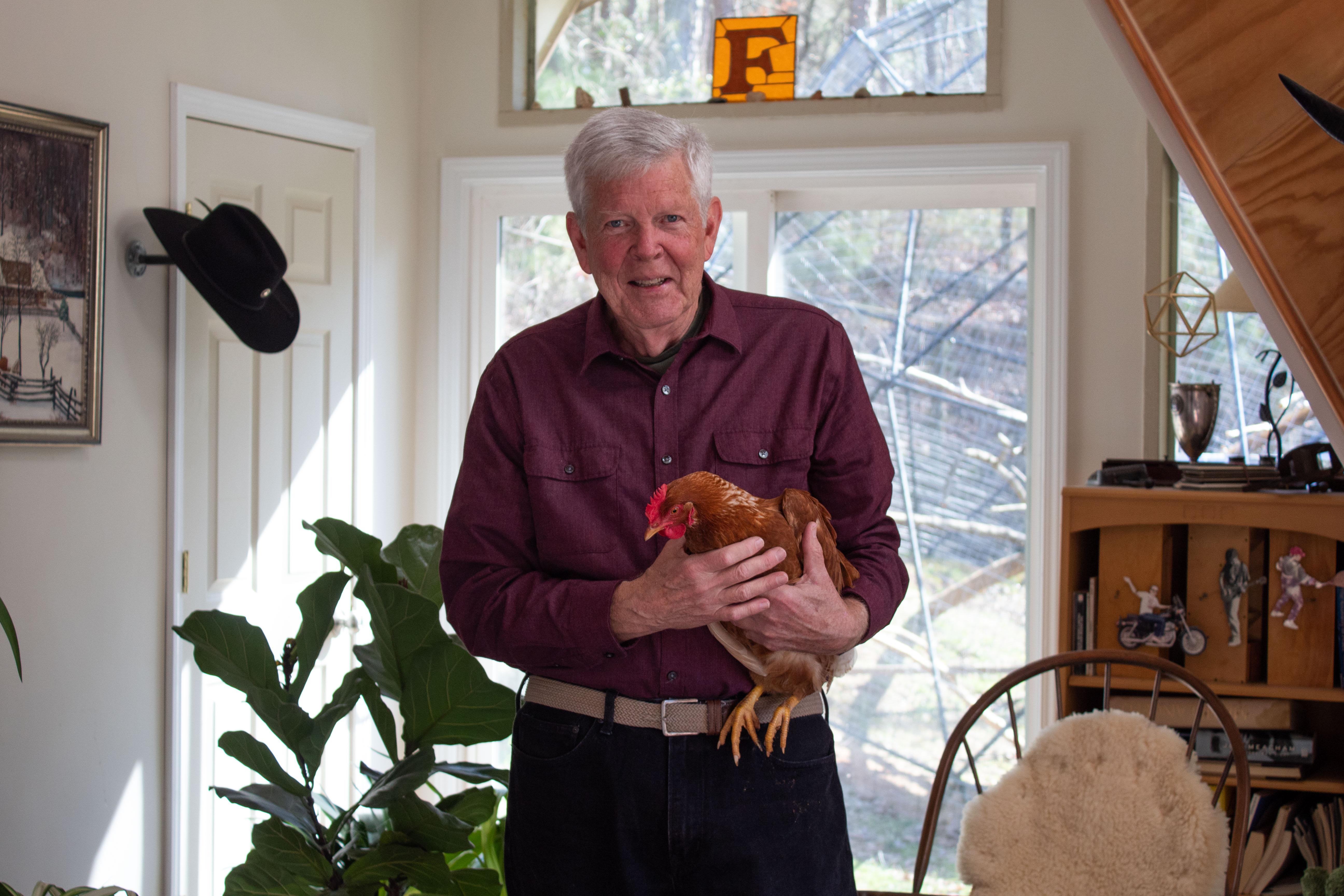
One holds three chickens named Pancake, Sausage and Bacon. Another shelters two peacocks.
Reflecting light from the sun and water, the largest and most eye-catching dome sits in the middle of the three and functions as John Fortuna’s house.
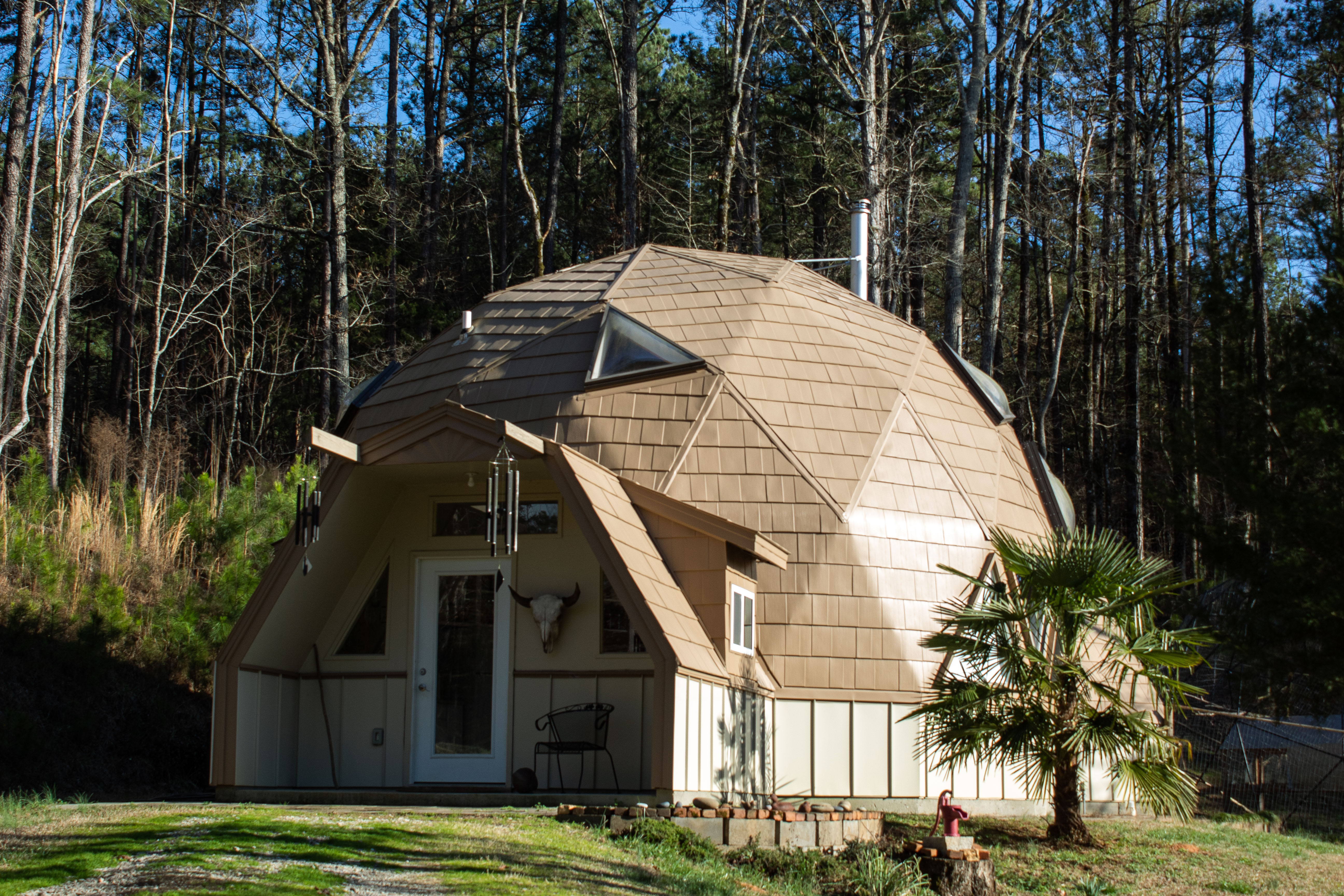
Fortuna has enjoyed living in the geodesic home in Lexington for the last five years, and he hopes to inspire others to embrace the same lifestyle.
“I really do hope people will realize large homes aren’t good for the environment and aren’t needed to achieve happiness,” Fortuna said.
Dome homes are considered one of the most efficient building systems known. Because they take up 30% less surface area than conventional homes, they require less energy for cooling and heating. The dome’s shape even keeps the home safe from severe storms, as it allows wind to pass over the structure with little resistance.
In Fortuna’s eyes, sustainability is a perk to the pure joy he finds living in the 1,200 square feet dome.
“I believe in another life I was a worker in a cathedral — when I get inside a sphere, it’s just magical to me,” he said.
The shape of things
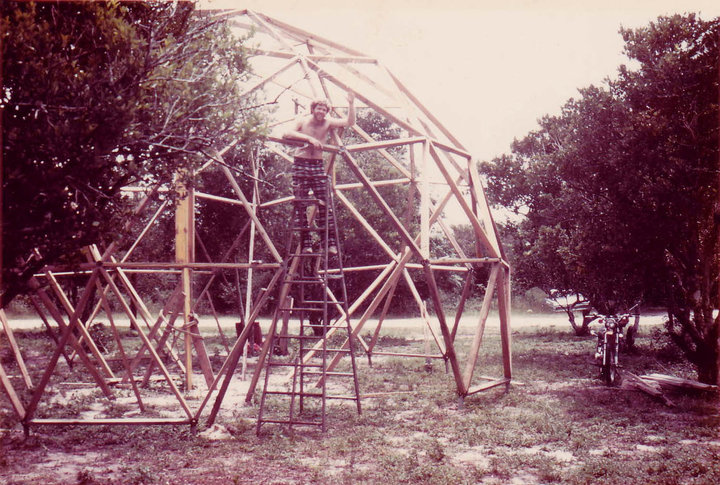
Fortuna built his first geodesic home while living in Orlando, Florida, in the 1970s. While he used a kit shipped from Timberline Geodesics in California for his current Lexington home, back in Florida, he did all the designing, building, wiring and plumbing himself.
He finished the project in 1976 and lived there for a couple of years, before he and his former wife sold it and moved to Atlanta.
“I’ve regretted selling it — I told myself I would build another when I retired,” he recalled.
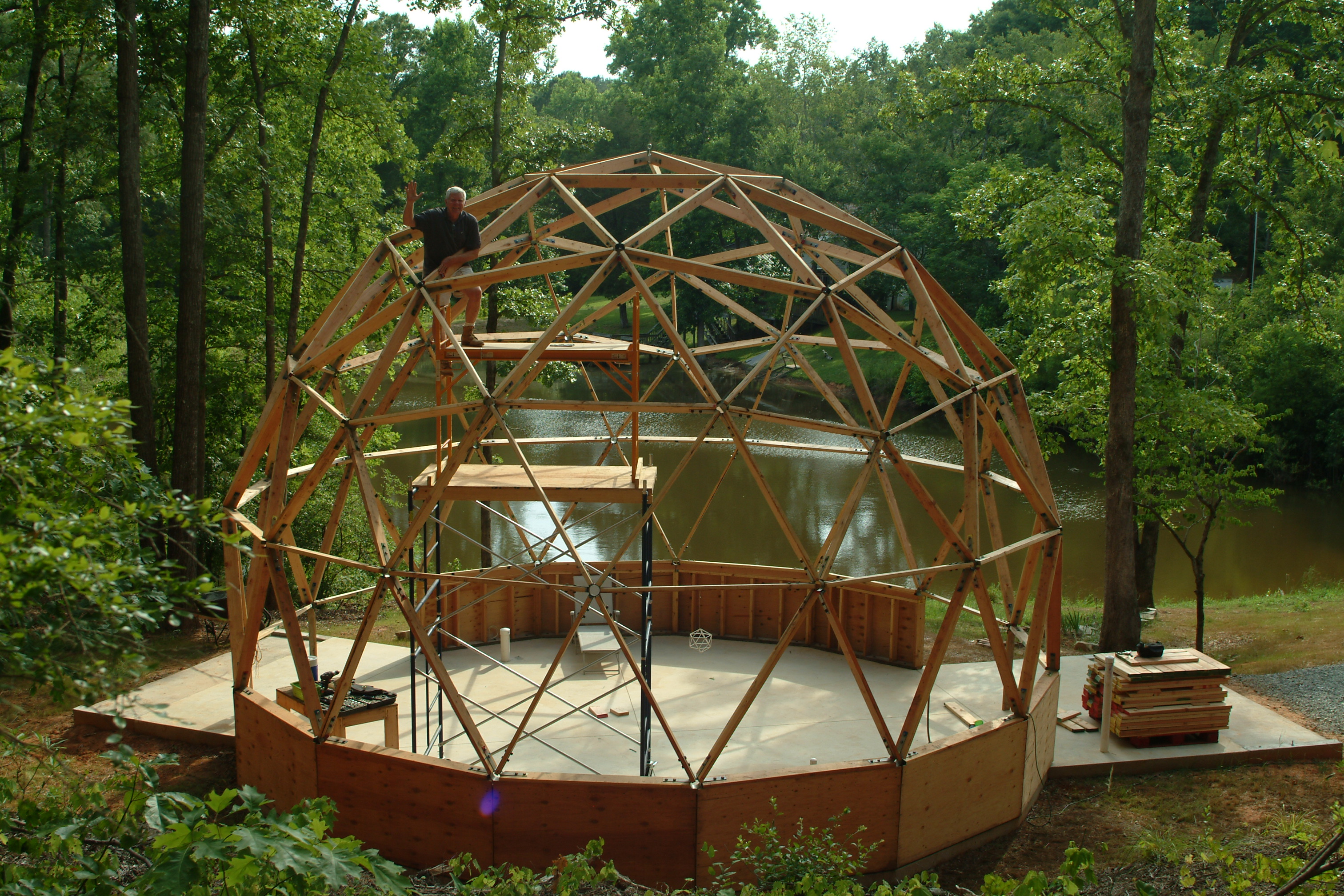
Fortuna started building the Lexington dome on his 14-acre property with help from his brother, Dan Fortuna, who made the trek from Pensacola several weeks throughout the year to aid in the construction.
“I remember I said, ‘We’re too old for this,’ but he’s got so much energy,” Dan Fortuna said. “He said, ‘I’m going to build it,’ and we started clearing the woods.”
John and Dan visited Timberline Geodesics in Berkeley, California, to see the kits it offers. Dan said it was fun to learn more about the different kinds of dome homes.
Geodesic homes were invented by Buckminster Fuller, an American architect who John called a “contemporary of Einstein.” According to Timberline Geodesics, Fuller’s quest was to build designs that would do more with fewer resources.
He wanted to embrace easy construction and the strength of natural structures.
“We used to live in a five-bedroom house,” John said, “Air conditioning and heating a five-bedroom house for two people drove me crazy when our kids left.”
The only drawback to these designs, John said, is the roofing. With susceptibility to leaking, dome roofs with aluminum shingles tend to be stronger than traditional fiberglass.
John also stresses the attention to detail and precision when building the base, since dome homes require circular slabs of concrete rather than a square or rectangle, and the measurements have to line up.
Creative haven
When he’s not tending the house, Fortuna fills his time with multiple artistic endeavors. Sketching portraits of friends and family, forming rings from old silver coins and staining glass are just a few of Fortuna’s pastimes.
The dome allows plenty of natural light, John said, so it’s a space where his creativity, and houseplants, can thrive. Dan likes to visit often and fish in the pond, enjoying his brother’s tranquil setup.
“That’s what’s neat about that place,” Dan said, “I like the peacefulness and the quiet.”
A hidden gem among its rural surroundings, John’s dome home is one of two in the county.
John said he’s had several people admire the house, but he hasn’t seen anyone in the area build one similar to it. In 2015, a group of students enrolled in a UGA course on tiny house construction visited John’s unfinished dome and said they were astounded by the construction.
“I would love it if someone asked me for help,” he said, “there are a lot of things you learn from actually building one of these. After you’ve done it once, you know the tricks.”
When asked what inspired this kind of living, he quoted Henry David Thoreau, who John said lived in a small house by a pond and wrote about a life of simplicity.
“There is some of the same fitness in a man’s building his own house that there is in a bird’s building its own nest. Shall we forever resign the pleasure of construction to the carpenter?”