
Lexington received a $25,000 grant for repairs to the Beth Salem building, a former church on Church Street. Work has already started to repair electrical and structural issues, as well as paint the exterior of the building
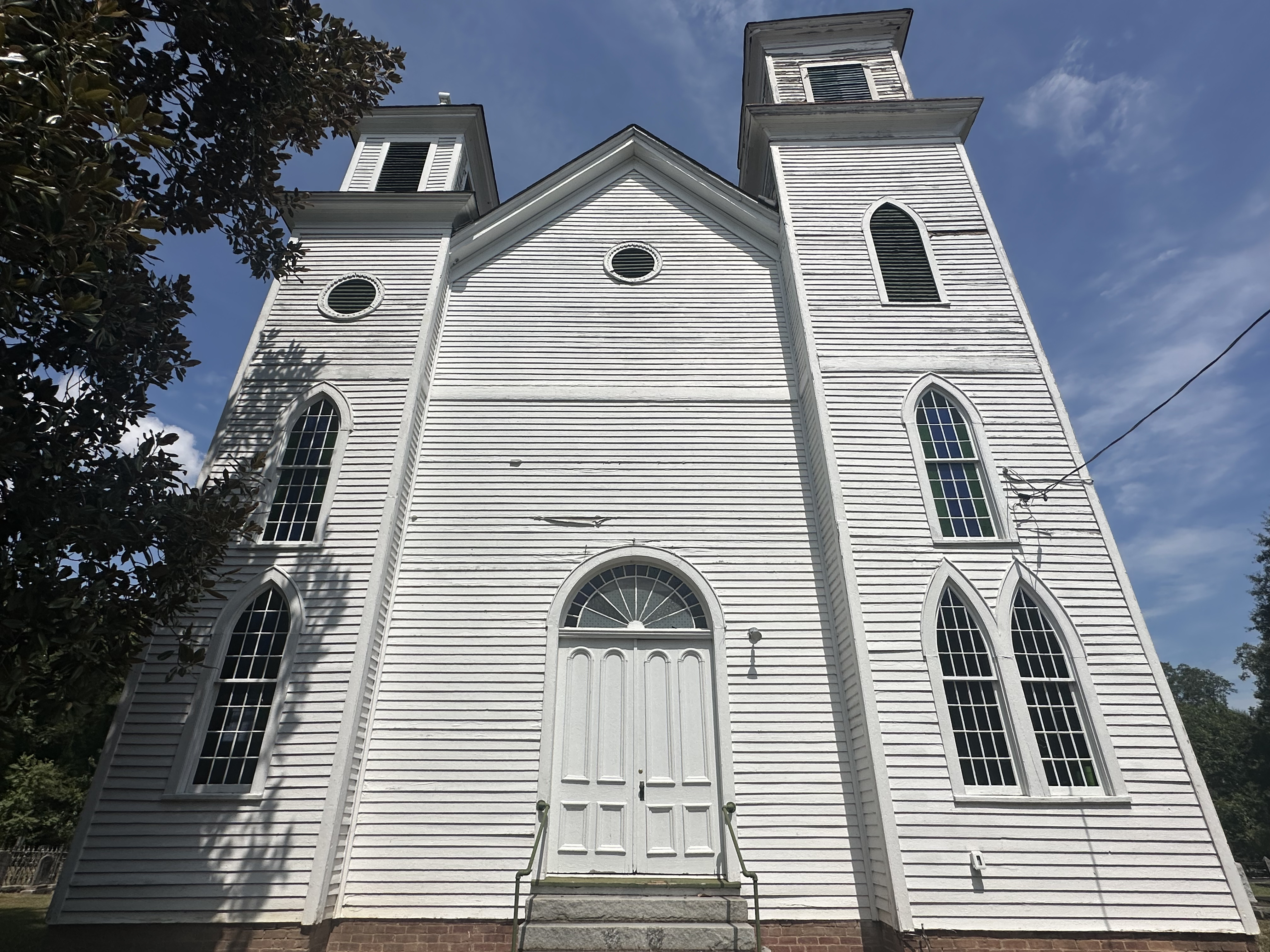
New grants are giving Lexington a chance to preserve the history of Beth Salem building, ensuring it can serve as a communal space for weddings, concerts and Christmas celebrations.
In August, Lexington received a $25,000 federal grant for further restoration, focusing on electrical, structural and exterior paint issues in the building. It was one of six Georgia communities to receive the grant from the Historic Preservation Fund (HPF) of the U.S. Department of the Interior’s National Park Service.
Lexington — which owns the former church — has spent years striving for eligibility for preservation funding, while setting aside local funds.
Now, it’s reaping the benefits of those efforts.
In 2020, the city received $4,000 to repair 14 of the historic windows. Two years later, another $4,000 was received to restore the front and back windows of the historic building.
And in late June, the city announced it had received $5,000 to repair more windows.
Lexington Mayor Evelyn Reece said work is already underway for the grant received in July, with Robert Pierson Jr. of Pierson Painting — a company that primarily does painting and window repairs for historic buildings — undertaking the job.
“We’re very excited,” Reece said. “There are lots of grants in the world … but the preservation grants are kind of few and far between, and this was the biggest award that, to my knowledge, existed for a project like this. That’s why it’s been so many years in the making.”
The church history
Beth Salem has long been an area of communal significance before the dissolution of the congregation 11 years ago. The congregation, which predates the formation of Lexington itself, was established in 1785 by Reverend John Newton. It relocated to Lexington around 1821, where it was renamed Lexington Presbyterian Church.
The church moved to the gothic-style building standing at the intersection of Church and Meson Streets in Lexington in 1893, after the original building was reportedly demolished.
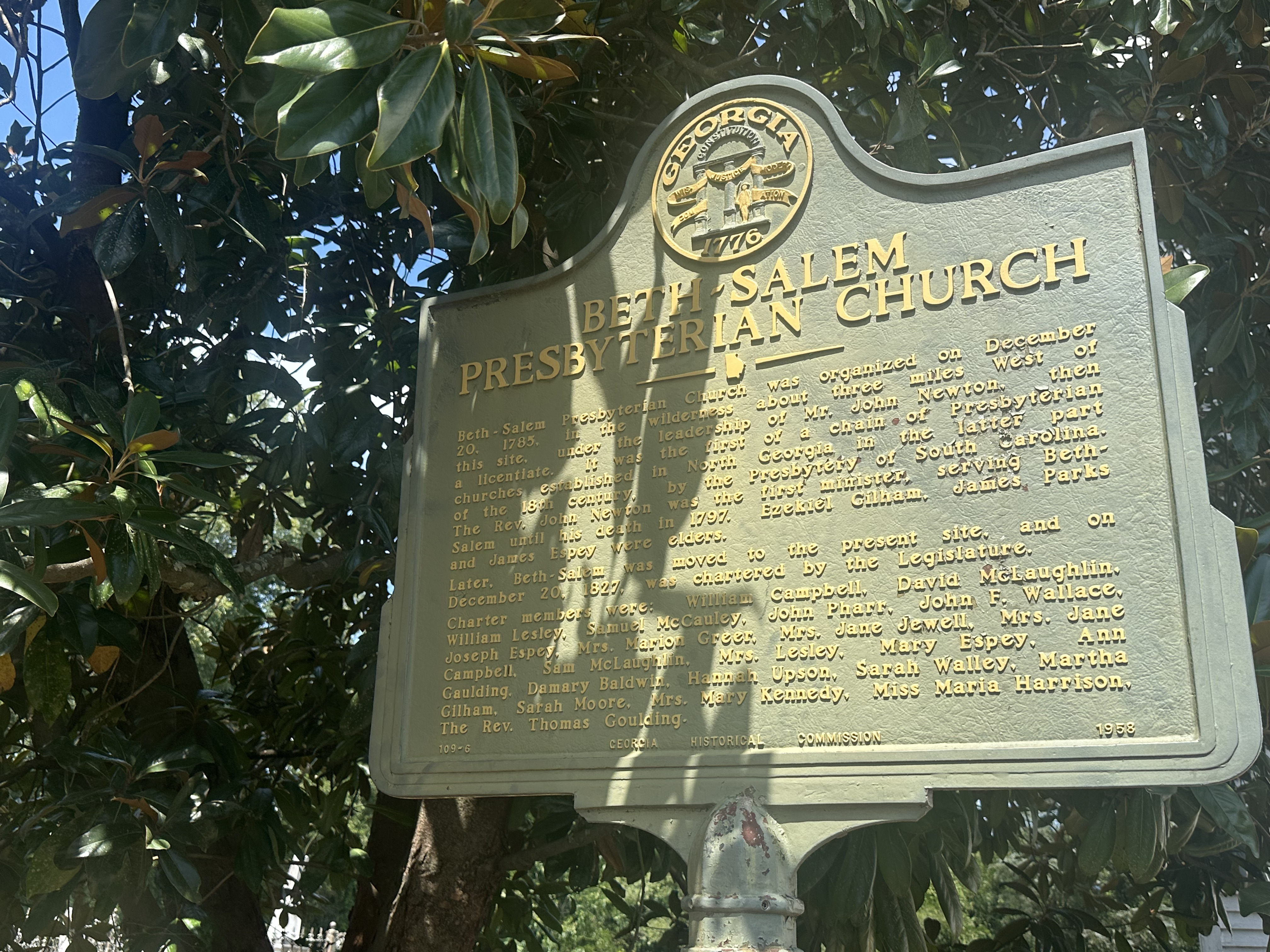
Historically, the church was multifunctional, serving as a school on occasion, with different denominations sharing the building. Various baptisms, marriages and deaths were recorded in the county, making it an important genealogical resource for residents.
“(The genealogical resources are) incredible information,” said Ashley Simpson, a member of the Digital Atlas project documenting Oglethorpe County’s history. “Somebody who’s looking for their ancestors in Oglethorpe County will probably want to know of the wealth of information that there is about out there.”
The eventual closure of the church was triggered by dwindling membership and financial hardships. Lexington eventually took control of the building in 2017 and began fundraising and obtaining grants for building repairs.
City landmark
Beth Salem remains a lasting reminder of Lexington’s early history.
“The city of Lexington’s foundation is tied to the existence and the founding of this church,” Reece said. “Not just locally, but regionally, because this is the first Presbyterian church founded in this Northeast Georgia (and) South Carolina region.”
For a small city like Lexington, preserving historic buildings can be difficult to fund independently, so donations and grants are essential.
“Living in a historic town or historic district is just different from living in another type of city or town,” said Linda Parish, chair of the Historic Preservation Commission. “That area has a soul.”
Without those landmarks, communities risk losing characteristics that make their towns unique.
“We don’t want to lose our history,” Parish said. “We lose a sense of place when we lose our history.”