
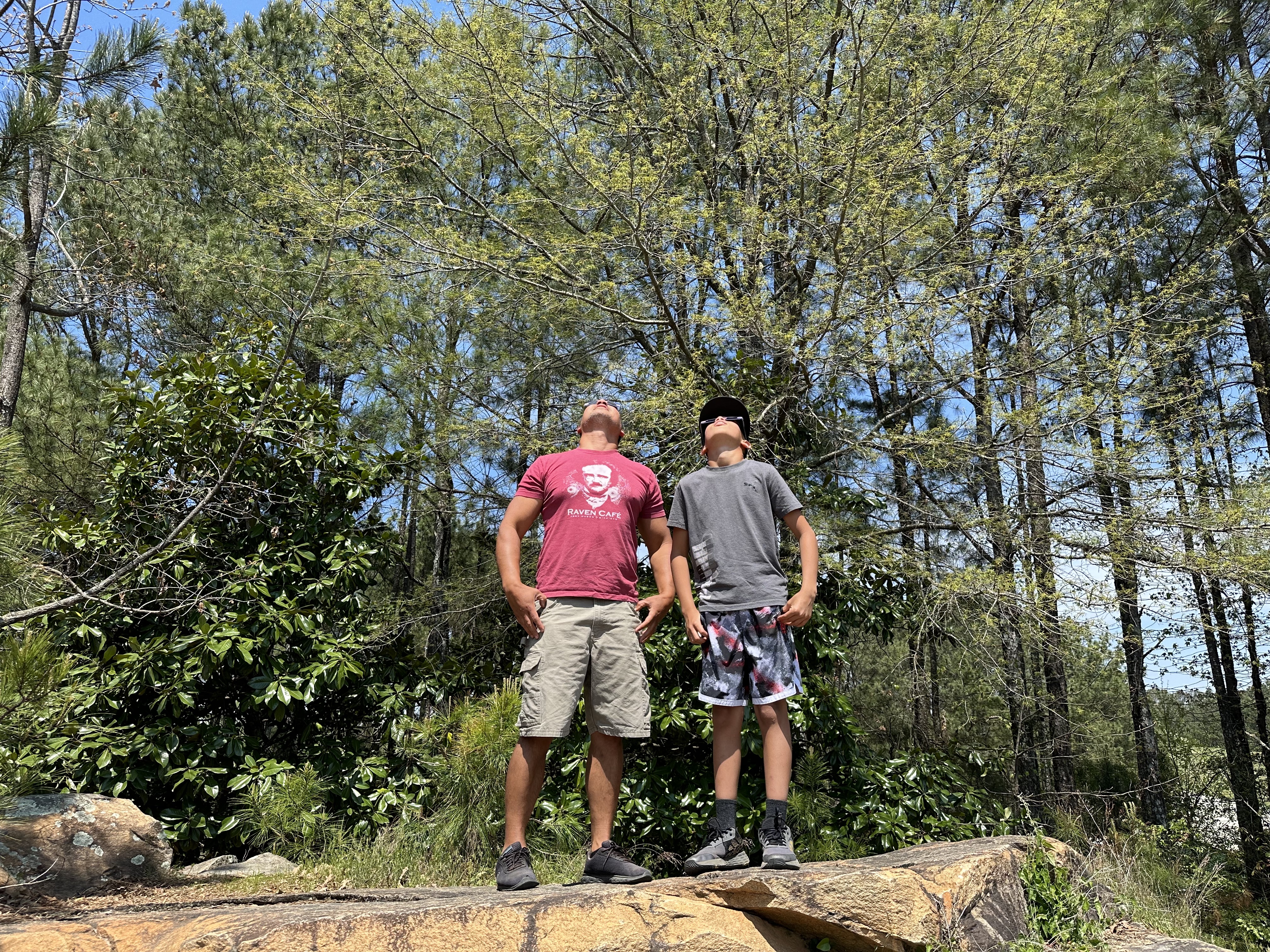
The sky was clear and vast outside the Oglethorpe County Library on Monday afternoon, which provided an unimpeded view of the sun — at least for a moment.
A rare astrological event soon cast a large shadow as a partial solar eclipse moved through the sky, peaking at approximately 3:06 p.m.
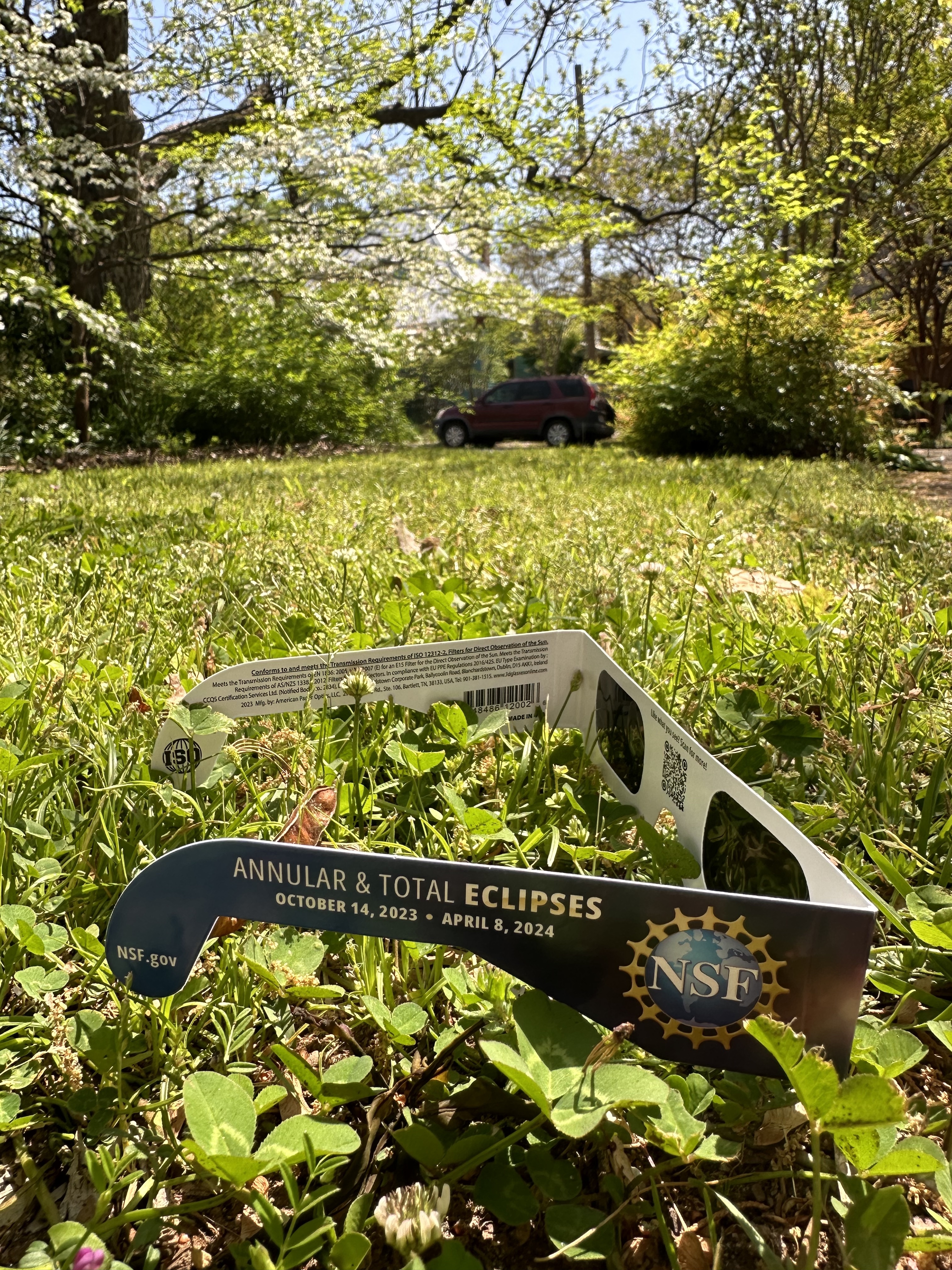
Viewers began to gather in the library parking lot at 1:30 p.m. Laura Lindsey, the library’s circulation desk specialist, handed out eclipse glasses to visitors as they entered the library’s community space.
Lindsey also set up chairs, crafts and snacks inside. Using a projector, she displayed a live feed of NASA coverage for patrons to participate in a viewing party. Between serving scoops of popcorn and cups of Hawaiian Punch, Lindsey darted outside to get a glimpse of the sun as the moon began to travel in front of it.
She said her decision to host the event was fueled by her keen interest in space, which started at a young age.
“I knew I was interested in space ever since I was little,” Lindsey said. “In sixth grade, my homeroom teacher had a poster of the solar system, and I would stare at it all day.”
At 2 p.m., the eclipse was underway. About 20 children and adults stood outside, eclipse glasses in hand.
“Is this what it feels like to be blind?” said a young boy as he put on the light-blocking eclipse glasses for the first time.
For some, this was their first solar eclipse.
Others, like Lindsey, had been anticipating this day since the annular solar eclipse on Oct. 14, 2023.
According to the National Weather Service, an annular solar eclipse is different from a total solar eclipse in that it occurs when the moon is closer to its maximum distance from Earth in its orbit. If an eclipse happens during this situation, the moon appears visually smaller than the sun, creating a shadow too small to reach the earth.
Monday's eclipse also differed from 2017’s total eclipse.
According to NASA data, the path of totality, or the places in which the moon completely blocks the sun, was much wider during this year’s eclipse. The unique occurrence of totality reveals the sun’s corona, or its outer atmosphere.
Although Georgia was not on the path of totality, viewers experienced 83% coverage of the sun by the moon.
By 3 p.m., the sky had become darker. Outside, the eclipse’s shadow was captured through the leaves, casting crescent-shaped spots on the pavement.
The sun had become a tiny sliver.
Data from scientists predict that the next total solar eclipse will not occur until Aug. 22, 2044.
“I can’t believe that just happened,” said a young girl as she took off her glasses.