
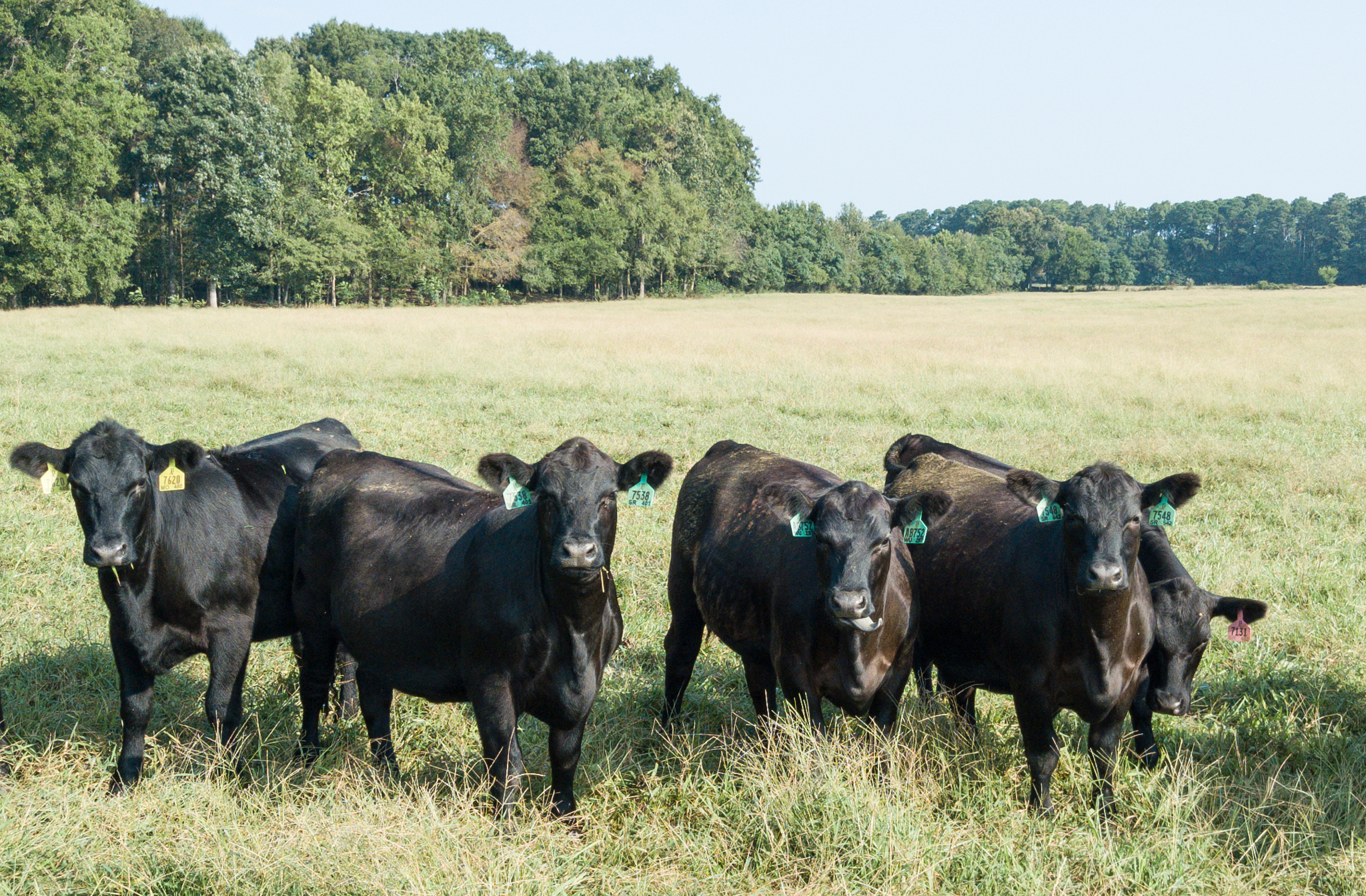
Ralph Bridges, who founded Bridges Angus Farm in Lexington, made headlines in 1985 when his bull, Warlock, became the first documented one to gain 5 pounds in a single day.
Today, under the ownership of Phillip Bridges, Ralph’s grandson, the farm’s bulls routinely set the individual gain test record, sometimes gaining between 6-7 pounds per day.
This is due, in part, to the use of modern methods in livestock farming.
When Phillip Bridges and his brother Alan purchased their grandfather’s Angus cow herd in 2005, they recognized the need to maximize their beef’s quality and increase demand for their cattle.
Their solution? DNA.
“We do a lot of things through genetics,” Phillip Bridges said. “Every animal in the place has a genomic profile on them, and they have data such as birth weights, weaning weights, and a lot of other information.”
As the industry grows in Oglethorpe County, local cattle farmers like the Bridges, are adopting new technology to enhance beef production.
Livestock production is vital to Oglethorpe County’s economy.
In 2021, the county ranked fourth in total livestock and aquaculture value across the state. Livestock, including cattle, contributed more than $48 million to the local economy, according to the University of Georgia’s Center for Agribusiness and Economic Development.
“Beef production as a whole has made significant quality advances through genetic selection over the past couple of decades,” said Shanna Reynolds, UGA Extension coordinator for Oglethorpe County. “We have several high quality Angus cattle producers in Oglethorpe County that significantly influence other small registered herds and commercial herds with the genetics they offer through animal sales.”
Bridges sends his bulls’ DNA samples to the American Angus Association, which tests them and generates genetic profiles for each animal. Once he has the profiles, he then provides an adequate environment to capitalize on his herd’s genetic potential.
“You’ve got to provide an environment in which the cattle can survive easily, and have plenty of grass to eat, and aren’t bothered by disease, or flies, or the need for fresh water and shade,” Bridges said. “If you stress an animal, it won’t reach its genetic potential.”
Bridges’ methods have paid off. Bridges Angus Farm registered the 10th most cattle in Georgia with the American Angus Association during the 2023 fiscal year, which ended Sept. 30.
“Our association members lead the industry in adopting new technology and breeding the most problem-free cattle for their customers,” said Mark McCully, CEO of the American Angus Association.
After three generations of Oglethorpe County farmers, Bridges Angus Farm recognizes the importance of adaptability and innovation in meeting the evolving demands of Oglethorpe County.
“We’ve been doing it here for nearly 80 years,” Bridges said. “We have to constantly evolve just to find new markets, just to survive.”