
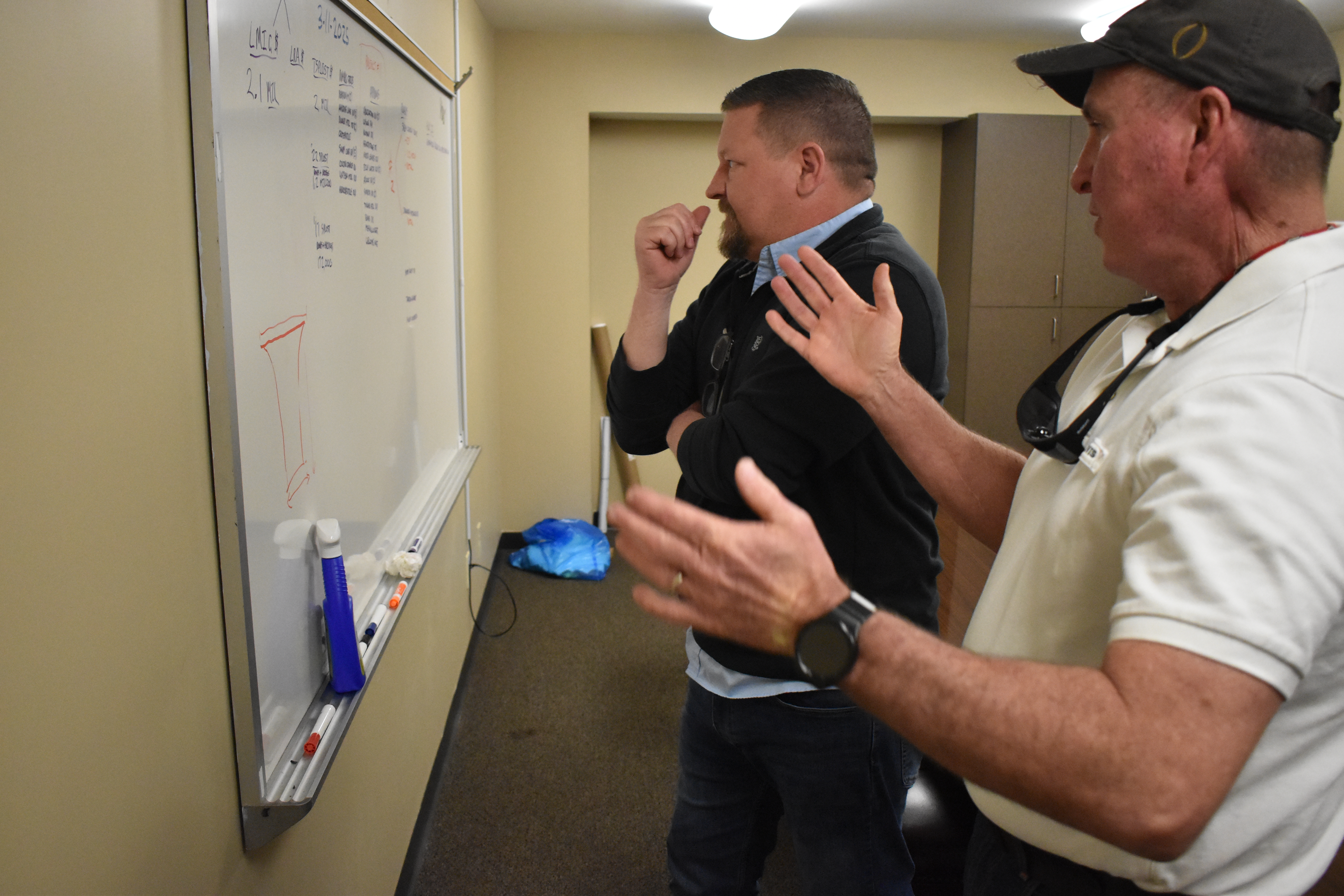
Oglethorpe County officials say they are taking steps to increase transparency and build trust with residents.
“All governments need that ability for citizens to engage with them,” said Jason Lewis, county administrator. “I think that as we engage more, then it will become less combative — it’ll become less of us-versus-them.”
Local government is working to accommodate increased public engagement in a growing county — Oglethorpe County’s population increased 9.1% between 2020 and 2024 to an estimated 16,172 people — according to the U.S. Census Bureau.
One strategy will be moving Board of Commissioners meetings to the Oglethorpe County Courthouse, beginning Monday.
“Luckily, we’re having to move to a bigger venue because there's more public engagement,” Lewis said.
At the same time, Board of Commissioners Chairman Jay Paul said he worries the mistrust in the federal government is transferring to local government. Only 17% of Americans trust the federal government to do what is right, according to 2025 Pew Research Center data.
“Because where we work for the government does not make us evil people,” Paul said. “It leaves me shaking my head some days. We want to be transparent, but at the same time, everything can’t be voted on by every citizen of Oglethorpe County.”
Quarterly BOC work sessions
Lewis said the Board of Commissioners will add quarterly work sessions for commissioners to discuss updates and plans. The board hasn’t set the date of the first session.
“The commissioners can discuss what’s happening, what’s going to happen and we can make these plans pretty public,” Lewis said.
The work sessions will be modeled off the Board of Education’s work sessions, which are held 10 times a year.
Lewis also said he wants to modernize and update county systems — such as departments that don’t accept card payments — to help build trust through greater accessibility.
“We’re trying to pull up to where we should have been 10 years ago,” he said.
The board is also meeting with technology companies to make meeting recordings and minutes available on demand.
“We always try to be very responsible, use what we have until we have to make a change,” District 5 Commissioner Tracy Norman said. “We don’t like spending taxpayer money unless it’s something we have to have.”
Norman said he hopes making information accessible online and on demand will ease the burden of open records requests on county staff.
Agencies must respond to requests within three business days, per the Georgia Open Records Act. The county has three employees who can fulfill requests, Lewis said.
“The open records process can be weaponized pretty quickly to where it bogs everything down,” he said.
New special revenue funds
The county government also established two special revenue funds in 2025: one for the speed camera revenue and one for opioid settlement money.
Lewis said creating these funds will make it easier for residents to understand county spending as they read government records.
“We’re trying to structure things at the county to where if somebody does an open records request, you don’t have to have 10 years of county experience to understand what you’re reading,” Lewis said.
Initially, both funds went through the county’s general fund, under Department 90, which receives grants before they are allocated to specific departments.
The speed camera fines brought in about $1 million the first year, but has leveled off to about $600,000 annually, Lewis said.
He said understanding this revenue behavior then allows county government to transition funds from one source to another. For instance, patrol cars will be paid for through the speed camera special revenue fund rather than by SPLOST, freeing up SPLOST money for other projects.
Combating misinformation
Lewis also wants to see more information readily available — and able to reach residents.
“In the absence of an answer, sometimes folks listen to the loudest person talking, and that is one of my largest frustrations,” Lewis said.
Paul said he hopes increased transparency will help mitigate misinformation on social media.
“It’s more challenging because the very people that you see putting misinformation out there are the very ones you’ll see eating at G Brand BBQ,” Paul said. “You don’t have distance like you may have at a state or federal program.”
Lewis said he hopes county officials can continue to build trust with residents.
“Everybody that works for the county — especially in the central county government — we live there,” Lewis said. “We’ve lived there forever. You knew us before we worked there. It’s not like we got the job and we’re like, ‘How can I exploit people today?’”