
Oglethorpe County residents still deal with the bothersome effects of soil amendments as officials and community members continue to push for more sludge regulation on both the state and local levels.
Here’s a look at the past, present and future state of soil amendments.
The past: Local, state officials share concerns
Oglethorpe County Board of Commissioners Chairman Jay Paul met with representatives from nearby counties and the Georgia Department of Agriculture on Feb. 18 in Wilkes County to discuss state and local regulation of sludge dumping.
“The fact that we had 17 people gathered up from both state and local levels I would say is an accomplishment,” Paul said.
Paul’s only regret is that they were unable to get someone from the Environmental Protection Agency to attend the meeting.
County representatives aired their concerns about the lack of sludge dumping regulation at the roundtable discussion. Paul said the three GDA representatives at the meeting were responsive and shared their plans for more state regulation.
In fact, the Department of Agriculture has hired two people who will focus on investigating complaints about sludge dumping, which is something that was supposed to come together last year but was delayed. The department is also looking into writing rules within the organization to further regulate the issue.
“They’ve been open and accessible,” Paul said. “An easy group to work with. They have their concerns as well.”
Even with the department’s new implementations, Paul said he is still pushing for more power on the local level to carry out the new regulations.
“We wouldn’t have to be at the mercy of the state if we were able to have the power to enforce some of this stuff at the local level,” Paul said.
There are no official plans for when the next sludge-related meeting will be, but Paul said he hopes the increased regulations and awareness will prompt more people to get involved at the next meeting.
“The more exposure this gets, the more participation is going to happen as well,” he said.
The present: Community testimony, current legislation
Ruth Wilson of Lexington has been battling the putrid smell of sludge near her property since 2017, but she remembers 2020 as an especially horrible year.
“We couldn’t go outside,” she said. “One time I got home from school, and it was so bad that I opened the (car) door, got out, and vomited right there on my driveway because it smelled so terrible.”
Wilson and nearby residents have filed a lawsuit against the neighboring farmer responsible for the foul odors. Despite the multiple complaints and fines he’s faced, the problem persists, Wilson said.
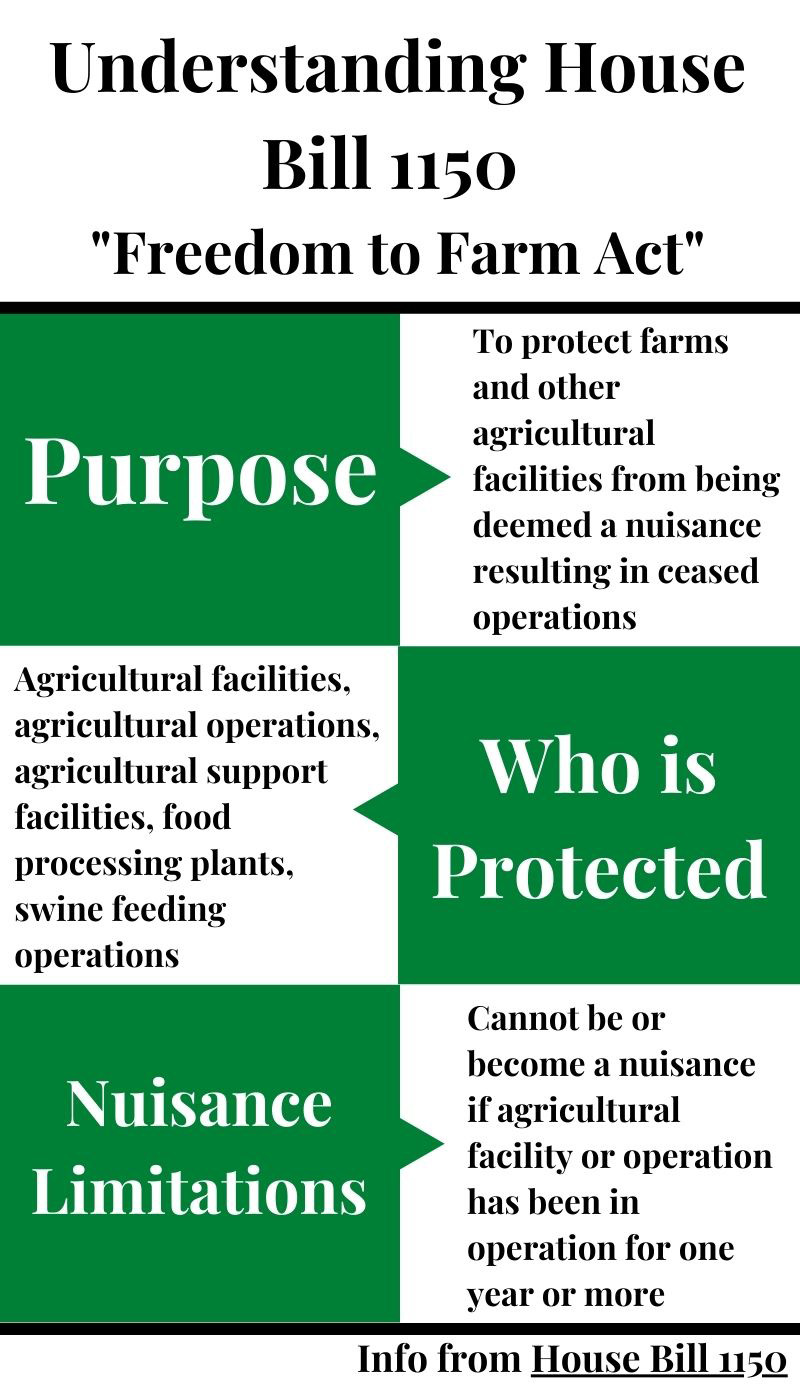
With House Bill 1150 through the Georgia House and now in the Senate, lawsuits such as these may be even more difficult to file.
The Freedom to Farm Act sets limitations on what and when agricultural facilities can be deemed a nuisance. The bill defines what agricultural facilities and operations are protected, including concentrated animal feeding operations, which is an area that contains hundreds of livestock in one place and can produce an excess amount of waste.
The bill states that any agricultural facility or operation that has been in operation for more than one year cannot be deemed a nuisance unless their operation is found to be negligent, improper or illegal.
For Wilson, one year is not enough time.
“It could easily go a year before the smell and the flies and the groundwater start being affected,” she said.
However, in Paul’s opinion, House Bill 1150 doesn’t have a strong connection to the issue going on in Oglethorpe County.
“1150 is a facility coming in, and what we have is not a facility. This is being generated somewhere else and being brought in as a soil amendment,” Paul said.
Wilson said that for now, she would like to see a ban on soil amendments until further testing and research is done.
“I don’t doubt that if soil amendments were done right, they would at least be bearable,” she said. “When they’re not done right, it’s awful.”
The future: New bill to curb sludge
Georgia Rep. Rob Leverett (R-Elberton) attended the Feb. 18 meeting and has authored a piece of legislation that he hopes will limit the use of soil amendments.
“I’m glad we have soil amendments, but when they are applied in a way that is excessive in its rate of application and volume, I think then they start to cause problems,” he said.
If his bill — House Bill 1548 — is passed, the use of a soil amendment for anything other than the growth of crops will be in violation of the bill. However, the bill authorizes and directs the Georgia Department of Agriculture to craft an exception to this requirement based on the low frequency of application and benign composition of some soil amendments.
Leverett introduced House Bill 1548 this year, but the official hearing for the bill will not be until next year. Before next year’s hearing, Leverett said he is open to edits and revisions to the drafted bill based on community concerns.
“I’m sure it’s going to take some work before it ever gets to a point where it’s perfected, but I’m hoping that I’ve started that process with some good ideas conceptually that we can work on,” he said.