
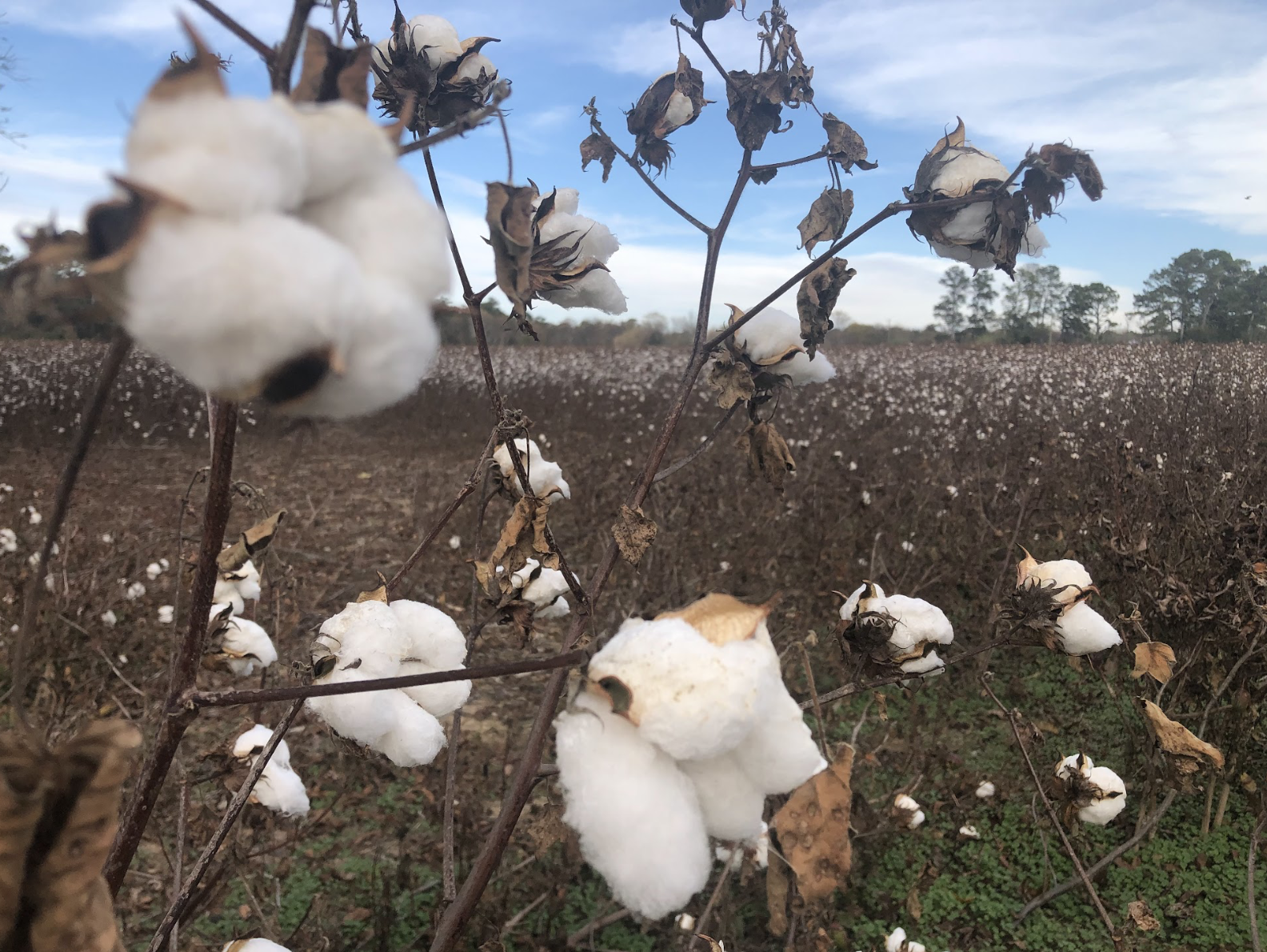

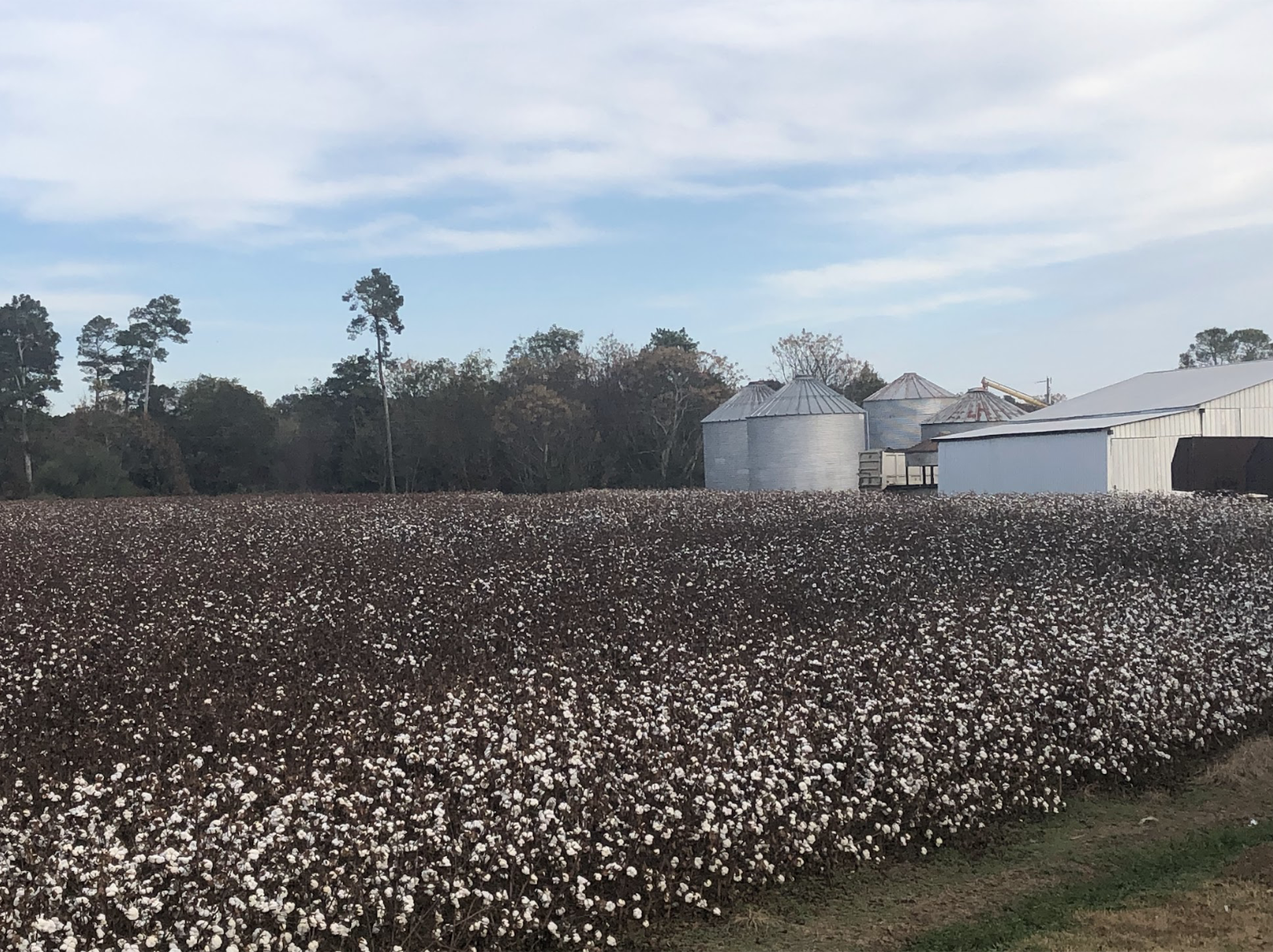
Phil Sanders sits at his dining table in Stephens and looks out on a once-familiar scene that’s now increasingly rare — cotton fields.
Cotton farming was once common in Oglethorpe County, but its presence has slowly waned.
“I guess you could say I’m the biggest cotton farm in Oglethorpe County because I’m the only cotton farm,” Sanders said.
Sanders said cotton was once a crucial component of the county’s economy.
“In Oglethorpe County, at one time, cotton and pulpwood were the only things you could make money at,” Sanders said. “I’ve just always thought, ‘well heck, if they could grow cotton back then, there was no reason I couldn’t grow it now.’”
Oglethorpe County is one of Georgia’s largest agricultural producers, ranking 10th in total farm gate value (out of 159 counties), according to the University of Georgia’s 2021 Farm Gate Value Report, with an estimated value of over $270 million.
The county’s agricultural landscape, dominated by livestock, poultry and hay, noticeably lacks the iconic Georgia staple.
“We are a big cotton-producing state,” said Shanna Reynolds, UGA Cooperative Extension County Coordinator for Oglethorpe County. “But the county, we just don’t have that many row croppers here.”
Row cropping is a method of farming where crops are planted in rows, allowing for efficient planting, irrigation and harvesting. While the area cultivates row crops, such as soybeans and corn, cotton farms are a rarity.
Sanders said he believes the substantial financial investment needed to run cotton farms deters prospective farmers.
“Now they’ve gone to the cotton pickers that can make round bales,” Sanders said. “I’ve heard those pickers cost just about $1 million, so you’ve got to grow a good many acres to afford one of those things.”
The patent for the round baler is held by John Deere, whose machines hold their value. On auction platforms like Fastline.com, used models are listed for as much as $850,000.
The high resale value highlights the substantial financial equipment involved in cotton farming.
The decline of cotton is not just specific to Oglethorpe County; it’s a national trend.
The University of Georgia’s 2023 Ag Forecast shows that while 13.6 million acres of cotton were planted across the U.S., only 7.7 million of those acres were harvested. This 43% abandonment rate, alongside high input costs and competing crops, is expected to contribute to a national decline in cotton’s value.
Despite the declining cotton trend, Sanders maintains an optimistic perspective on the cultivation of the crop, which is at the end of its harvest season.
“It’s rewarding because, you see, I can sit right here at my table, and I can look out and see what we’ve been able to accomplish this summer,” Sanders said.