
“I hope it stays in the family. That’s my goal in taking it over.”
— Jennifer Johns, co-owner of Hickory Hill Farms

Nine-year-old Madelyn Johns spends her Friday afternoons running through rows of crops spread across her family's 12 acres of plantings at Hickory Hill Farms in Carlton.
Across the field, her youngest brother Matthew, 6, clutches a handful of freshly pulled carrots.
As Madelyn passes a plot of sugar snap peas, she gestures to a wire stretched through the middle.
“They’re climbers; they’ve gotta climb stuff, or they’ll just go crazy,” she explained, referring to the plants’ growing habits.
She points out which crops are which, quickly distinguishing a reddish, flowering leaf — beet, not radish — and pulls onions that have bolted and can’t be taken to market.
It’s a glimpse into her childhood, shaped by lessons learned on her family's multi-generational farm in Oglethorpe County.
While national family-owned-and-operated farms have steadily decreased since 2017, according to the 2022 U.S. Census of Agriculture, 95% of Oglethorpe County’s farms are still family-owned. These farms underscore the community’s agricultural heritage, highlight the benefits of family farming and reveal the challenges facing a fading business model.
“This land was given to my family in 1852,” said Susan Shaw of Hickory Hill Farms. “It was actually a land grant from an — I can’t even tell you how many generations back — uncle who fought in the Revolutionary War.”
Both Susan’s mother and grandmother were born on the land. In 1998, she returned to Oglethorpe County to fulfill a promise to her grandmother — that she’d come back “when the time was right.”
Today, four generations of the family grow organic fruits and vegetables on the 204-acre, four-season farm. Susan and her husband, Gary, co-own the farm with their daughter, Jennifer Johns, and son-in-law, Josh.
“I hope it stays in the family. That's my goal in taking it over,” Jennifer Johns said. “I appreciate the fact that it's been in our family for as long as it has.”
Keeping it in the family
Other small, family-run farms in Oglethorpe County share a similar connection to the land.
Julie and Jim Holloman have run the pullet farm since 2017. They raise pullets — young hens that will eventually mature and begin producing eggs — on land that has belonged to Jim’s family for generations.
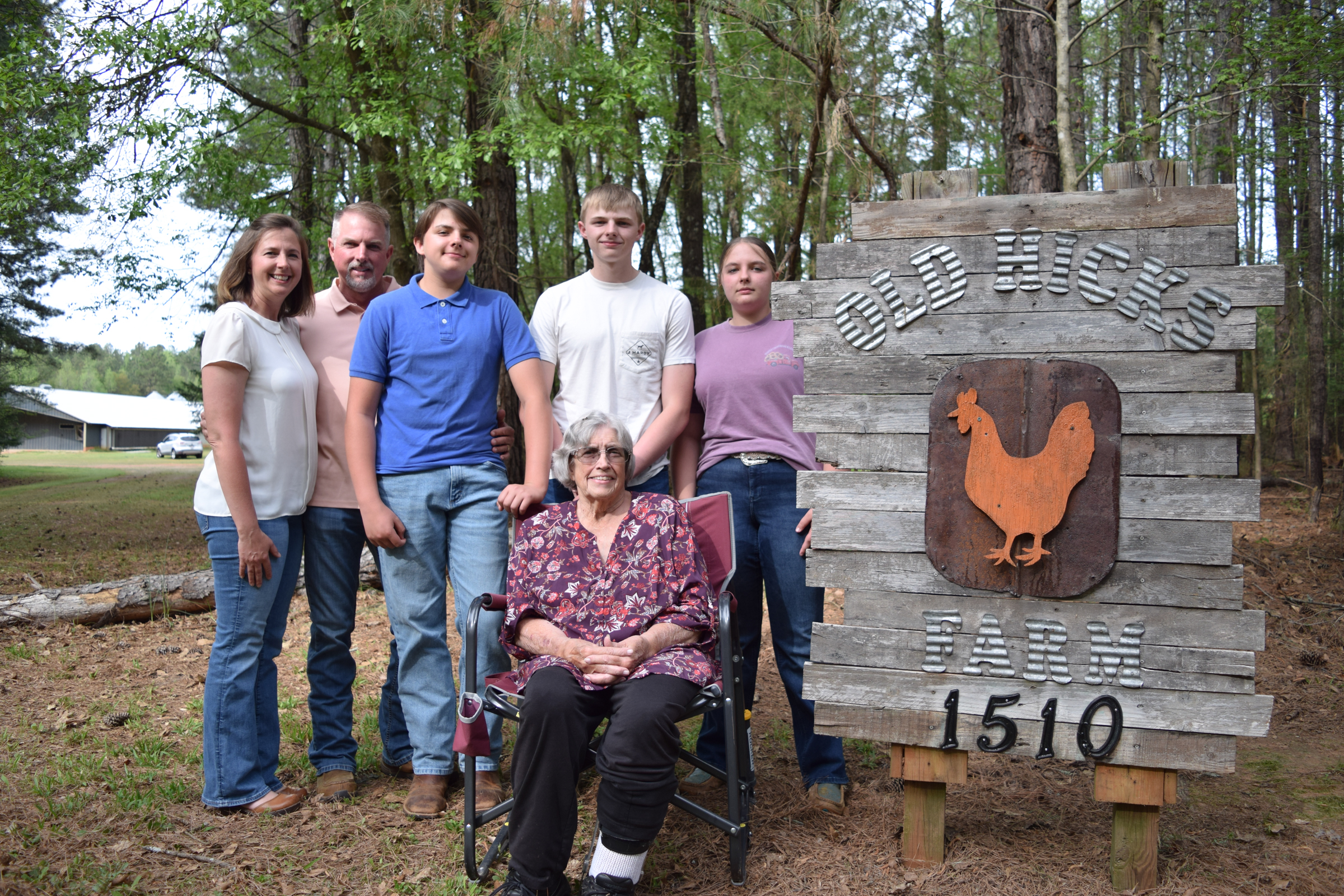
His ancestors, Lou Desta Ann Fortson Hicks and Lemuel Griff Hicks, farmed cotton and corn on a 400-acre plot in Crawford in the early 1900s.
Over time, the land was used for other purposes, until Julie and Jim began their poultry operation to help bring in extra income.
“It's a big deal that my mother-in-law, Jan Holloman, entrusted her son, and I to love that land and take care of it,” Julie Holloman said. “It is special because it was her family farm, her family land. And I like to think that, you know, there's something to this lineage and continuation and being proud of it.”
In pullet farming, the chickens are allotted only eight hours of light in order for them to grow correctly.
The Hollomans have built their life around this rule.
Nolan Holloman, a 17-year-old junior at Oglethorpe County High School, has been at the chicken houses every day at 5:30 a.m. since he was 8 years old.
Though Nolan said he finds himself to be “tired” with his family farm’s demanding schedule, he also thinks that he’s learned important life skills.
“(I have learned) responsibility, just waking myself up every morning, get up and go,” Nolan said. “I feel bad if I don't wake up. I’ll kick myself about it all day.”
For Julie, a teacher at Oglethorpe County Elementary School, balancing farm duties with parenting, a full-time job and much more is “absolutely tremendous.”
“I will say that all farmers have trouble stopping,” Julie said. “It's hard to leave a farm and just go on vacation. The chickens have to be run every day, no matter what, no matter storms, no matter sickness, somebody will be in those houses watching the birds and feeding them and taking care of them.”
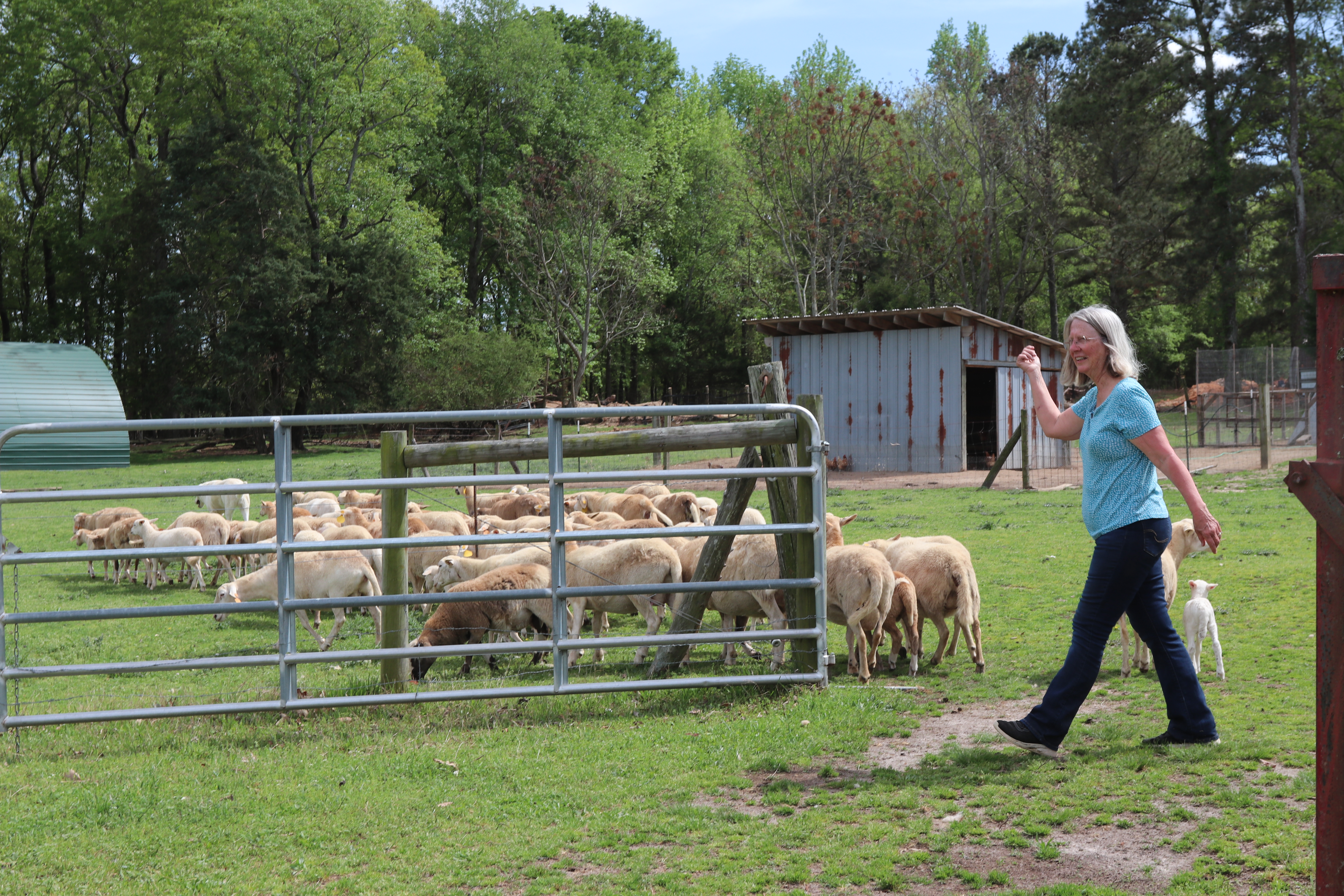
Julie said she believes “part of what comes with being a Holloman” is pitching in with farm work. This lifestyle has ingrained a strong work ethic and other important life skills, like electrical work, in her three children.
“We do expect them to help. That's what helps pay some of the bills, what helps fund some of our little projects,” Julie said. “We're very strong as a family unit.”
After almost eight years of owning Old Hicks Farm, the Hollomans stay motivated because there is a “sense of pride in owning (their) own business,” Julie said. Additionally, Julie said she hopes to set the future generations of Hollomans up for success if they so choose.
“We're not asking them to continue (the farm). But it is an option for them,” Julie said. “I always thought that was super special about my husband's family — is that they do have that. It was a tremendous gift that not everybody gets to have.”
State of family farms
Ninety-eight percent of farms in Oglethorpe County in 2017 were family owned, but as of 2022, the number had fallen to 95%, reflecting a pattern impacting the country.
The 2022 Census of Agriculture found 141,733 fewer farms in 2022 than in 2017 nationwide, and the number of farm acres fell to 880 million, a loss of more than 20 million.
Nolan Holloman believes the downward trajectory of family farms can be attributed to a shift in priorities.
“People don't think as much of values and stuff,” he said. “Stuff doesn't mean what it did to people a long time ago, so they just don't feel like they need the land, so they get rid of it.”
The steady decline of family farms can also be attributed to “increased regulations, rising supply costs, lack of available labor and weather disasters,” according to a statement by American Farm Bureau Federation President Zippy Duvall in February 2024.
Despite the decline in the number of family-owned farms in the county, the 2022 Census of Agriculture reported that overall farm acreage increased by 10% and farm-related income increased by 110% from 2017.
There are certain qualities that set small family farms like Hickory Hill apart, qualities that help them stay grounded in their purpose.
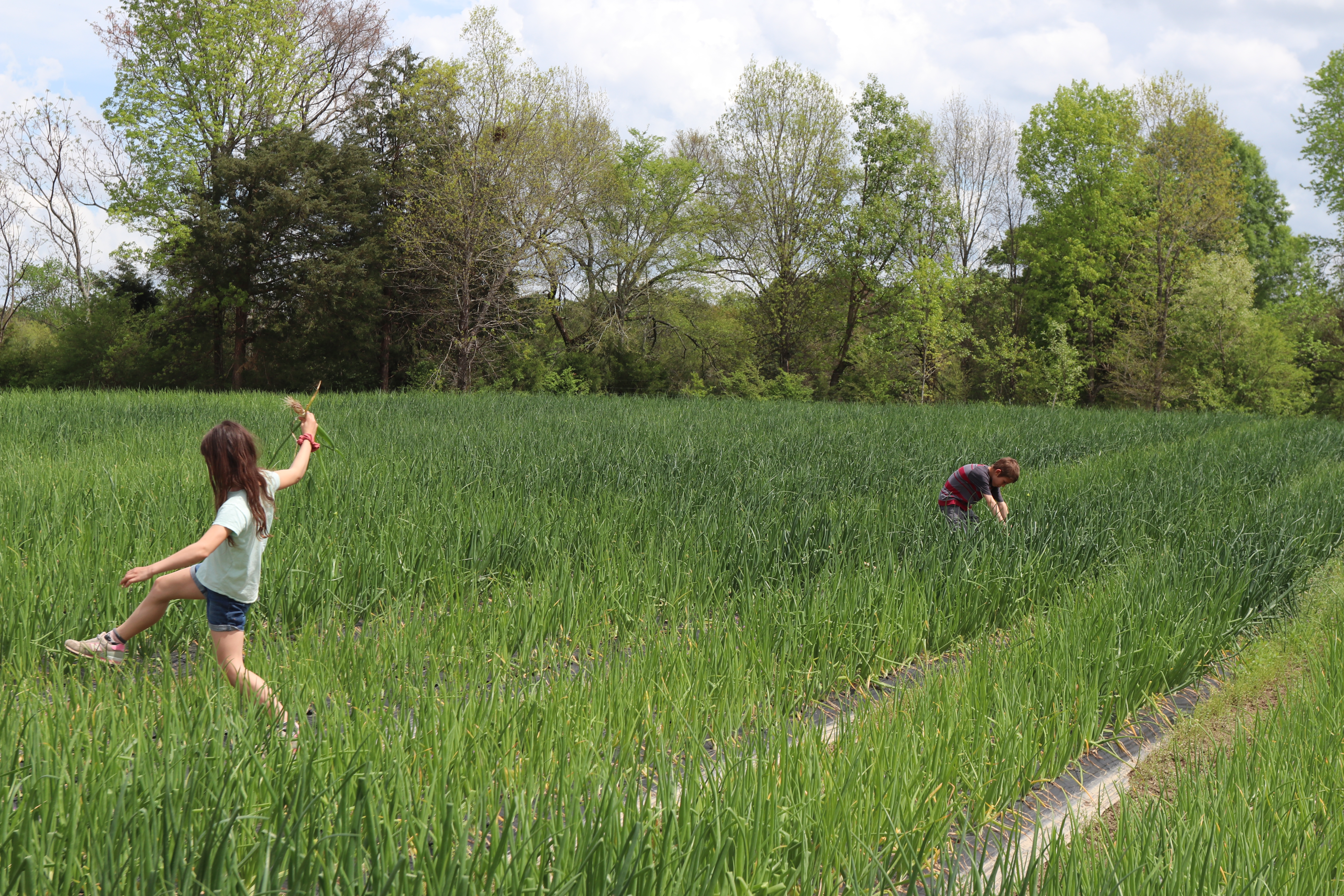
For the Johns and Shaw families, that means a focus on growing quality, organic food for customers.
“We have each other's best interest in heart, and we all know that we all have the same goal in the end,” Jennifer Johns said. “Being able to be more connected with what you're doing. I think the larger and larger your business gets, the more you get away from what it was that you started out to do.”
Hickory Hill Farms follows organic practices, growing non-GMO produce without synthetic fertilizers or chemicals. Instead, it uses cover crops, compost and crop rotation to maintain healthy soil. Often, the owners grow more than they need to ensure they can still meet demand, even if nature causes damage to their crops.
“Out here, what I try to get people to understand is the way we value or put a price on what we do. It’s your land,” said Susan Shaw, gesturing to a sea of around 60,000 onions.
Josh Johns, Susan’s son-in-law, planted the onions in cold frames in September. By December, they were moved outdoors to finish growing until they’ll be harvested in June.
“That’s why he knows there’s 60,000 of them,” Susan joked. “They had to be moved.”
It's a small but telling example of the hands-on care and dedication each family member brings to the farm.
And it’s not just the perfectly picked orange carrots, crisp bell peppers or sweet onions that customers desire at farmers markets. It’s the chance for farmers to develop connections with customers, and the consumers have the opportunity to know where their food is grown.
“Knowing your farmer, and knowing where (the produce) comes from, and knowing that it's not traveling across the state or across the country, but that it's picked as fresh as possible,” Johns said. “That mindset in wanting that local, locally grown produce is a big factor in keeping the small farm alive.”