
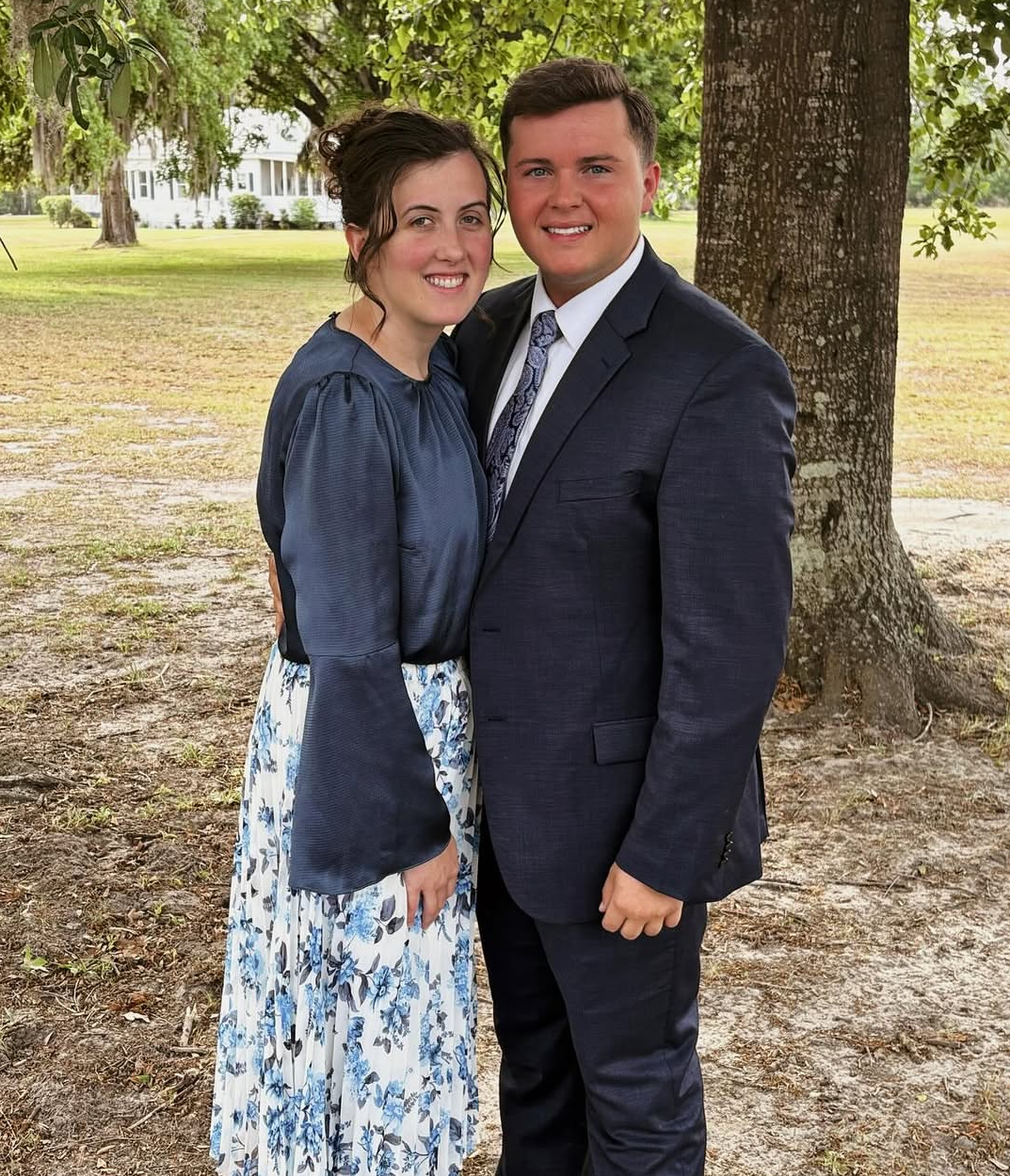
Brendan Padgett
At his day job, Brendan Padgett is a sales rep for a software company, but in his free time, he spends hours poring over historical documents, something he likens to investigating a mystery.
Over the past several years, he has unraveled his family history and said he’s traced his roots back to Native American ancestors. Though he was raised in a culturally white, Southern household, through his hobby, he has since embarked on a search for meaning.
“I explain to people it’s almost like a puzzle,” said Padgett, who lives in Effingham County. “You keep trying to get something to get further along. Obviously, the Indian ancestry is super cool, but that’s not the only reason I do it. It’s really neat to be able to find where you come from. Where your family history comes from.”
Looking through historical documents, Padgett said he’s found evidence his ancestors were widely recognized as Cherokee in the county, a discovery he believes adds to mounting evidence that there was a community of other Cherokee people present in the Broad River region at the time.
Three of his direct ancestors, Rainey and Emily Eades, and Zady Bell appeared on the Guion Miller Roll, a federal document created between 1906 and 1911 which includes all the names of individuals who applied for compensation from the federal government after the U.S. government violated the Cherokee treaties of 1835 and 1846.
Though their applications for the Guion Miller Roll were denied, Padgett said many applications were denied for Cherokee people who had not lived on the Cherokee Nation land during forced removal during the Trail of Tears. His ancestors had migrated to Oglethorpe County before that time.
Padgett is now a member of the Georgia Tribe of Eastern Cherokee, a state-recognized tribe and nonprofit group, and he wants other people with Oglethorpe County roots to consider learning more about their own history. He believes there might be many people in Oglethorpe County with Cherokee or other Native American ancestors who don’t know about their roots.
“They might not be able to ever meet the criteria for a tribe … but that’s not the goal,” Padgett said. “That was someone’s identity, and to be able to take that away from someone is super sad. So, I feel like us being able to reclaim that just kind of gives a little bit more of a voice to our ancestors who weren't able to speak at the time. It’s the voice saying we’re still here. Our ancestors are still here.”
James A. Owen, the assistant director at the Institute of Native American Studies at the University of Georgia, said Native American identity is a complicated subject, especially with the rise of DNA testing sites like 23andMe.
“People have always made claims to Native ancestry,” he said.
Georgia and the University of Georgia were central forces behind Native American removal in the 19th century, he said. In the succeeding generations, it was common for white settlers to move into Cherokee land to claim to have Cherokee ancestry or for their descendants to claim Cherokee ancestry, when really, there was none.
At same time, however, Owen said many Cherokee people married a white settler, and in doing so, avoided forced removal. Then, over the years, because Native Americans were a persecuted class, people would deny their heritage.
Now 200 years later, many descendants are coming to terms with their family history and want to understand more.
Padgett understands the history is fraught, and wants to make sure people claiming Native American ties have gone through extensive genealogical research to learn more about their past.
“I want people to understand that we are educated on our heritage,” Padgett said. “We are not pretending to be Indians. We are connecting with our heritage and our culture, of which we have extensive proof and documentation.”
Still, it is complicated, especially in the South. And Owen said there is intense controversy between federally recognized tribes and state recognized tribes in the U.S.
“I think for individuals, there is absolutely value in discovering your ancestry, and I think that’s true for anyone. We identify with where we came from. Learning where we really come from can sometimes be disruptive, but it can also allow real community creation and real creative things to happen in terms specifically of Native American ancestry,” Owen said.
For Padgett, being able to bring pride to his living ancestors about their origins is a gratifying part of diving into genealogy.
“My grandparents didn’t know anything about their family,” he said. “I don’t know why, and I almost wonder if racism was a part of that.”
The Oglethorpe Echo’s Emily Slepsky and Jet Rawls contributed to this article.