

Reaching the scene is often the largest hurdle for first responders when there’s an emergency somewhere across Oglethorpe County’s more than 400 square miles.
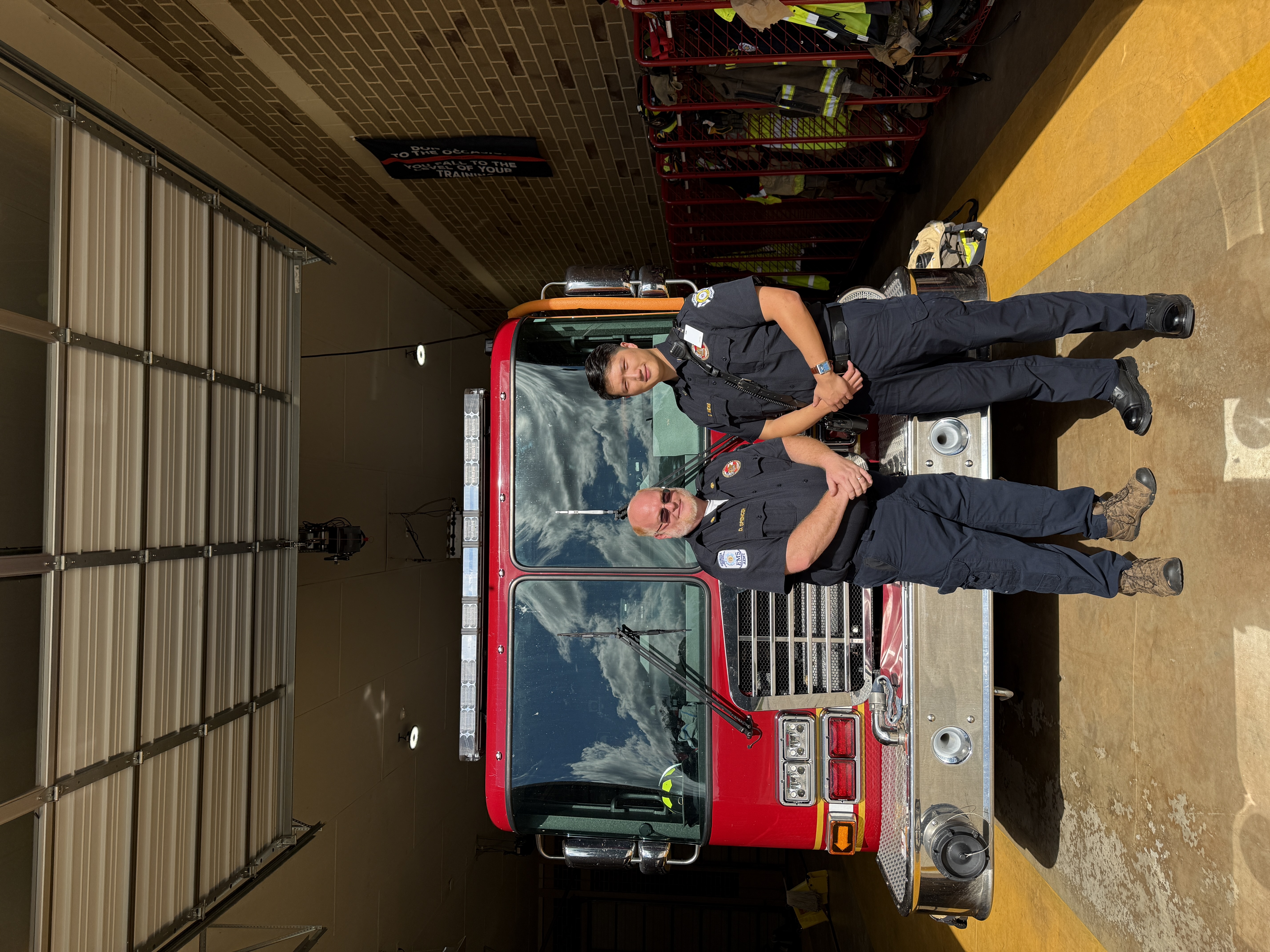
“Because we’ve only got two ambulances and because we cover 440 square miles, having volunteers in schools, in churches, out on the farm to be able to do CPR or control bleeding is a really critical step when you're talking about an ambulance being 20 minutes away,” said Douglas Spencer, the Emergency Management Agency director for Oglethorpe County.
To strengthen frontline safety, county agencies have partnered with the University of Georgia’s Institute of Disaster Management.
This collaboration was initiated by Jason Meng, a UGA alum who was a volunteer firefighter with the Lexington Volunteer Fire Department, and UGA assistant professor Michelle Ritchie. Meng graduated, but remains involved with EMA in events and exercises.
It brings university research, specialized equipment and hands-on field days to local crews. For Meng and county leadership, having university researchers help design these custom playbooks transforms how the county can handle crises.
“I would say the most thing that we were lacking was really just personnel,” Meng said. “We did not have enough people on the roster, we did not have enough equipment, and the leadership could not see as far ahead as a higher institution like University of Georgia could see.”
Spencer said it’s a trade-off.
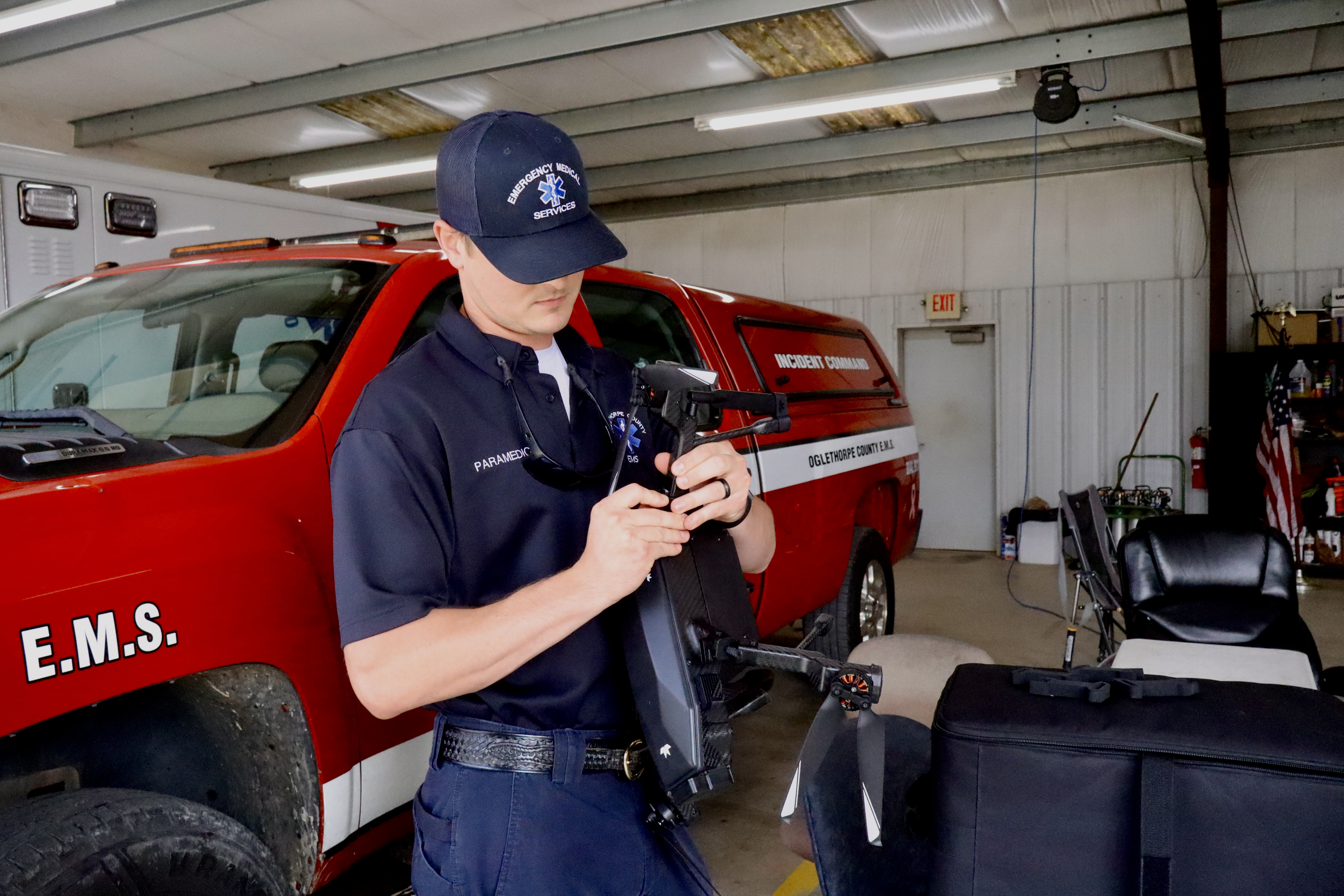
The county lets UGA test its research in the field. In return, the county gets access to new equipment, like thermal search drones, and more strategies and numbers for its own simulations.
Cutting search times
Traditional ground searches for missing people can take dozens of volunteers to cover a fraction of the search area. Thermal-equipped search-and-rescue drones, however, let first responders cover more ground, faster.
“As well as we can search places on the ground, we’re still just people, and it takes a lot of time to cover an area like that,” Ritchie said. “By being able to have a bird’s-eye view, especially something that’s better than our eye, like thermal... it’s going to allow for exactly that to happen – someone’s lost and they’re going to be found much quicker.”
The Oglethorpe County Board of Commissioners approved purchasing three drones in 2025.
EMA/EMS had two drones for operations, but now has one — a Teledyne SIRAS. The other, a Parrot ANAFI USA used for property surveys, crashed into a tree after losing connection mid-flight, Spencer said. They also have a practice drone.
The Oglethorpe County Sheriff’s Office has five drones, with plans to purchase two more, and has access to the county’s thermal drone, Sheriff David Gabriel said in a text.
The drones have been put to use, including search-and-rescue operations.
In December, parents called EMA after their son went missing near their Crawford home. Crews used a drone’s thermal camera to locate the boy, who was hiding, and returned him home safely, Spencer said.
Last October, the county used its drones during the search for a missing hunter.
“The county drones can gather a whole lot faster — anywhere from 45 minutes to three hours faster (than state helicopters),” Meng said. “Once we find a heat signal, we can pinpoint and allocate our limited personnel to an area rather than doing endless searches.”
Specialized care protocols
With more than 21% of Oglethorpe County residents age 65 or older, the partnership extends to facilities like Quiet Oaks Health Care in Crawford.
Standard active-shooter protocols like "run, hide, fight” aren’t an option for non-ambulatory, elderly residents.
Emergency organizers have worked with Quiet Oaks administrator Chris Wrenn to design containment procedures for "aggressive intruders" and active threats, training staff to lock down the facility until emergency responders arrive.
“Having a perspective that complements them can help people understand more and maybe be a little bit less afraid, feel a little more empowered,” Ritchie said.
Field days, training
Joint field exercises between county responders and UGA are a practical way to combat volunteer staffing shortages felt locally and nationwide. UGA disaster management students receive real-world field experience, while Oglethorpe County receives extra manpower for complex simulations.
During one recent large-scale exercise involving a smoked-out school bus, dozens of UGA students served as mock casualties, allowing local crews to test disaster triage.
“It’s been kind of a blessing on both our ends,” Ritchie said. “Having some outlet for my students ... to actually serve as volunteers in things like the full-scale exercise they had last spring ... definitely helps their education. It’s more memorable and you see the real impact you can have. But also, then there’s more hands on deck for exercises like that, and it's just a nice give and take.”