
Board of Commissioners want to localize soil amendment oversight
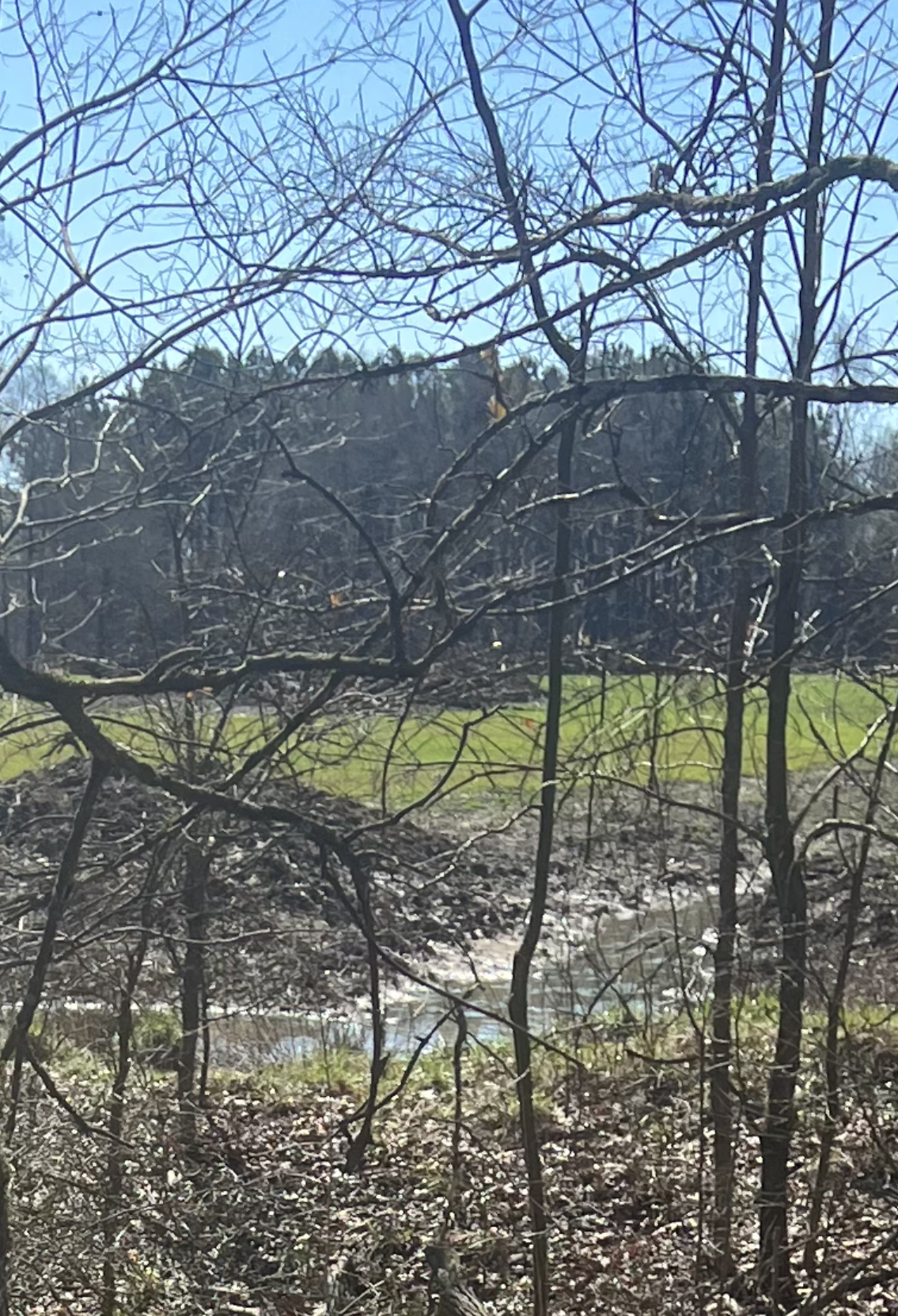
Johnathan Martin and his brother inherited land from their late father five years ago. Now, that land is being disrupted by material considered to be a soil amendment.
“If you were looking for a piece of land, you wouldn’t be interested in where I live,” Martin said.
His land, which is off of Thaxton road in Rayle, is adjacent to a property that has ground where soil amendment, also known as sludge, is being dumped. The sludge then seeps into a conjoining creek and gets into Martin’s property, which causes two issues: a decrease in property value and unwanted stench.
“The chicken house ain’t near as bad as that stuff is,” Martin said when describing the smell of the material.
Martin is not alone in being negatively affected by sludge.
“We have a soil amendment law in Georgia that is being used by numerous bad actors to cover up a pretty destructive industry of disposing industrial waste on, often, unsuspecting landowners' land in rural communities,” Tonya Bonitatibus, executive director for Savannah Riverkeeper said.
On Feb. 6, the Oglethorpe County Board of Commissioners unanimously approved a soil amendment resolution in response to the lack of action by the Georgia Department of Agriculture.
“I’m trying to think of a word other than being taken advantage of, but that is exactly what it is,” Jay Paul, BOC chairman, said about the impact of soil amendments in Oglethorpe County.
The county resolution proposes the idea of localizing oversight of these soil amendments. This would make it so that counties can act as a liaison to the Georgia Department of Agriculture, which only has two people to monitor 159 counties.
“We would love to have some type of authority on investigative ability on the local level so that our hands aren’t tied,” Paul said.
This would help ease the workload off the state government while also allowing for more enforcement on what is — and what is not — a soil amendment.
The definition of a soil amendment is any material added to a soil to improve its physical properties, such as water retention, permeability, water infiltration, drainage, aeration and structure.
“The problem is we’ve been basically pretending like it is a soil amendment,” Neill Herring, a lobbyist for the Georgia chapter of the Sierra Club, said. “But when it runs off into the stream, then it is basically pollution.”
Ideally, Paul would like to have someone for Oglethorpe County trained by the Georgia Department of Agriculture to have a full understanding of the rules and regulations with soil amendments.
Martin agrees with that idea.
“Somebody needs to police this stuff more, it's too open for people to do whatever they want with it,” Martin said.
Regional Issue
Oglethorpe County is not alone in the fight, other counties have also felt the impact of sludge.
This past summer, 1,700 fish in Wilkes County died from what the Environmental Protection Division considered to be soil amendment that got into the Little River.
Bonitatibus believes there needs to be four areas of improvement from the Georgia Department of Agriculture.
First, is getting rid of any secrecy and giving people, what she called, “the right to know.”
“The soil amendment law doesn’t require any true conversation with the communities and what is going on in their own backyard,” Bonbitatibus said.
Martin knows this lack of transparency all too well.
“I ask the drivers what they’re hauling, and they never give me a straight answer,” Martin said.
Second, Bonitatibus wants properties who are accepting this soil amendment, which is used to improve a product, to actually have a product that is being grown.
Third, is a desire that she shares with the Oglethorpe County Board of Commissioners, and that is to give power to the local officials.
Lastly, Bonitatibus just wants the dumping to be known as an issue.
“It's almost too crazy for people to wrap their heads around, the stories are insane, it seems nutty to say that hoards of flies show up and people can’t walk out of their house because their eyes are stinging,” Bonitatibus said.
“It’s too obvious, people who don’t experience it just don’t believe it,” Herring said.
Armed for a fight
Only time will tell if there will be any new rules and regulations implemented regarding soil amendments, but there is progress being made.
“I have seen no indication from the agriculture department that they will care; however, the legislators will care and that’s where the big fight is right now,” Bonitatibus said.
Paul also provided encouragement when talking about the 24 state senators, legislators, lobbyists, and others who he has been in contact with on this issue.
“I think people are starting to see the light and understand the challenge these rural counties have,” Paul said.