
Oglethorpe County High School graduate Harley Hayes had been traveling to Athens long before she was a University of Georgia student. She said she made the half-hour drive whenever she had to visit the doctor.
“Even if it's for a simple ear infection, or checkup, or like a physical to play sports or anything, we have to come to Athens to get that,” Hayes said.
Oglethorpe County is home to six medical providers, but that isn’t always enough to cover all county residents, especially when one in five do not have medical insurance. There are no dental resources, and the closest hospitals are in Athens.
“We sort of think of our county as being a bit of a health care desert,” Oglethorpe County School System nurse Kristina Turner said. “We do not have a local pediatrician, and we don’t have an urgent care with walk-in hours. While we do have several really good practitioners in our county, that’s not their focus.”
To address this, the Oglethorpe County School System has been awarded a $999,000 grant for a school-based health center to provide state funding for a clinic to serve both students and staff — and then later, the community.
The grant provides up to $308,000 for renovations and up to $682,000 for staffing and equipment. It’s a reimbursement grant, meaning funds are received after expenses are incurred, and anything purchased with grant funding belongs to the school and not to the medical provider.
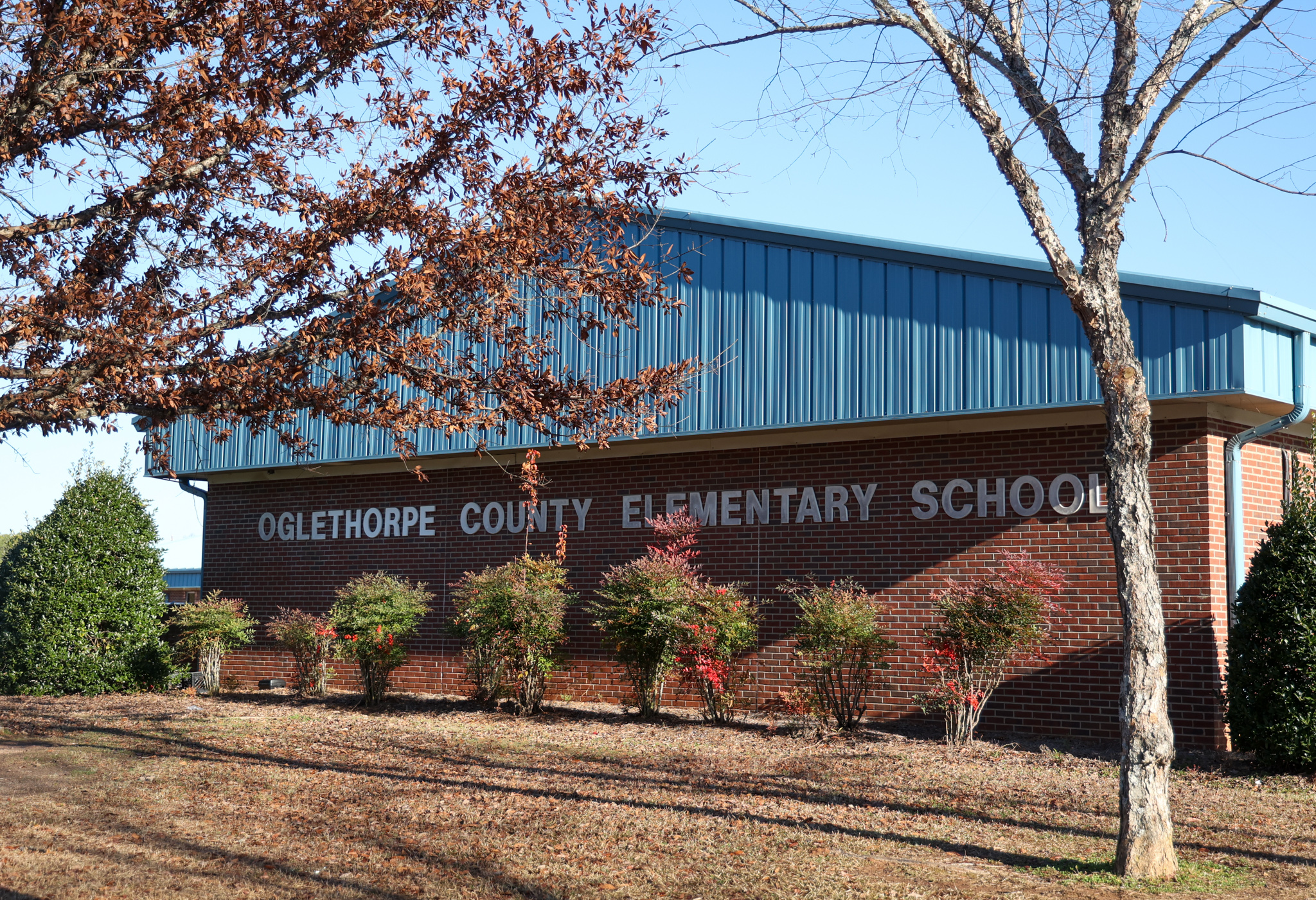
The clinic will be in what is now the elementary school, after the new school opens next January. The clinic will open after renovations are complete.
Something to consider, Superintendent Beverley Levine said, is transportation for the middle school and high school students to travel there. The old elementary school will be connected to the new one by a covered walkway.
“It’s a unique position for the school system to be in, and it’s really a golden opportunity to have this kind of funding and that's not something that just comes around easily,” Turner said. “We are very appreciative for the opportunity to be able to spend those funds doing it.”
The school system plans to host “additional forums” for community input, Levine said. An advisory board consisting of community members has been formed to provide feedback and oversight during the planning phase. The committee plans to have “folks who can help us move forward,” Levine said.
School-based health concerns
The first Georgia school-based health center opened in 1994. Now, over 100 school-based health centers serve students in 24 Georgia counties, according to the Georgia Department of Education.
Often found in rural or impoverished areas, these clinics host medical practitioners on school property to address medical, behavioral, dental and vision needs for students. If the school administration allows it, community members can also utilize the health centers’ services.
The partnership between school and provider eliminates barriers to health care, such as transportation, inaccessible hours of operation and cost. Students, staff and community members would be able to utilize the school-based health center, Levine said.
Levine also said the health center will take insurance, including Medicare, Medicaid and PeachCare. For those without insurance, services will be priced on a “sliding scale,” Levine said.
“Nobody will be turned away if they don’t have the ability to pay,” she said.
While school nurses can administer students’ prescriptions, tend to injuries and assess students’ illnesses, a health center’s medical practitioners can prescribe medicine, provide immunizations, conduct sports physicals or vision screenings, offer mental health services and diagnose illness, among other services.
Sara Hughes, the school system’s federal programs coordinator and grant writer, said no student would be seen or treated at the school-based health center without written parental consent. This consent, established ahead of the visit, is deemed essential for any student seeking medical attention at the center.
“We are not sending anybody’s kid to the doctor without their permission or without their knowledge,” she said.
School-based health centers are run and operated by external healthcare providers utilizing space on school property.
“It would almost be kind of a lease situation,” Hughes said. “Whoever they employ is employed by that medical practice.”
Oglethorpe County is “in the process of finalizing their provider agreement with MedLink,” a nonprofit community health center, Turner said. MedLink operates the school-based health center in White County and spoke at a September 2023 informational meeting about the potential center in Oglethorpe County.
“I wanted to be sure that I was not putting any of our other medical facilities off and being in competition with them,” Levine said. “And they really feel like this is a medical desert in this area, that we’re sorely lacking services.”
Turner said the health center is expected to have between three to five employees, depending on patient volume, consisting mainly of mid-level providers and office staff.
“There’s sort of a skeleton business plan that is in place for school-based health centers,“ Turner said. “They are probably considered new to our area, but they have been around in some of the metro Atlanta areas for quite a number of years.”
School-based health examples
The Clarke County School District operates two school-based health centers.
One is run by the Athens Neighborhood Health Center and the other by UGA and Augusta University’s medical school partnership. Combined, the health centers provide a full-time dentist and hygienist, a nurse practitioner and counseling services.
“They help by keeping kids in class and keeping staff in classrooms teaching, they reduce absenteeism and increase learning time for students,” said Amy Roark, director of nursing for Clarke County Schools.
The health centers have been so successful that the school district has applied for grants to add a third and fourth, Roark said.
“A school-based health center can be something you have to talk your school community into,” Roark said. “But once you put one in there, and you see how much it's utilized and appreciated by your families, then you'll have principals lining up asking for school-based health centers in their schools as well.”
The school system has wanted to add a school-based health center like neighboring Athens-Clarke and Taliaferro counties, but the state grants’ recent addition of implementation money — versus just funds for planning phases — was a deciding factor for Oglethorpe County to submit its grant application.
“I wanted to be sure that it was not going to be a ‘If it was not sustainable, there was a burden on the school system or the taxpayers’ situation,’” Levine said. “That was sort of in my mind, and once I cleared that hoop, we said that this sounds like something that really could benefit this community.”