
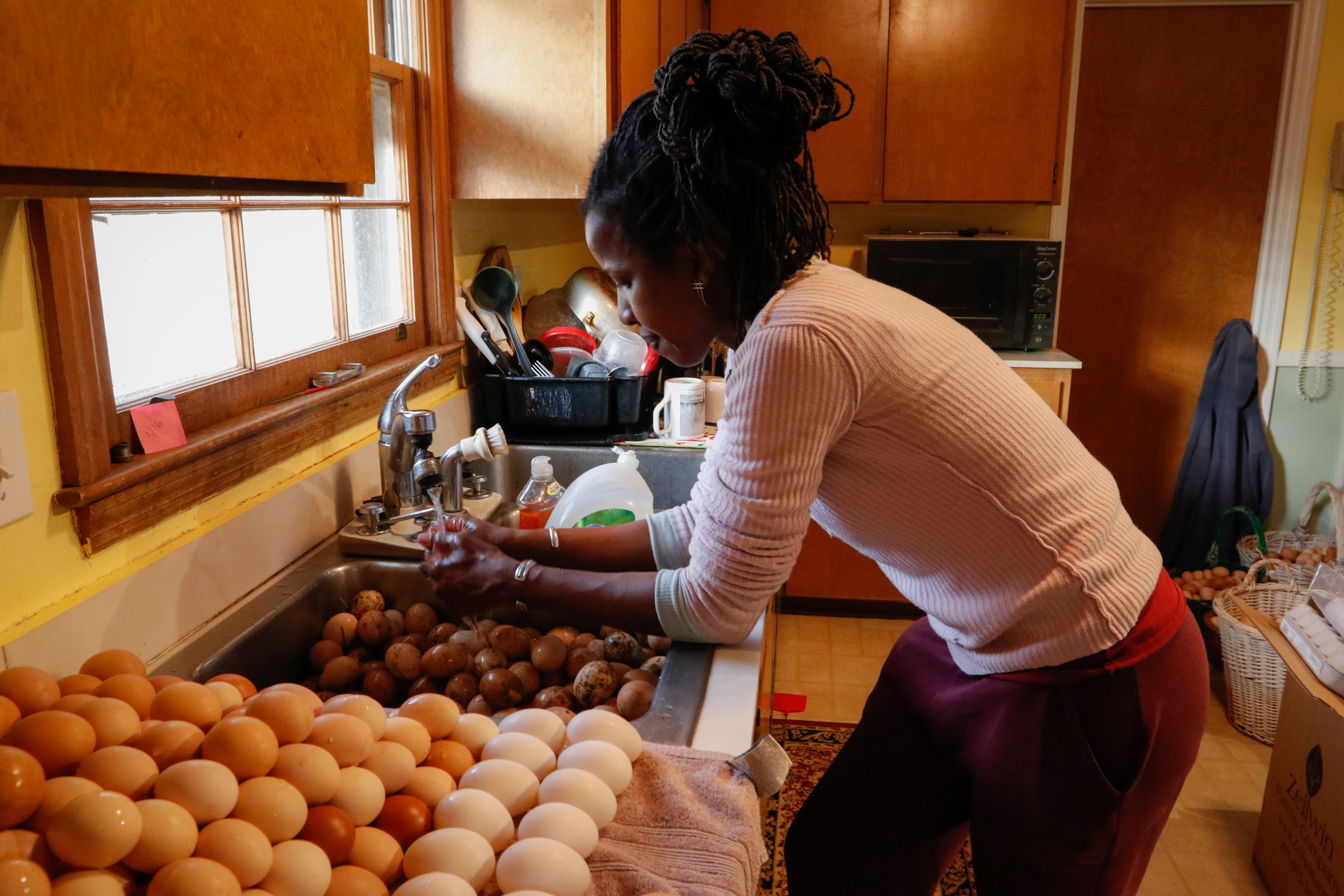
Howard and Cindy Abbey have been raising chickens since 2006 after purchasing 50 acres of land in Lexington. Cindy grew up on a farm, so she enjoys having animals around and the fresh eggs are a bonus.
With recent egg prices, the couple is grateful they get plenty of fresh eggs from their own chickens. They encourage others to follow suit.
“I mean this is ridiculous,” Cindy said. “It has gone down a little bit, but in one of the Walmarts, a big 18-count was $51. I went out to my land the other day and got 20 eggs.”
The ongoing avian flu outbreak is the deadliest and longest on record in the U.S. According to the Centers for Disease Control and Prevention, nearly 50 million birds have been killed in an attempt to prevent its spread, and eggs have been scarce since last spring, which is causing a spike in prices.
“We’ve had trouble getting eggs into the store,” said Dylan Sheridan, who works at Bell’s Food Store in Lexington.
He said he’s noticed changes in consumers’ buying habits as well.
More consumers are leaning toward buying fresh eggs from local residents or raising their own chickens.
“To me, they’re better tasting, and with these prices, I’m not going to pay for them,” said Janet McDaniel, who has been raising chickens outside her home for years.
Fortunately for local farmers, they have kept their chickens safe from avian flu.
Tamita Brown, owner of Caribe United Farm in Crawford, said she’s been low on eggs this season simply due to the cold weather. By this spring, she should be full-force again and she predicts to have anywhere from 50-100 dozen eggs to sell.
Her prices ranged from $6-$10 a dozen during her last selling season.
“I try to keep my prices where they are,” Brown said, “but the truth is, the cost of my organic feed has gone up tremendously, so I'm going to have to increase my prices a bit.”
On recommending others to own and raise chickens of their own, Brown says go for it. However, if intending to sell eggs, residents must first receive an egg candling certificate.
The certificate is also recommended for those who are not interested in selling, to ensure their eggs are healthy and safe to consume.
“It’s not as hard as a lot of people think it is,” Cindy Abbey said. “You have to figure out what kind of feed works for the chickens you have because it depends; you learn your animals as you go along.”
The Abbeys live in an area zoned for low-impact farming, but in some suburban areas, there will be more restrictions, as chicken farming can be noisy and disruptive to neighbors.
Howard said people also need to make sure they’re allowed to raise chickens where they live.
When it comes to avian flu, the Abbeys haven’t seen an impact on their chickens. Howard knows that if it did infect one of their birds, they’d have to kill the entire flock.
Brown said she’s also aware of the seriousness of the disease.
“What I know is you have to be very strict on who can visit your farm; you don’t know where someone has been,” Brown said. "I don't allow farm visits at this time; I’ve been closing my gates.”