
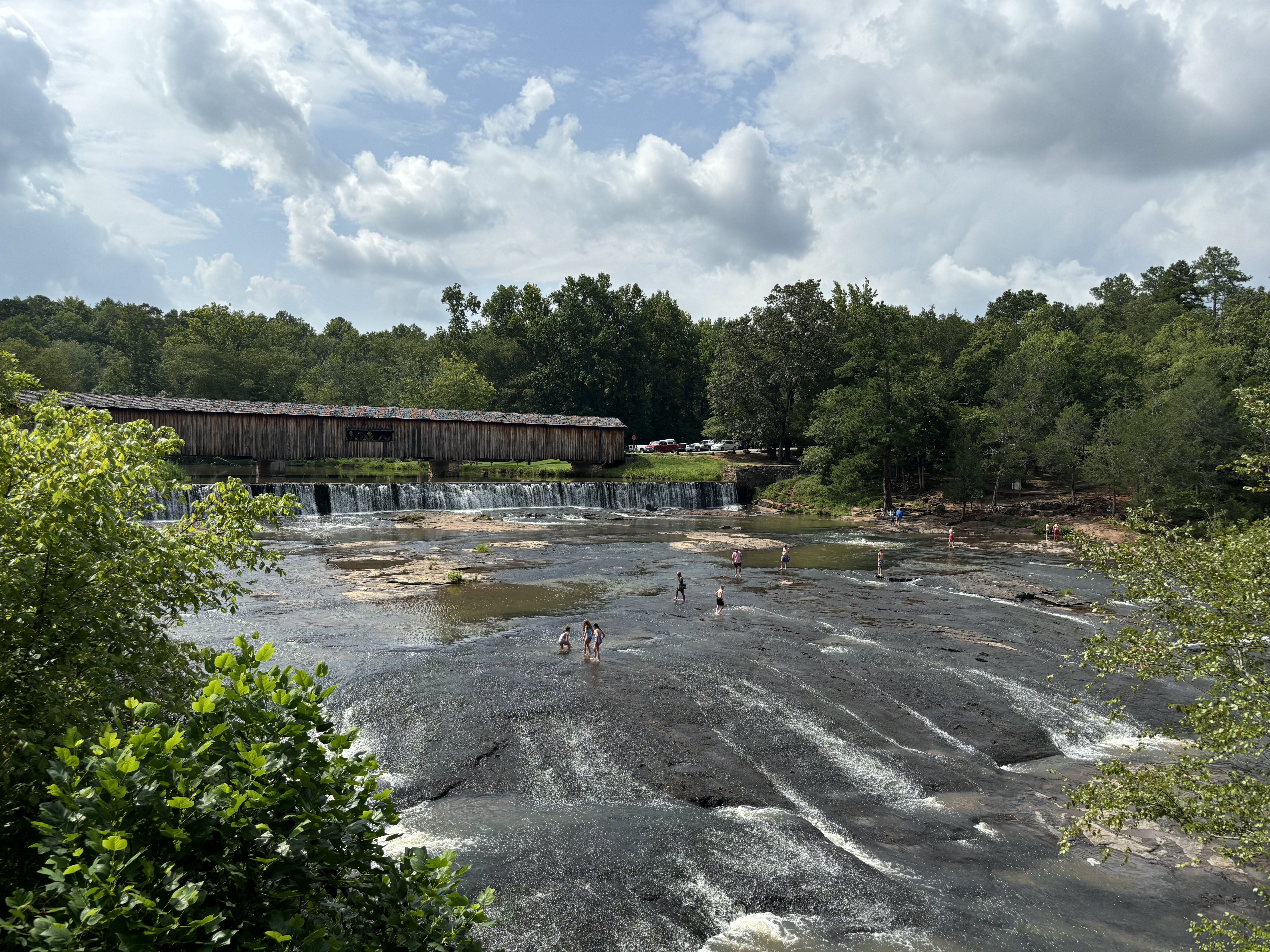
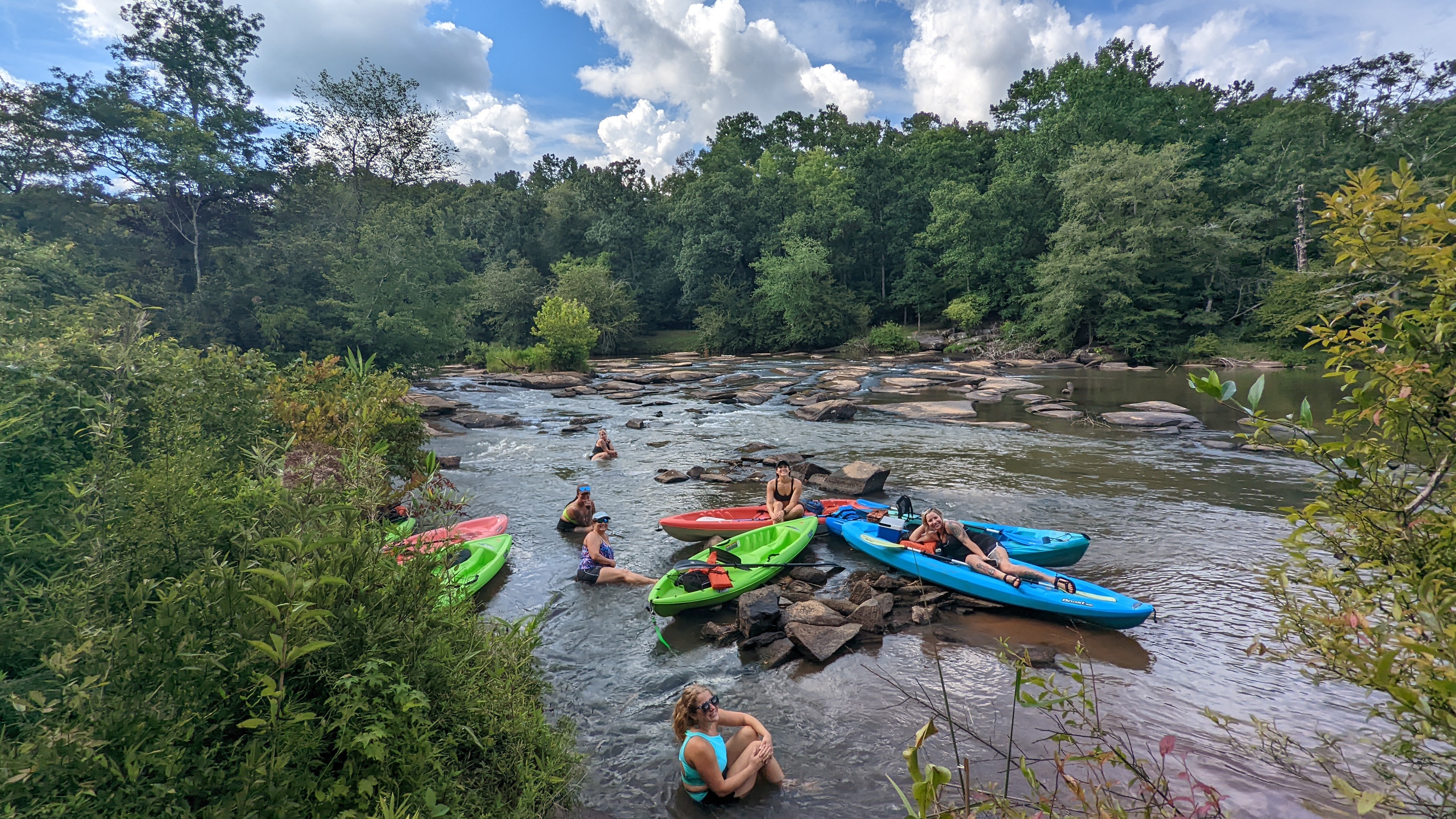
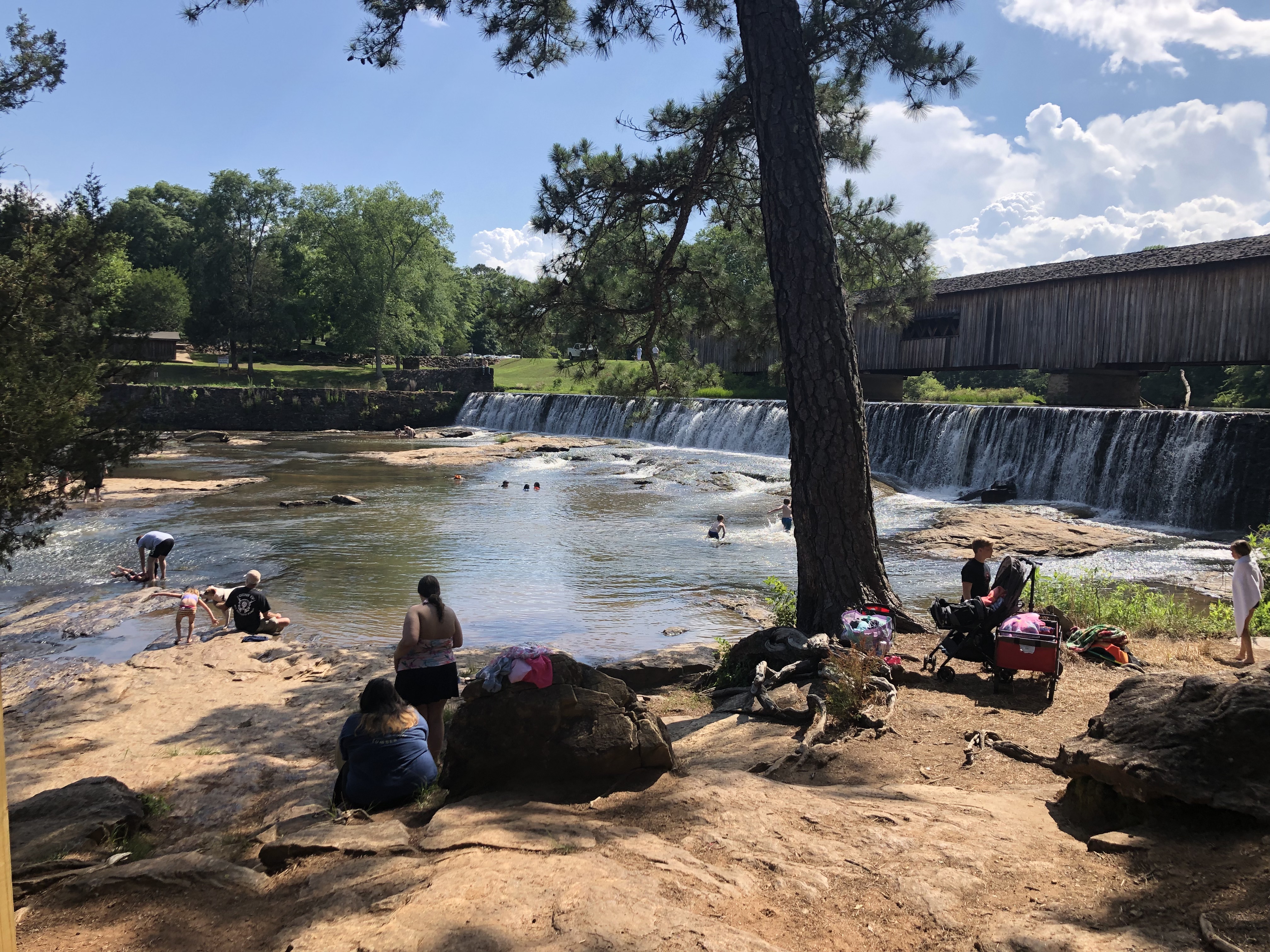
Local clean water proponents moved one step closer to a big win recently when the Georgia Environmental Protection Division (EPD) announced a local section of the South Fork of the Broad River will be reclassified for recreational use.
This section of river, which runs through Watson Mill Bridge State Park, is designated for fishing use, which has higher allowable levels of things like dissolved oxygen, E. coli, and water acidity, which are indicators of lower water quality.
In December 2024, the Georgia EPD announced the part that flows from Watson Mill Bridge State Park to Lexington-Carlton Road, would be one of 11 bodies of water nominated statewide for recreational use.
“We’re working on everything we can to protect that river,” said John Robertson, member of the Madison-Oglethorpe Stream Team (MOST) who lives in Smithonia. “It’s not there yet. Two or three more agencies have to sign off on this, but it’s all downhill from here.”
Madison County resident Ruth Ann Tesanovich helped spearhead this effort when she became involved with Georgia Adopt-A-Stream, a volunteer water quality monitoring program.
Tesanovich has been recreating on the river for 40 years, and when the Madison Biomass Power Plant opened in Colbert in 2019, she was concerned about pollution from the plant.
Then, she decided to do something about it.
Robertson said, like Tesanovich, he too was concerned about pollutants affecting his and his neighbors’ health when the biomass power plant moved in, especially when he learned the plant was burning chemically treated railroad ties.
The power plant was cited for violating the Water Quality Control Act in 2020, when runoff from its wood chip fuel pile passed through the settling basins and discharged into a tributary to Indian Creek and “produced significant water quality changes that were potentially lethal to aquatic life and resulted in fish kill,” among other violations, according to an EPD Enforcement order.
Tesanovich, Robertson, and others took action and formed the Madison County Clean Power Coalition. The group helped successfully lobby lawmakers to pass a statewide law that banned burning the noxious creosote railroad ties for power generation in 2020.
Then, when Tesanovich learned about the biomass plant’s application to discharge wastewater into a tributary of the South Fork of the Broad River upstream of Watson Mill Bridge State Park, she shifted focus to protecting water quality and helped form MOST.
Through her work with MOST and Georgia Adopt-A-Stream, she learned about what is called a “Triennial Review,” a stipulation in the Clean Water Act that requires Georgia to review and revise its water quality standards at least once every three years.
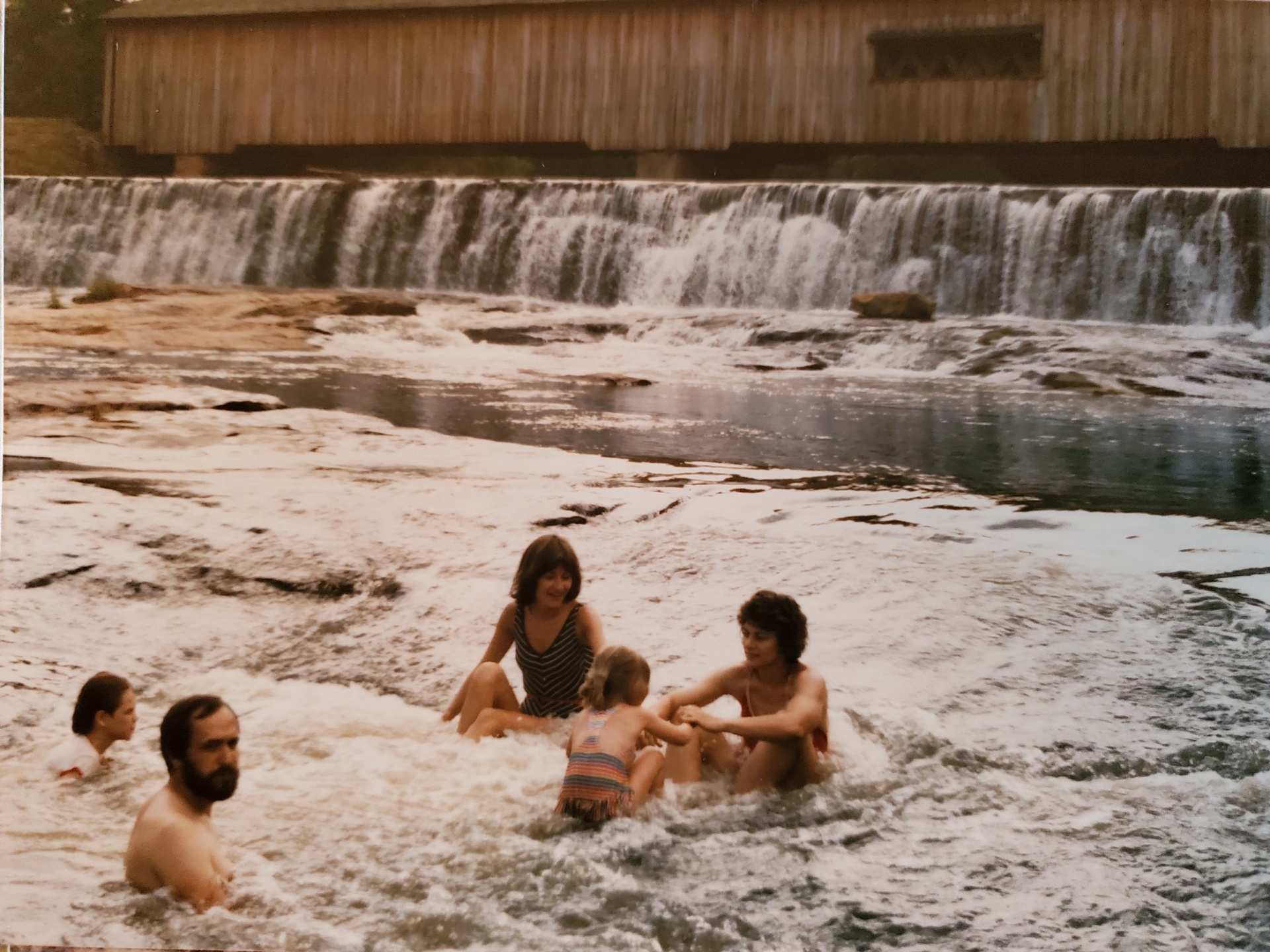
“I’ve been going there for 40 years,” Tesanovich said. “When our children were little, we went there, had so many happy memories and thought the South Fork of the Broad River with Watson Mill should also be designated recreation. It’s not just fishing. People are in the water, swimming, playing.”
After years of due diligence, Tesanovich said no stakeholders had any complaints or questions about changing the use designation, and now, the EPD has made the announcement that the river’s use would be updated.
A public hearing for the rule change will take place July 15, and in August, the rules will go before the Department of Natural Resources Board. Then, they must be certified by the Secretary of State and Attorney General before they are submitted to the Environmental Protection Agency for approval, said Sara Lips, director of Communications and Community Engagement with the Georgia DNR.
The good thing, Tesanovich said, was that in analyzing water quality samples from July 2021 to June 2023, water temperature, pH, dissolved oxygen and E coli levels, on average, already met recreational use standards. With this new designation, however, there are now more guardrails in place to ensure the river stays this clean for years to come.
“My interaction with numerous environmental groups has really opened my eyes to how many nonprofits and individual people doing volunteer work are making a difference in protecting our water and our environment,” she said. “It’s made me want to be more proactive about it and realize that it doesn't take a lot of people to make a difference. Just a small group of dedicated, energetic people can make big changes.”
Oglethorpe County Commissioner Tracy Norman has also been on board, helping push this redesignation across the finish line, and he said ensuring high water quality on the South Fork is an important safety consideration.
“It’s currently one of the cleaner rivers in the state of Georgia, and we really ought to try to keep it that way,” he said.
Recently, talk of a chicken rendering plant coming to Franklin Springs, upstream of Watson Mill Bridge State Park on the Broad River, sparked public outcry across the Broad River watershed due to the potential of polluting runoff making its way into the river.
Pilgrim’s Pride, the rendering plant company, announced it was no longer considering Franklin Springs as a location for its business expansion, but the threat of industrial waste on the river remains a serious concern for locals.
“One of the biggest things that most of us have heard recently was the rendering plant that was planned potentially for Franklin Springs, that without very tight controls, could affect the water quality,” Norman said. “I don’t know if that project is even going to get started, but having this (rule change) in effect, it gives us more leverage over companies that are planning on building facilities to ensure that they are in full compliance with every safety measure they can take when it comes to water quality.”
Both Tesanovich and Robertson are retired scientists, and the two have used their free time and their skills in the lab to take on this project to ensure water quality on the river for years to come.
“I have a deep love of nature, and I have the time to give back right now.” Robertson said. “We have to always be vigilant.”
Alex Perri is a master’s student in journalism at the University of Georgia. She previously worked at the Transylvania Times in Brevard, North Carolina.