
Oglethorpe County teachers say the clearest progress in student learning this year hasn’t come from a single test score, but from the way the classrooms have changed.
As statewide scores continue to shift after the pandemic, the district has leaned on deeper instruction, shared planning and better support for students to steady its own performance.
OCHS Principal Bill Sampson said the school is already looking closely at areas that need more attention.
“We made great gains there, but apparently across the state, they all made great gains,” he said. “We’ve shown growth, but we’re still reviewing all of our information to look at what we can do.”
That work has reshaped teaching across the county.
At the high school, teachers meet in Professional Learning Communities every Wednesday. They plan lessons and assessments together, compare student work and look for ways to raise the depth of instruction.
Sampson said this change has helped teachers push students to think more critically.
“We’re looking at all the data and triangulating everything that we have with student grades,” he said. “(We’re) looking at how to make sure that we raise the depth of knowledge with our questioning, so that they have a deeper understanding of all these content areas.”
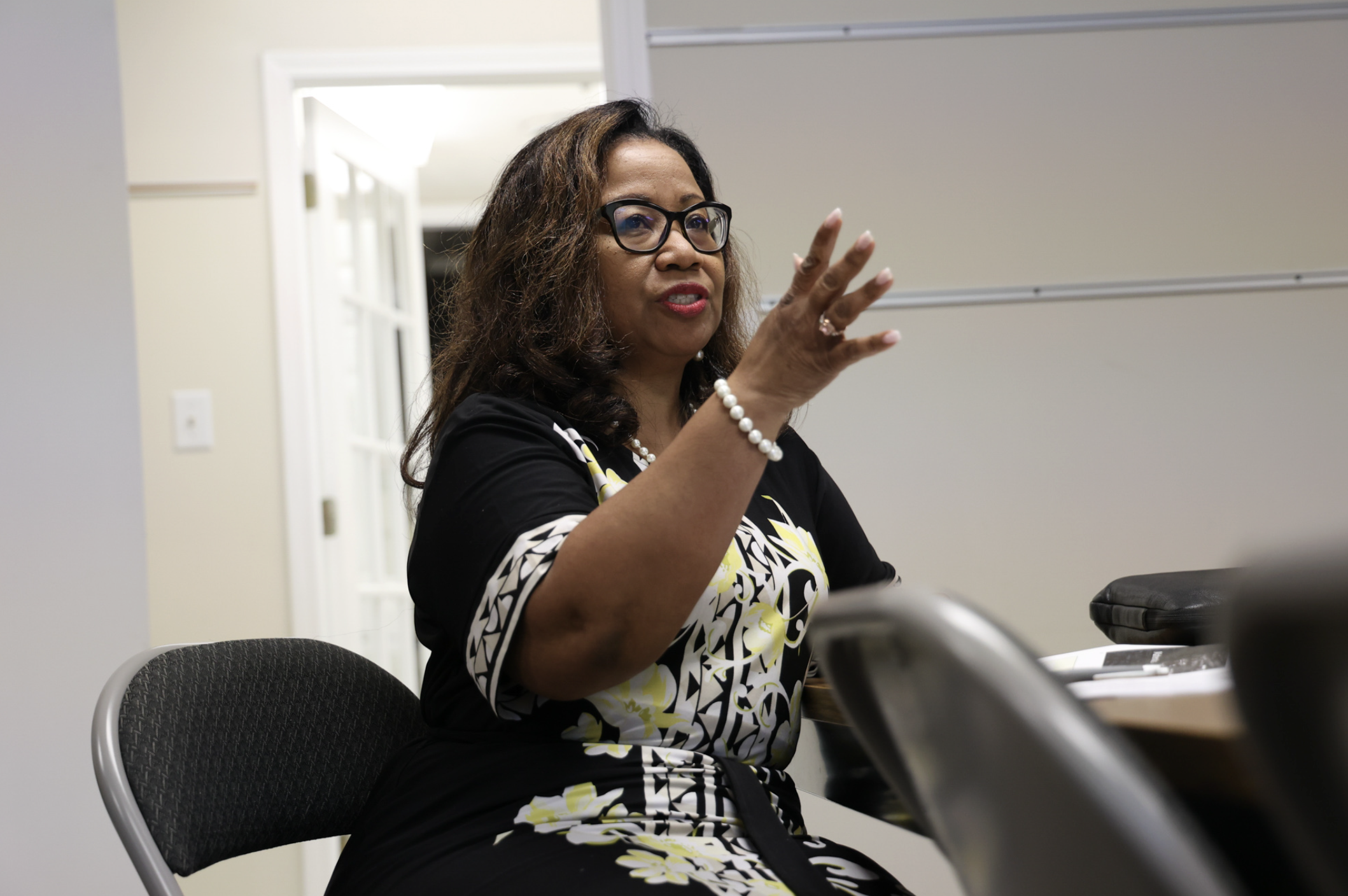
Assistant Superintendent Kayna Cornish leads regular “data digs” with teachers at every school, reviewing trends and identifying areas that need more attention.
“We’re looking at trends,” she said. “We’re looking at previous trends or ongoing trends. And we’re looking at which domain areas in which the students did well, did not do well.”
Teachers said they see the impact of that consistency.
Last spring, every student in Jennifer Yauck’s AP biology class passed the national exam. Senior Kayden Watkins said the results reflected the expectation that students engage fully in the coursework.
“You really had to know your stuff to get through the class,” he said. “So then, when it comes down to the AP exam, it’s like, we’ve already been over all this stuff. We know it like the back of our hands.”
Senior Amber Tiller echoed those thoughts.
“I was happy,” she said. “All my work paid off, and all the support helped me get there. And my mom was really excited. She did a little dance.”
County expands advanced coursework
Two years ago, Oglethorpe County added an enhanced eighth-grade algebra course. Students who complete it move directly into geometry in 10th grade, which opened AP precalculus to younger students.
“And those students, once they complete that eighth-grade class, they then get a high school credit for algebra, so they don’t have to take that ninth-grade algebra class,” Cornish said.
She said “this past year, 100% of those students scored distinguished on the Georgia Milestones in math.”
AP enrollment overall has grown as well.
AP precalculus increased from 21 to 38 students and AP English rose from seven to 29. A new AP seminar course enrolled 36 students who previously would not have had that option.
“Honestly, I think more students are choosing the AP pathway rather than dual enrollment,” OCHS Assistant Principal Lauren Carlson said.
Local students scored an average of 18.7 on the ACT (out of 36) and 1007 on the SAT (out of 1600) last year, slightly below the state averages, but consistent with previous years. Teachers said those numbers show students are holding ground.
Younger grades show steady progress as well.
Fourth- and fifth-grade math scores remained above 90% developing and above, eighth-grade ELA held at 87% meeting or exceeding standards, and algebra I rose from 71% in 2022 to more than 92% this year.
Physical science reached 100% developing and above. The district's four-year graduation rate was 91.7%, above the state’s 87.2%.
Seventh-grader Wayne Campbell, who earned a perfect score on his math Milestones, said he has advice for younger students headed to middle school.
“If you don’t know it, study; if you do know it, study more,” Campbell said. “And just know that no matter what you get on the test, you’ll still be using that math.”
Schools battle outside influences
Cornish said the district still faces challenges present in most rural school systems, including limited internet access, fewer CTAE pathways and students who often work significant hours outside school.
Sampson said that sometimes affects academics.
“Our students are eager to get out and work and make some money,” he said. “I do think that sometimes that pulls students away from some of this academic focus.”
Even so, Cornish said she feels confident about the direction the district is moving.
“I love that we have great people in place,” she said. “We have amazing administrators. We have teachers who have come, and they have come to stay.”
She said the district plans to keep focusing on instruction, consistency and support.
“We never want to just remain stagnant,” she said. “We’re definitely always looking at ways to grow.”
Yauck said that mindset is paying off in her classroom.
”I want them to come out with just a real quality experience to where they are supposed and feel like they can do what they did,” she said.