
There’s always work to be done when it comes to crops, livestock
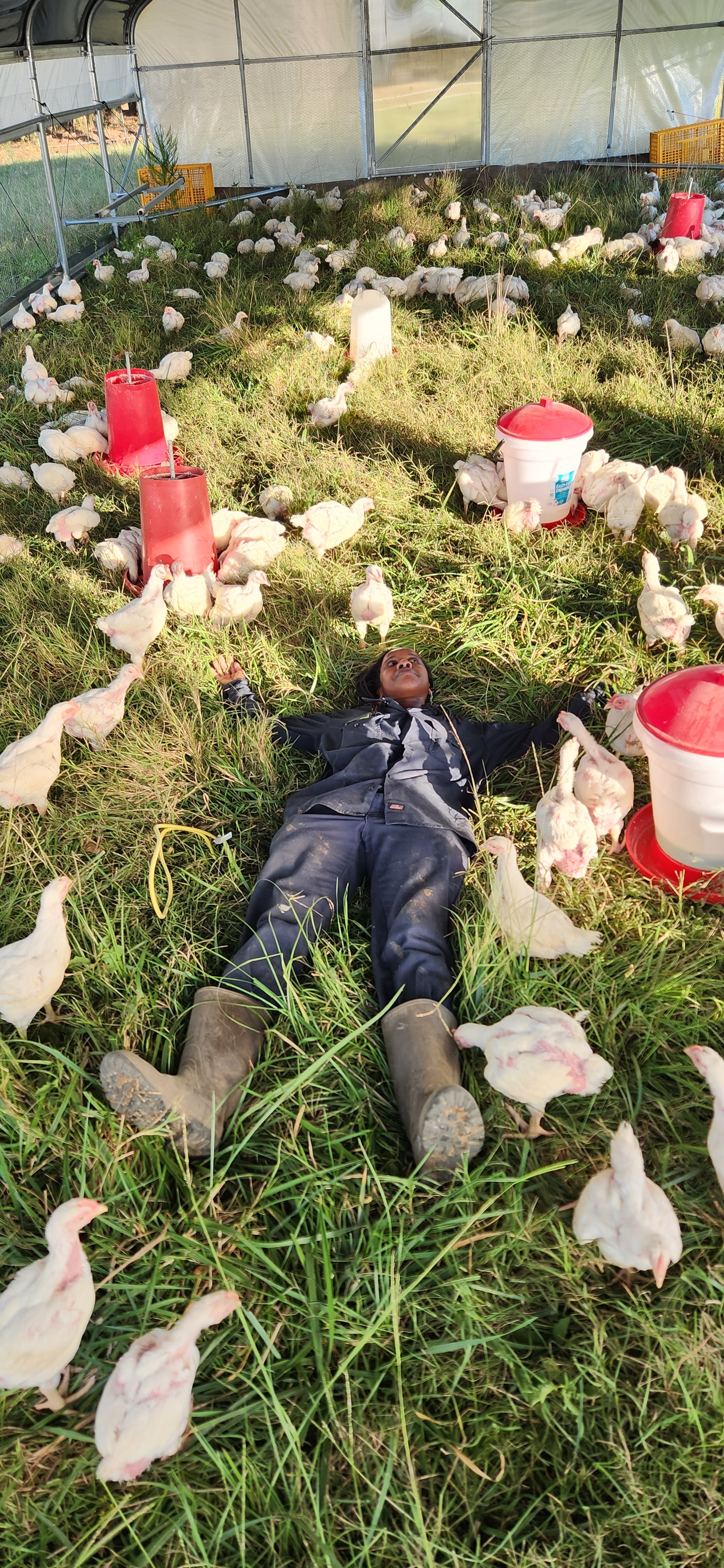
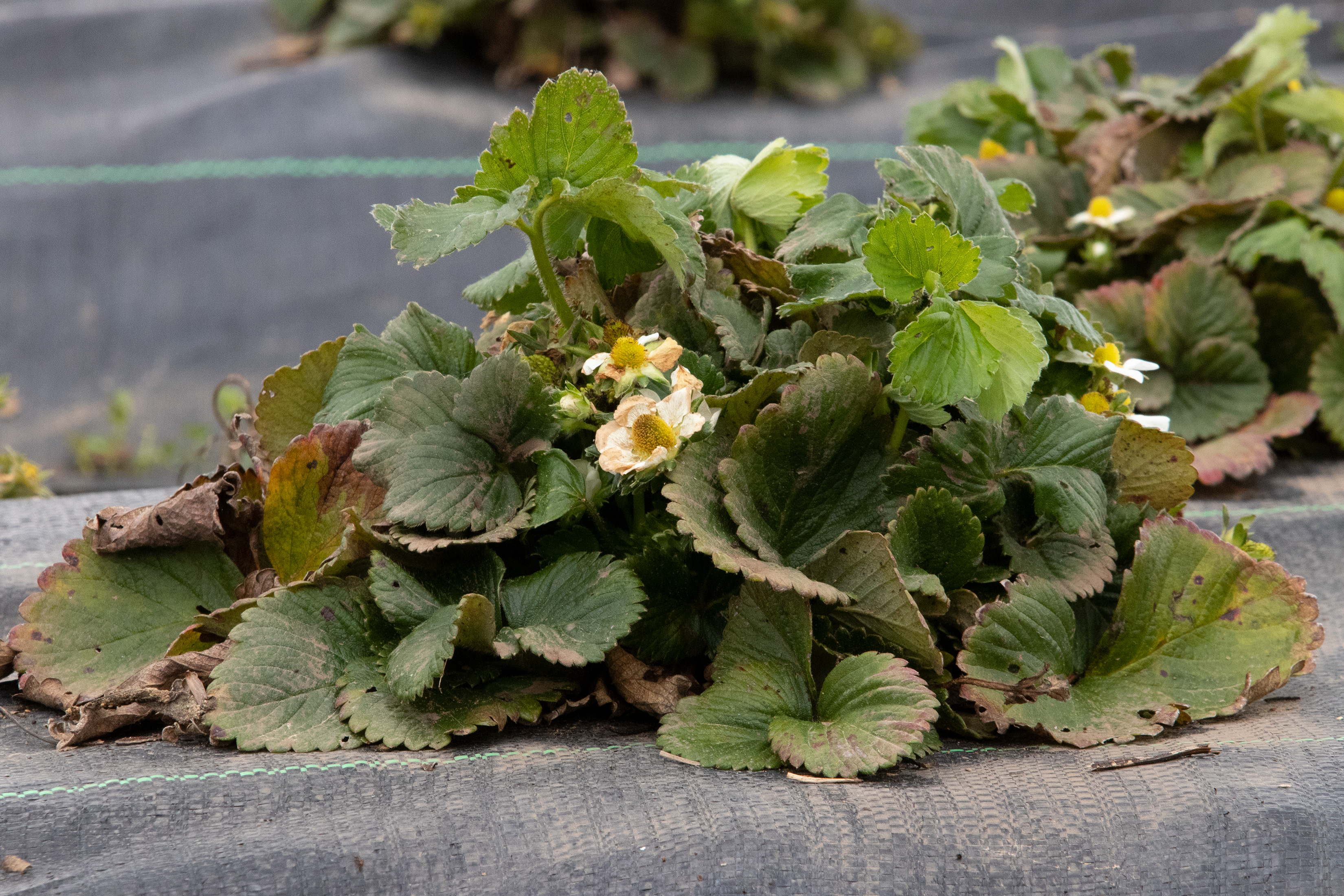
A late freeze impacted strawberry plants at Buffalo Creek Berry Farm in March, 2022, causing 70% crop losses. Co-owner Laura Pallas said she and husband/co-owner Cameron Phillips stay busy all winter. (Julia Walkup/The Oglethorpe Echo)
Winter isn’t a time of rest for Oglethorpe County farmers.
Instead, it’s a challenging season that demands farmers juggle numerous tasks. From protecting livestock and crops from the harsh conditions to preparing the farm for a successful harvest, the demands are varied and constant.
Laura Pallas, who co-owns Buffalo Creek Berry Farm in Lexington, with her husband Cameron Phillips, understands the relentless pace for farmers in the winter.
“I always laugh when people make a comment going, ‘Oh, you’re a berry farm? You must be done in the wintertime,’” Pallas said. “I’m like, ‘No, you’re never done.’”
During the winter, Pallas utilizes a high tunnel, a greenhouse-like structure, to regulate temperatures, ensuring optimal conditions for her produce. This extends the growing season and protects sensitive plants from the harsh environment.
Pallas also uses a frost covering to protect her strawberries from damage, beginning in February. For the blueberry bushes, she begins cane renewal pruning, a process that promotes healthier and more fruitful bushes for the next growing season.
A critical task during the winter is preparing soil for the upcoming planting season.
To effectively manage weed control in her vegetable beds, she covers the beds with large, opaque tarps. These block the sunlight, inhibiting the growth of new weeds and killing existing ones.
Additionally, she plants cover crops, which are grown primarily to improve and enrich the soil.
This approach not only suppresses weed growth, but also enriches the soil. Pallas also meticulously removes wild blueberries by hand to ensure they don't compete with cultivated crops for resources.
On top of all this, Pallas and her husband must continue their daily activities, such as property maintenance, pest control, livestock and bee feeding, and jam and syrup production.
Pallas, who holds a doctorate in food science from the University of Georgia, is committed to efficiency in her operations. Her academic background and practical approach help optimize the use and management of resources on her farm.
“I have a passion for not letting things go to waste,” Pallas said. “I want minimal waste with maximal usage of things.”
While produce farmers are not offered many breaks in the winter, livestock and poultry farmers do see a slight reprieve.
“As far as livestock goes, really, there’s not a lot happening in the winter,” said Sarah Hovater of the Marigold Market in Winterville. “Everybody’s kind of on break.”
For these farmers, the colder months bring a natural slowdown. Milk production typically decreases as temperatures drop, according to the New Jersey Department of Agriculture. This reduction in output can offer a brief slowdown in the otherwise constant cycle of dairy farming, allowing farmers to focus on maintenance and preparation tasks.
Tamita Brown, who co-owns Caribe United Farm with her husband Gabriel Jimenez, said poultry farmers see a similar shift in their responsibilities as the weather cools down.
The reduced daylight hours cause a decrease in egg production, offering poultry farmers an opportunity to focus on farm upkeep. Brown, who is also a full-time teacher, said despite her chickens’ reduced output, the colder weather makes it more difficult to get outside and perform her daily tasks.
“In colder weather, they lay less eggs because of the changing weather or shorter days,” she said. “It’s a lot harder to get up and deal with that when the weather gets too low.”
As seasons change and bring varying weather conditions, one thing is certain — farmers must adapt.
“There’s nothing typical about a day in our life, besides we eat and sleep,” Pallas said. “Otherwise, we are just trying to fit in what needs to be done the soonest.”