
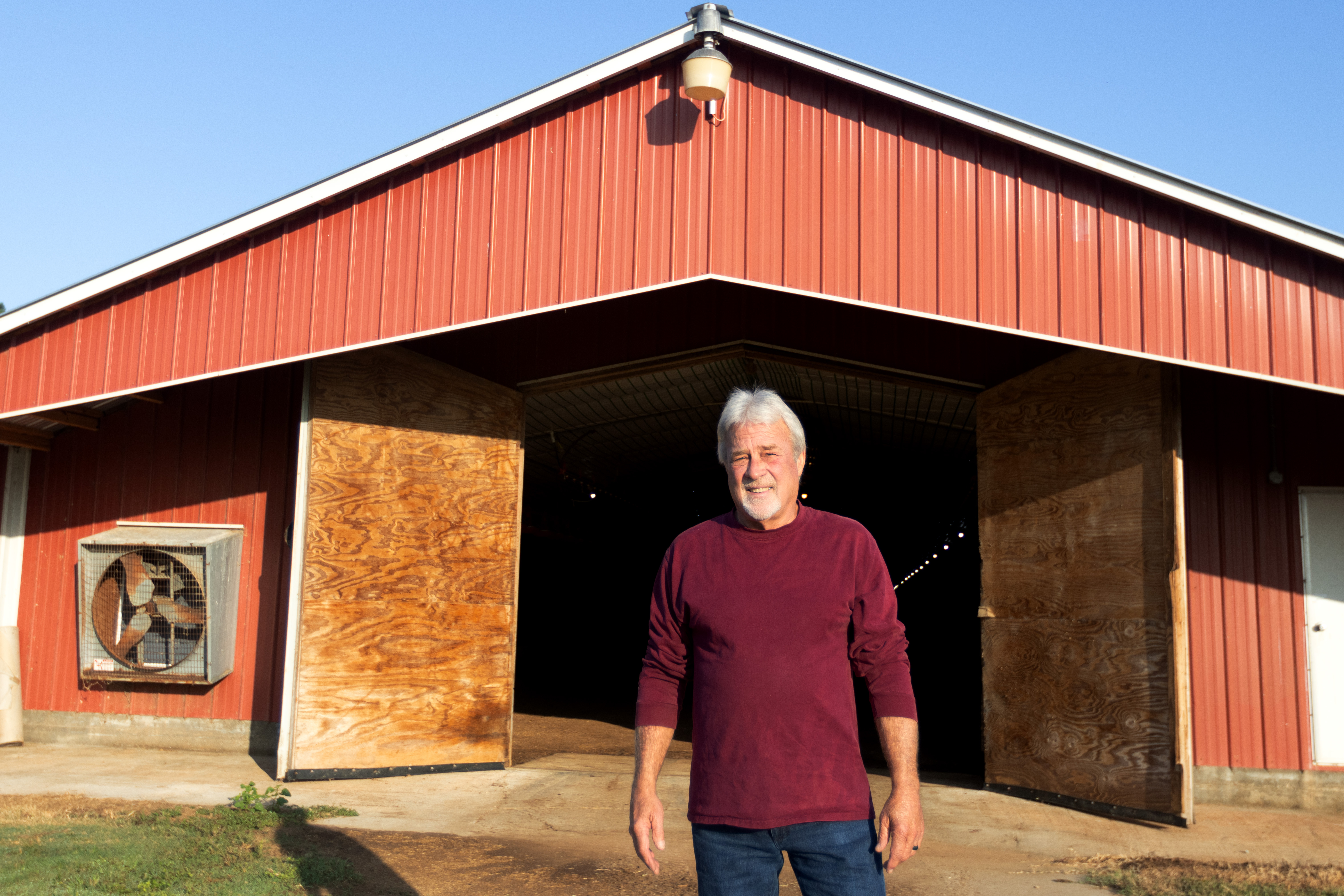
Howard Sanders has seen and adapted to new technology throughout his 48 years in the poultry business. But he said he will not partake in the new cell-cultured technology that entered the U.S. market last summer.
“We don’t have any big industry in Oglethorpe County. Oglethorpe County is a farming county,” Sanders said. “The effect on the job market would be astronomical, you know, if it ever did take effect, and that's all we ate was cell-cultured meat.”
Georgia ranks as the top poultry production state in the U.S., according to the National Institute of Food and Agriculture. The poultry industry employs more than 88,000 people in the state and has an overall economic impact of $28 billion annually.
The U.S. Department of Agriculture approved cultivated meat, or “lab-grown” meat, last June, which allows the production of meat in a laboratory without slaughtering animals. Companies have slowly begun releasing cultivated chicken into two U.S. restaurants, including Upside Foods in Bar Crenn in San Francisco and Good Meat in China Chilcano by José Andrés in Washington, D.C.
Some expect grocery stores to begin selling lab-grown meat in a few years.
While supporters hope that cultivated chicken will help combat climate change, there are concerns about its economic impact.
Sanders said he and other farmers believe consumers should continue to consume traditionally raised chicken rather than cultivated chicken.
Sanders, who also serves on the Oglethorpe County Board of Commissioners, said the success of cultivated meat could lay off enough residents that Oglethorpe County would not have as strong of a tax base.
Farmers, he said, pay the majority of the tax base in the county because they are the biggest landowners.
Differences between farming, cellular agriculture
Sanders’ great-grandfather started the family poultry farm in the 1800s. Sanders began to work in the poultry business when he was 16.
“My family had been farming this land since the 1800s — this land right here. And to me, it's an honor to still be here,” he said. “Farming is a way of life.”
After the chickens produce fertile eggs, the farmers send the eggs to hatcheries. Less than three hours after the eggs hatch, Sanders receives feed and the broiler chickens, a common breed for meat production.
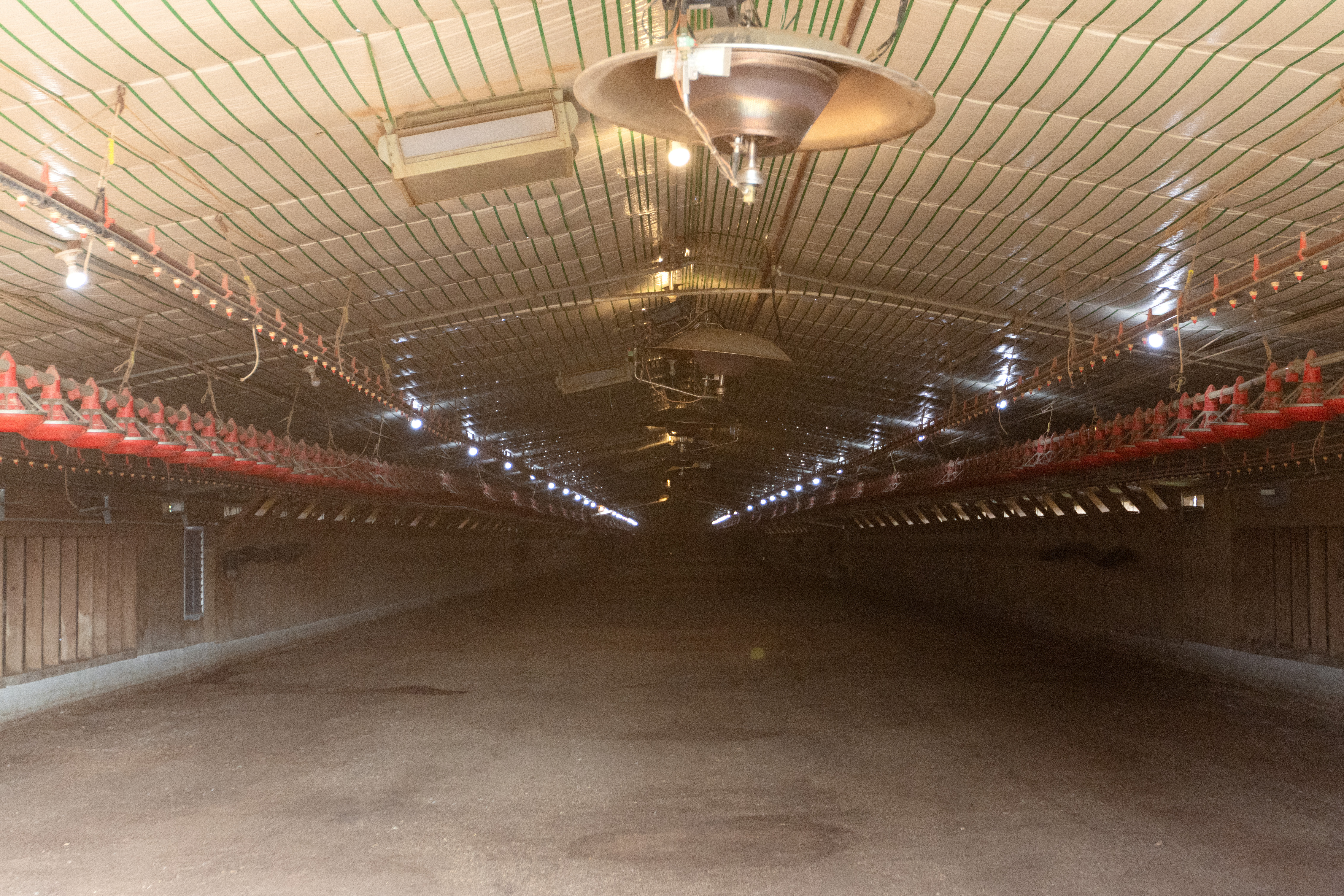
From there, he provides them with housing, ventilation and heat for about six weeks. Another company then takes the chickens and, eventually, the chickens go to a processing plant for meat production.
Chicken production is drastically different for cultivated chickens.
According to the USDA, the cultivating process begins with cells, typically taken from the tissue of an animal. The workers then place the cells into large, sealed vessels called cultivators.
Experts supply the cells with the necessary nutrients to develop skeletal muscle, fat and connective tissue. Once the product is of the desired type, the cellular material can be harvested.
Throughout the cultivating process, the Food and Drug Administration will oversee and regulate the cell collection, selection and growth, and the Food Safety and Inspection Service will oversee the harvest, processing and labeling, according to the USDA.
Along with other factors, Sanders said he thinks the process is wrong and would be harmful to people because of his Christian faith.
Other farmers he knows, he said, have similar views.
Can cultivated meat impact farmers?
William Secor, an assistant professor in the Department of Agriculture and Environmental Sciences at the University of Georgia, said broilers, a common breed of chicken, account for about half of all agriculture sales in Georgia.
From an economic standpoint, Secor said lab-grown meat might have some impact, but conventionally raised meat will likely remain the big player, at least in the short run.
To understand the impact of cultivated meat, Secor said, one has to understand how cultivated meat will align with consumers’ expectations and values.
Usually, consumers prioritize taste, nutrition, affordability and availability. After those factors, he says consumers may then have other concerns, such as social responsibility and environmental sustainability.
Because lab-grown chicken is more expensive, a substitution effect is unlikely, he said.
“The farmers that are growing the birds domestically, they're going to be the ones that would be impacted, but I don't think the impact would be very large at all, especially in the short run,” Secor said. “Long run? It's hard to say.”
Similarly, Sanders said he does not see cell-cultured meat completely taking over because of the costs of production and equipment.
But if cell-cultured meat succeeds in the market long-term, Sanders said, unemployment would spike in Oglethorpe County.
“It would be such an impact on the economy that we would never get over it as far as the amount of people that would be out of a job,” he said.
Allyson Reynolds is a senior with a major in journalism, a minor in sociology and a certificate in sustainability.