
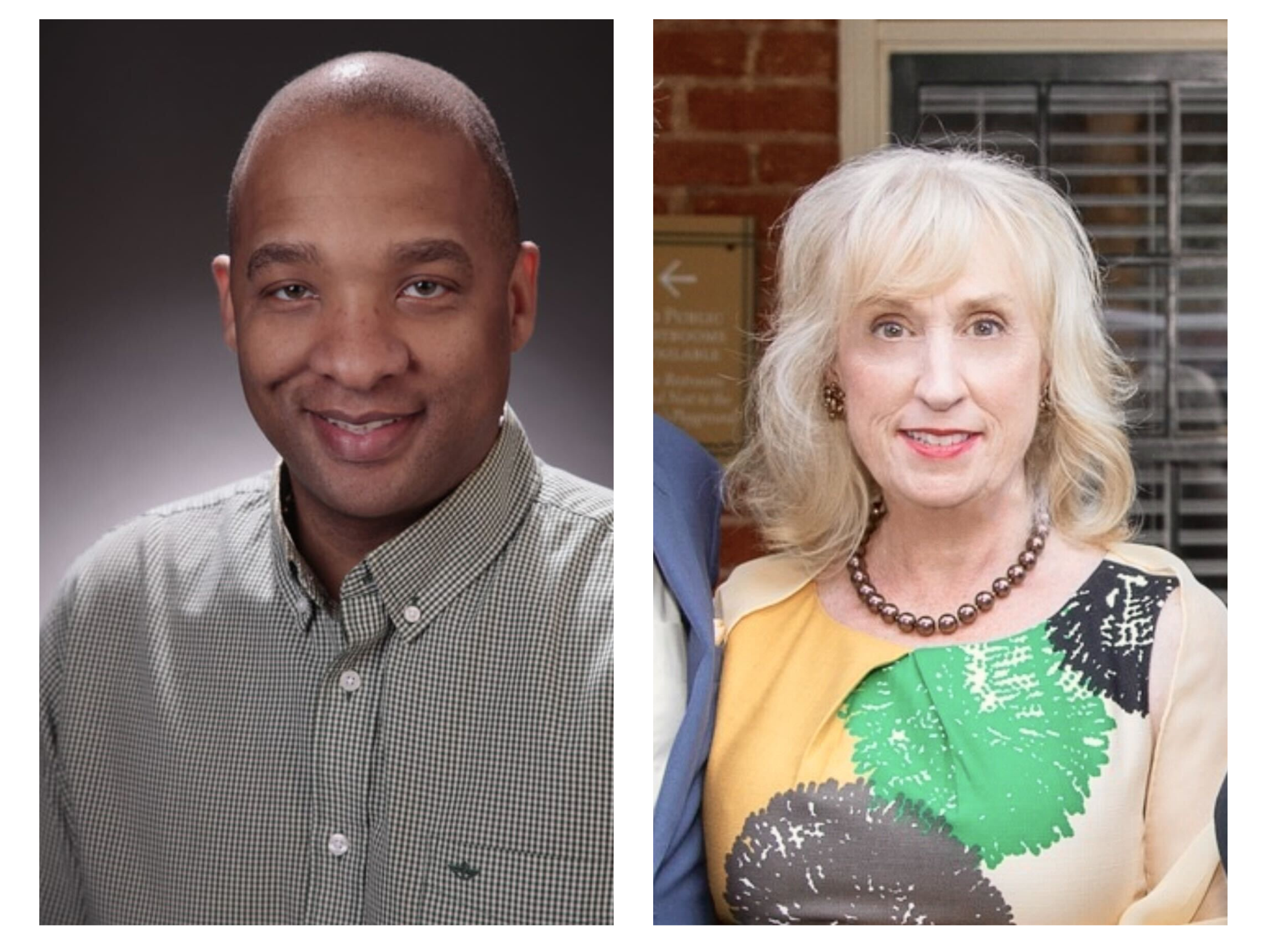
Cory Crayton and Evelyn Reece, the candidates in Lexington’s nonpartisan mayoral race, spoke to The Oglethorpe Echo about their views on key issues, such as city utilities, economic development and historic preservation.
Early voting for the Lexington mayoral race is from 9 a.m. to 5 p.m. Oct. 14-17 at 225 W. Main St. Saturday voting is 9 a.m. to 5 p.m. Oct. 18 and Oct. 25. Election Day voting will be from 7 a.m. to 7 p.m. Nov. 4.
Comments have been edited for length and clarity.
Cory Crayton
Originally from Louisiana, Cory Crayton is the Chief Information Officer at MedLink Georgia and has worked in the information technology industry for more than 20 years. He holds a bachelor’s degree in information technology from Georgia Gwinnett College and a master’s in cyber security from Penn State. Crayton’s career has centered on healthcare and IT support. In addition to his role at MedLink Georgia, he serves on the Lexington City Council and Historic Preservation Board. He has lived in Georgia for 25 years, including the last five in Lexington.
Q: What are your top three priorities if elected mayor?
A: I definitely want to continue the progress we’ve made in developing and redeveloping downtown. We’ve made a lot of progress with that, and I want to keep that momentum going, which leads into No. 2: to help attract more businesses and give people a reason to stop in Lexington and not just drive through, which in turn, can help the tax base, can help us provide services to the citizens of Lexington.
Q: City utilities have been a recurring concern in Lexington, from water quality to infrastructure maintenance. How would you address current challenges and ensure the long-term sustainability of the city’s utility systems?
A: The water issue is an ongoing thing. That’s the thing that we have some initiatives coming out for here pretty soon. The water quality. There’s some infrastructure improvements that we need to make. Well, for those infrastructure improvements, you need capital. So, whether that’s grants, whether that’s tax-based, whether that’s increasing rates — obviously, increasing rates — you don’t want to do that if you can avoid it. So, we try to find other avenues to get that revenue to improve the water quality. We do want to be one of the best, so there’s some things we need to do to put ourselves there.
Q: What’s your vision for economic development in Lexington?
A: Attracting businesses to that downtown to some of these older buildings that aren’t being utilized to get some activity in them. It’s a charming little town, so people (are) intrigued by it, and people stop, but there’s really nothing to purchase, or there’s no commerce going on downtown, or not a lot, at least.
Q: How do you balance the need for historic preservation with the push for modernization?
A: You can modernize, while preserving history and charm. (You) just don’t go through it with a sledgehammer and a chainsaw and just rip everything out. You just pay attention to the history of the buildings and to the surroundings. You want to keep it a charming little city, so it has that atmosphere, but (also) have the modern conveniences and modern opportunities.
Q: How can Lexington ensure new development benefits everyone, not just newcomers, but longtime residents?
A: Everything requires resources. Any of the services we provide as a city, it requires resources to maintain and to do it to the level it needs to be done. Therefore, sales taxes are a good source for that. Well, to get sales tax, you need businesses that sell things in the city limits. So, that’ll benefit the current residents and long-term residents indirectly, and that we could provide the quality services that we want to provide and have been providing at no cost to them, so to speak.
Evelyn Reece
A native of New Orleans, Evelyn Reece comes from a long line of engineers, but found her calling in cultural and resource management, with a focus on historic preservation, public service and ethics. She earned her associate and bachelor’s degrees from Southeastern Louisiana University and later completed a master’s in historic preservation at the University of Georgia. Since moving with her family from Athens to Lexington in 1998, Reece has worked as a consultant in the field.
Q: What are your top three priorities if elected mayor?
A: There is a focus on downtown and the blight issues, and there’s been a lot of progress there. We’re seeing it come into beautiful fruition. I really believe in government transparency. I would really like to see the agendas and the minutes of the mayor and (city) council, the Downtown Development Authority and the (Historic) Preservation Commission available online so citizens know what’s going on. I want it to be a lot more welcoming and friendly when people come to the meetings. It’s not always really felt that way. Our zoning ordinance hasn’t been updated in nearly 40 years. I would really like to make sure that we have things in place that will allow businesses to thrive.
Q: City utilities have been a recurring concern in Lexington, from water quality to infrastructure maintenance. How would you address current challenges and ensure the long-term sustainability of the city’s utility systems?
A: First, we’ve had an ongoing issue with traffic calming. We’re on Highway 78 and people are running into our buildings. In order for businesses downtown to make it, it has to feel safe, it has to be pedestrian friendly. As far as the water goes, we’re blessed with our location, but at the same time, we have built-in challenges with our granite substrate and radon. I believe there will be funding sources to make serious improvements there.
Q: What’s your vision for economic development in Lexington?
A: Economic development is business, and we need businesses downtown. These blighted buildings are starting to come on into sound repair where businesses can go in. I believe it’s really important for the city to sort of back, not just the punitive aspects, but to reward those aspects and help businesses come to town. We’ve kind of laid the important groundwork, and the city needs to step up to the plate with the various organizations — the Downtown Development Authority, the city council — to reward those efforts with things that will attract businesses here.
Q: How do you balance the need for historic preservation with the push for modernization?
A: I’m really big on getting through as efficiently as possible. Whatever public requirements are to get in place, and then just getting to the point where you can break ground. It’s really important, but I don’t think people should feel intimidated. Lexington is just one big historic site. To me, this is our biggest asset, and that asset needs to be leveraged into heritage tourism.
Q: How can Lexington ensure new development benefits everyone, not just newcomers, but longtime residents?
A: I think the most important thing is to know what people want, to know what their biggest concerns are as far as development goes. I would really like to see housing stock and commercial buildings be improved first before we feel the need to sort of do new construction.