
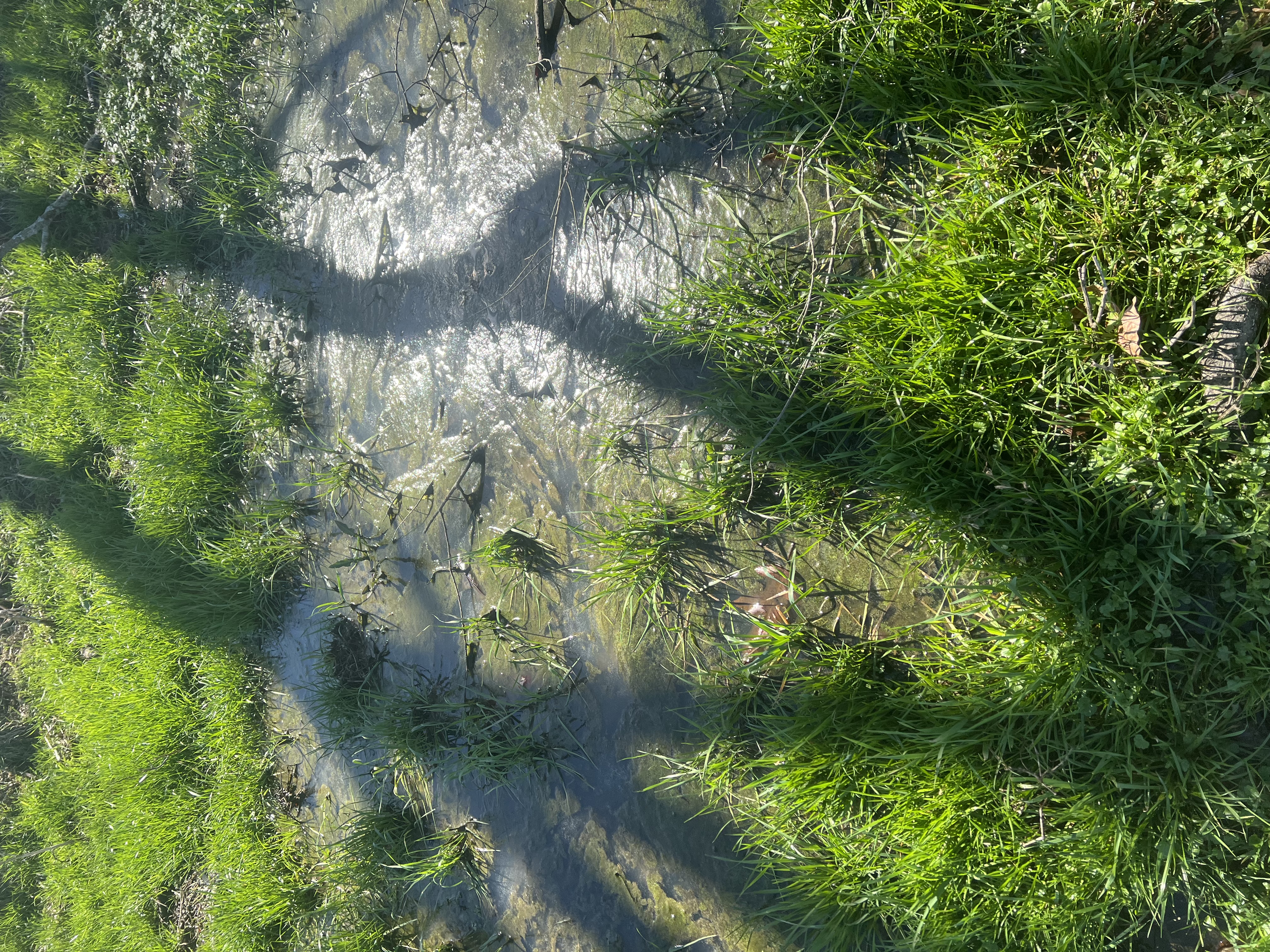
More than 40,000 tons of sludge were used for agricultural purposes in Georgia in 2018, according to the National Biosolids Data Project.
That’s four times the weight of the Eiffel Tower.
Sludge — also called soil amendments or biosolids — is fertilizer made of recycled goods. However, not everyone agrees about the use of sludge, and its use in Oglethorpe County has been a topic of debate for several years.
The U.S. Department of Energy said the application of sludge to farming land might reestablish microbial activity in sterile soils. Microbes in the soil improve the soil’s quality and support plant growth.
Todd Rasmussen, a hydrology professor at the University of Georgia, agreed with the U.S. Department of Energy’s assessment. While Rasmussen said he considers sludge a promising alternative to expensive synthetic fertilizers, he also acknowledges the pressing concerns surrounding its use.
“We have a worry about pathogens, toxic metals or other chemicals,” he said. “The state has rules to regulate what can go on the soil, and these things are constantly being updated as we conduct more studies on the toxicity of different things.”
Rasmussen likens sludge application to taking vitamins: beneficial when used appropriately, but harmful when applied excessively.
For Rasmussen, the key is sustainability. He emphasized the need to reproduce soil fertility while advocating for vigilance and careful management in the application of biosolids like sludge.
“One of the things we like to do on campus is to think long term, ‘How can we work with nature sustainably?’ ” Rasmussen said. “This whole sense of reusing (materials) adds very beneficial nutrients to the landscape, but you know, always be vigilant, be careful and make sure you’re not putting too much on.”
Tonya Bonitatibus, executive director of the Savannah Riverkeepers, takes a more skeptical stance on sludge application.
While Bonitatibus concedes that some instances of sludge application may be beneficial to the soil, she’s concerned with the diversity of potential ingredients within soil amendments.
This complexity makes it difficult for farmers to discern whether the sludge they receive will be advantageous or detrimental to their land.
“I have zero doubt that some of the people participating in the program are providing waste that is beneficial to the soil,” Bonitatibus said. “The problem is the breadth of multiple hundreds of different waste streams that have been categorized as soil amendments, and not all of them are beneficial to the ground.”
The Georgia Department of Agriculture (GDA) tests sludge for nitrogen, phosphorus and heavy metals, but Bonitatibus said it can consist of any mixture of up to 550 different ingredients.
Some elements, like lead and arsenic, are dangerous. Sludge containing these potentially dangerous substances is permitted as long as numbers remain below 13 pounds per acre for lead and 1.8 pounds per acre for arsenic.
The Environmental Protection Agency classifies sludge as a “biosolid” and has split it into two categories: Class A and Class B.
Class A biosolids are rigorously treated to eliminate pathogens and contaminants. The metal content is low and the organic matter is stabilized, so there is little odor.
Class B biosolids, while still subjected to treatment, have a higher pathogen content than class A biosolids with more varied characteristics and stronger odors.
To register sludge as a soil amendment, applicants must submit a copy of the product label to the GDA. The label must contain essential details such as the product's name, a statement of its benefits, the concentration of active and inert ingredients, recommended directions for use, net weight or volume, and the name and address of the registrant.
If the sludge is derived from industrial by-products or sewage waste, which most Class B biosolids are, the registrant must also specify the industry it comes from, a description of how it is produced, and the intended use and frequency of application of the sludge.
Despite these registration procedures, Bonitatibus said she is still concerned about the extent of the testing and oversight and wants to see greater vigilance around the use of sludge going forward.
“There’s a sampling that has to be done, but it’s not very extensive,” Bonitatibus said. “One of the biggest outstanding questions is, ‘What all has the ag department allowed to be put in there?’ Because I can tell you, some of it is decomposing baby chicks.”