
Gresham’s decades-long work uncovers the stories and traditions hidden in Georgia’s cemeteries.

Tom Gresham has devoted his life to uncovering the hidden histories of Georgia, spending nearly four decades at grave sites and historic cemeteries to document lives that might otherwise have been forgotten.
His work bridges science, history and ethics, offering insights into the state’s past.
Fifty people attended the Historic Oglethorpe meeting on Tuesday night, where Gresham presented “Archaeology of the Dead” — a talk at the Oglethorpe County Library designed to connect people with the land they live on and the stories buried beneath it.
Much of Gresham’s research has focused on the cultural aspect of burial practices. When excavating the area surrounding Baldwin Hall in 2015-2016, he found that in the late 18th century, many Southerners adopted a Western African burial style.
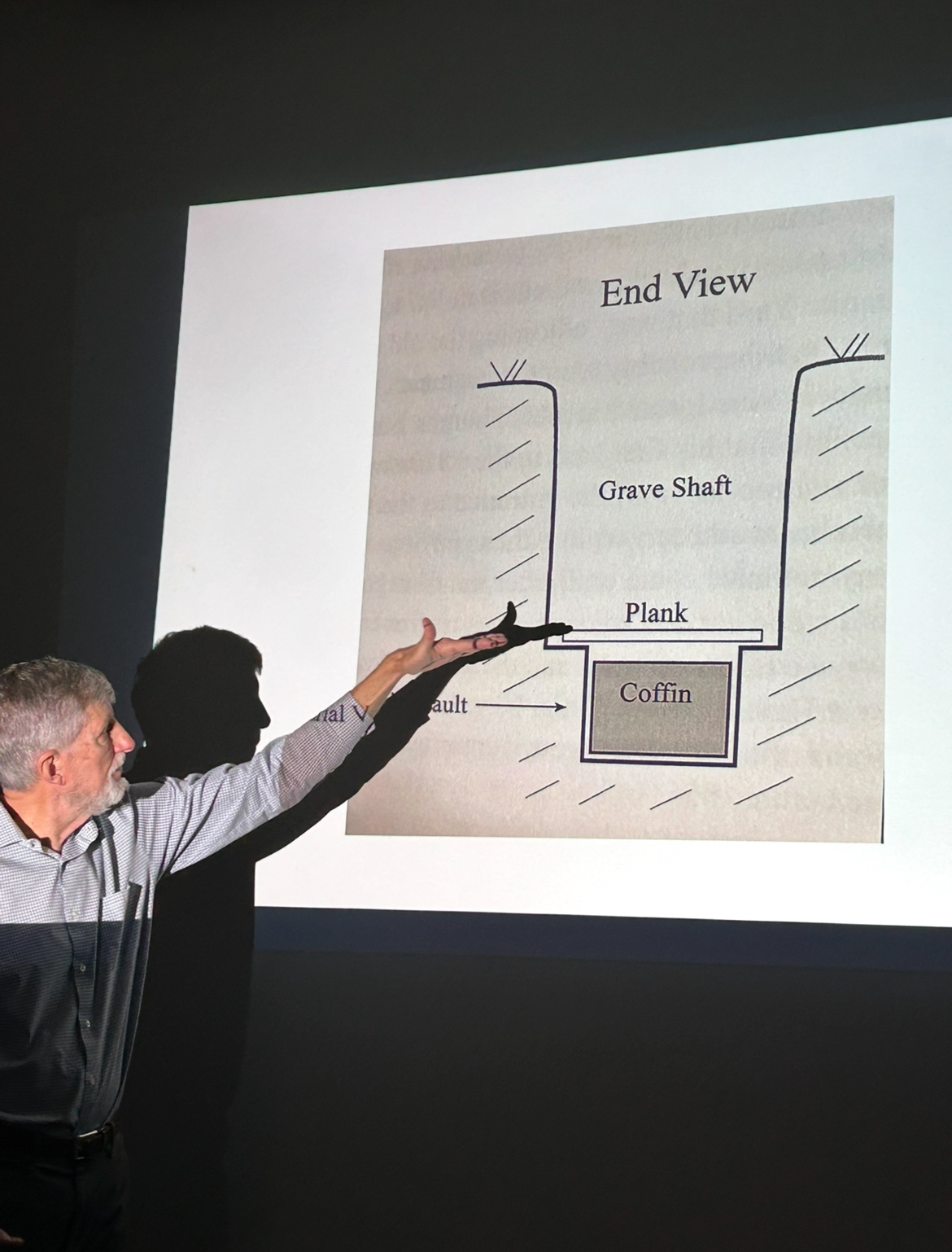
“It was adopted by whites and Blacks together, so that you have essentially the method of burial with a plain pine box,” Gresham said. “Both of them had wooden boxes fastened with nails with virtually no artifacts buried in this coffin, this type of excavation where you go down, then you come in and have a smaller plate hole to put the coffin in.”
The enactment of Georgia’s Abandoned Cemeteries and Burial Grounds Act of 1991 changed much for archaeologists throughout the state, ensuring they consult with descendants, require public notification and detailed documentation before graves could be relocated, preserving historical context.
“Prior to 1991, archeologists tended to dig Indian sites along with burials,” Gresham said. “There was a lot of discussion, particularly in the ’80s, between professional archeologists and the Native American community. Federal and state laws were passed to sort of limit and require discussion among archeologists and the descendants or ancestors of those buried.”
Gresham began as an archaeologist in college after deciding not to pursue engineering. His career evolved into surveying sites across Georgia, exploring locations shaped by the history of Native Americans, enslaved people, white settlers and others.
Roads, reservoirs and construction sites often revealed signs of graves, many unmarked and undocumented, a fact that Gresham said can frequently be inferred by the surrounding terrain.
“I discovered this historical site (Barrow Creek) because (construction workers) started uncovering stuff,” said Gary Doster, a member of Historic Oglethorpe and avid collector.
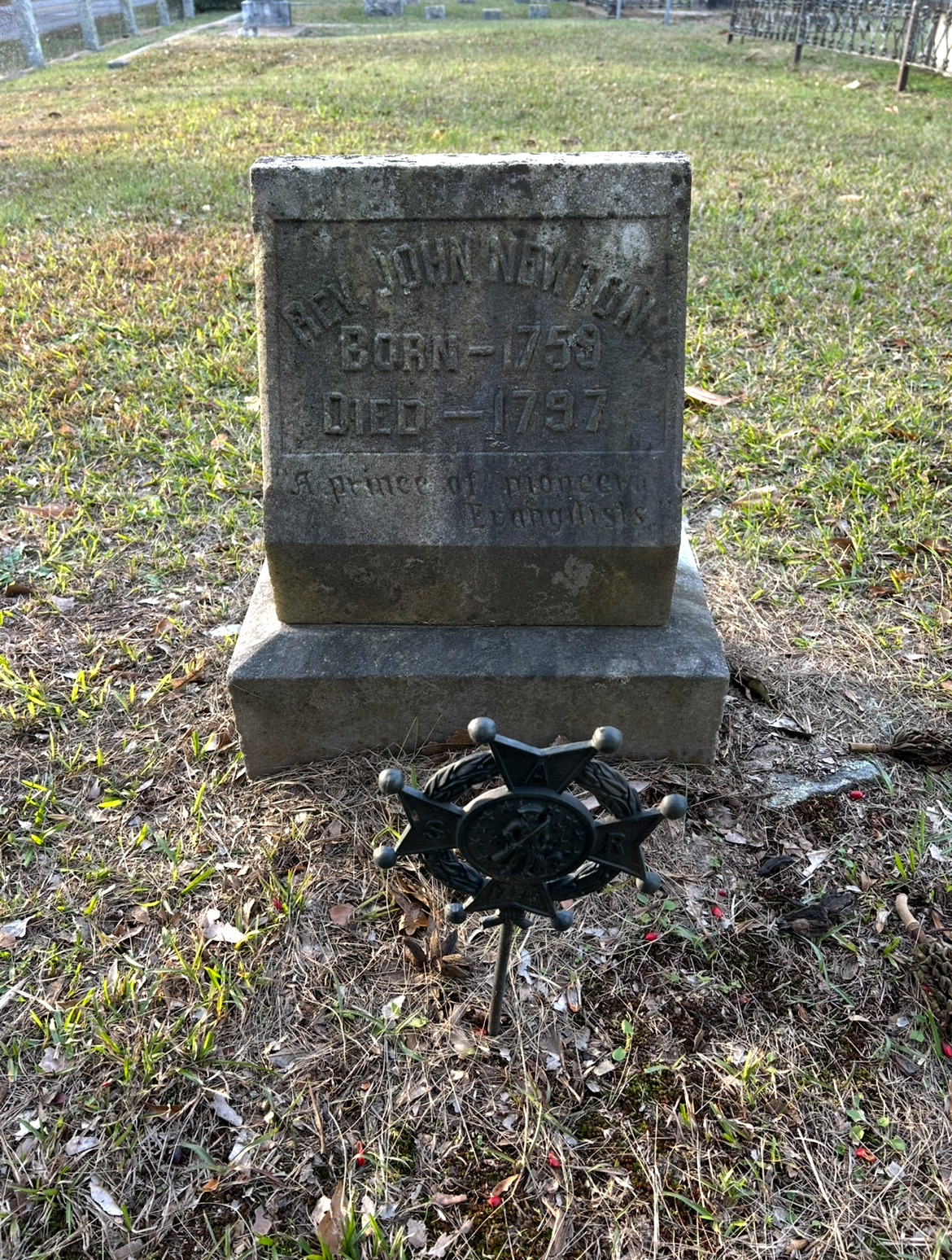
Along with a Native American gravesite, he helped uncover and preserve other sites in Oglethorpe County, including the original cemetery of the Beth-Salem Presbyterian Church and the remains of founding Rev. John Newton.
Doster stressed the importance of learning history.
“We don’t have as many people that are interested in our history as we used to. A lot of it’s just being ignored or destroyed,” Doster said. “We need to keep these important historical sites in good condition and take care of them.”
Cemeteries serve as tangible records of Georgia’s past. They reveal cultural traditions, social structure and everyday life.
“Once you dig it, you’ve destroyed it,” Gresham said. “Archaeology is not the artifacts that you find, it’s the context. It’s the layers of soil where artifacts are found, the relationship to other artifacts and features.”