
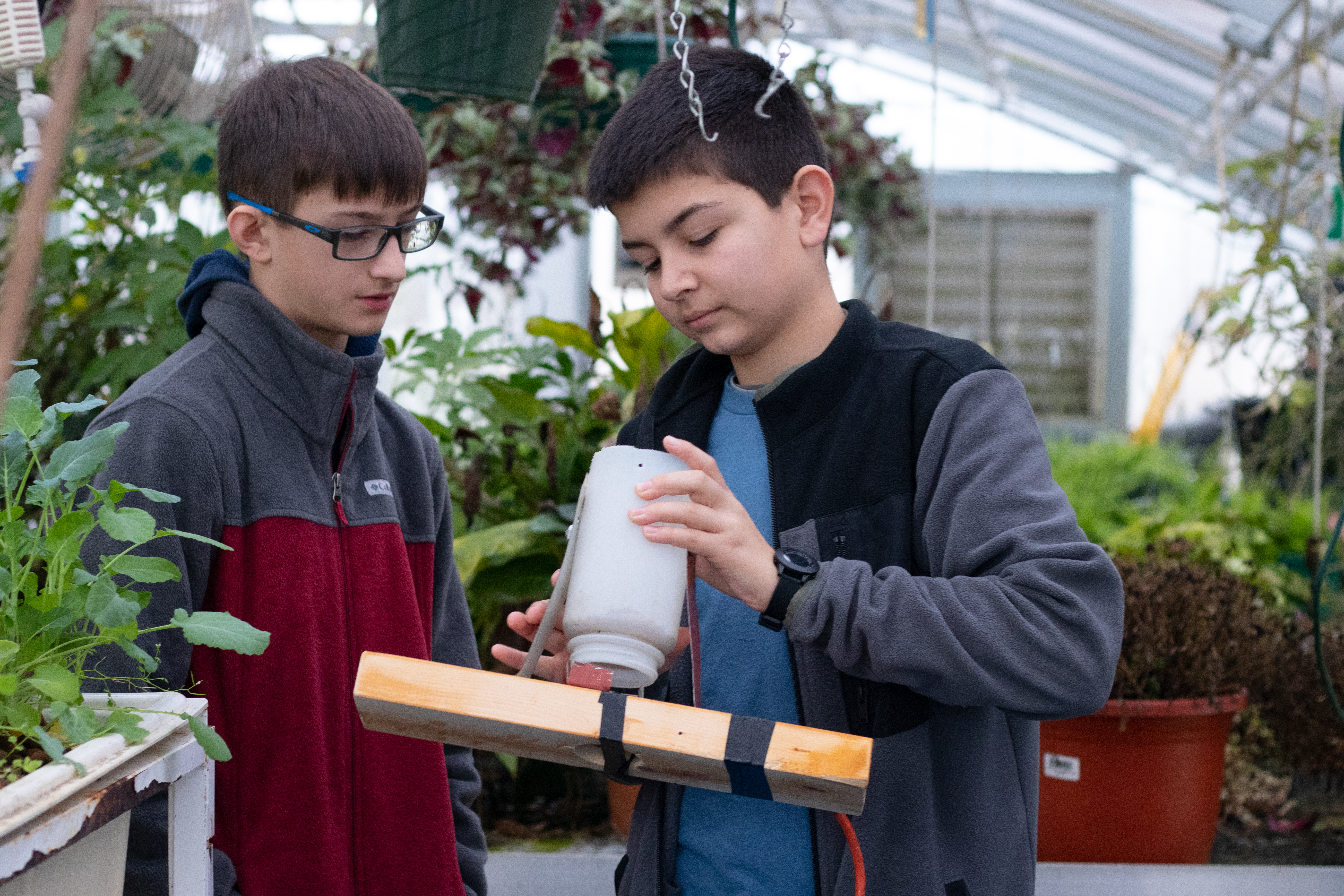
In a county where agriculture is one of the largest industries, Oglethorpe County Middle School students are learning aquaponics, a modern form of agriculture to prepare for a more urban future.
OCMS teacher Sara Hughes, who runs the program as part of her eighth-grade science class, wanted to teach students a new way to farm, keeping food insecurity and a growing population in mind. She formed it from a 2014 equipment grant and separate hydroponics and aquaculture systems.
“With an increasing world population, I try to educate them about different methods for growing food and alternative practices in agriculture,” Hughes said. “So that’s one of those options of what we might have to turn to more and more as we continue to have more people and expanding cities.”
Aquaponics systems are a combination of hydroponics, which is a way of growing plants through water — instead of soil — aquaculture and the cultivation of fish.
Water from a large tank flows through a filter table and a bacterial filter; it is the students’ job to empty the water out of the filter table and clean it each day. Then, this water is pumped through a table, where the plants are grown.
This nutrient-rich water from the fish helps fertilize the plants. The roots of the plants filter the water, making it clean and ready to go back into the fish tank.
Students go to the greenhouse behind OCMS to complete their daily routine. They clean the filters and make sure everything is running smoothly, eighth-grader Cole Faust said.
“You get to know a lot when you come out here every week and be actively hands-on with it,” he said.
Urban agriculture like aquaponics is already practiced by 800 million people worldwide and will continue to grow with growing urban populations, according to the U.N.’s Food and Agriculture Organization. The U.N. predicts the world’s population will increase to 9.7 billion by 2050.
Hughes said while agriculture is the main industry in the county, most students don’t live on farms and are still removed from where their food is grown and produced. She thinks it is important for the students to realize the origins of their food by growing some of it themselves.
“I always tell my kids I want them to be well informed consumers and good citizens,” Hughes said. “And I think this contributes in both of those ways, being able to help others, but also be able to provide for themselves.”
Fewer plants grow in the winter, but when they’re plentiful, the students are allowed to snack on the lettuce they grow.
The students usually have a fish fry with the fish from the system at the end of the year. While tilapia are typically used, this year, OCMS used bluegill, which is a smaller species. Eighth-grader Miley Christian said they may release this native species into a pond.
Both Christian and Fraust said one of their favorite parts of taking care of the aquaponics system is taking care of the fish. They like to see the progress of their work and how the plants and fish grow before their eyes.
“It’s really fun how they act,” Christian said.
Hughes said the future of this program lies in the students. As the kids grow older, they’ll make consumer decisions, be leaders and help decide how land is used and how to feed people. Hughes hopes aquaponics can prepare the students to be ready for a world with more agricultural possibilities and urban farming.
“Overall, I want them to be well informed and be able to make good, educated decisions,” she said. “I don’t tell them how to think; I try to teach them how to think.”