
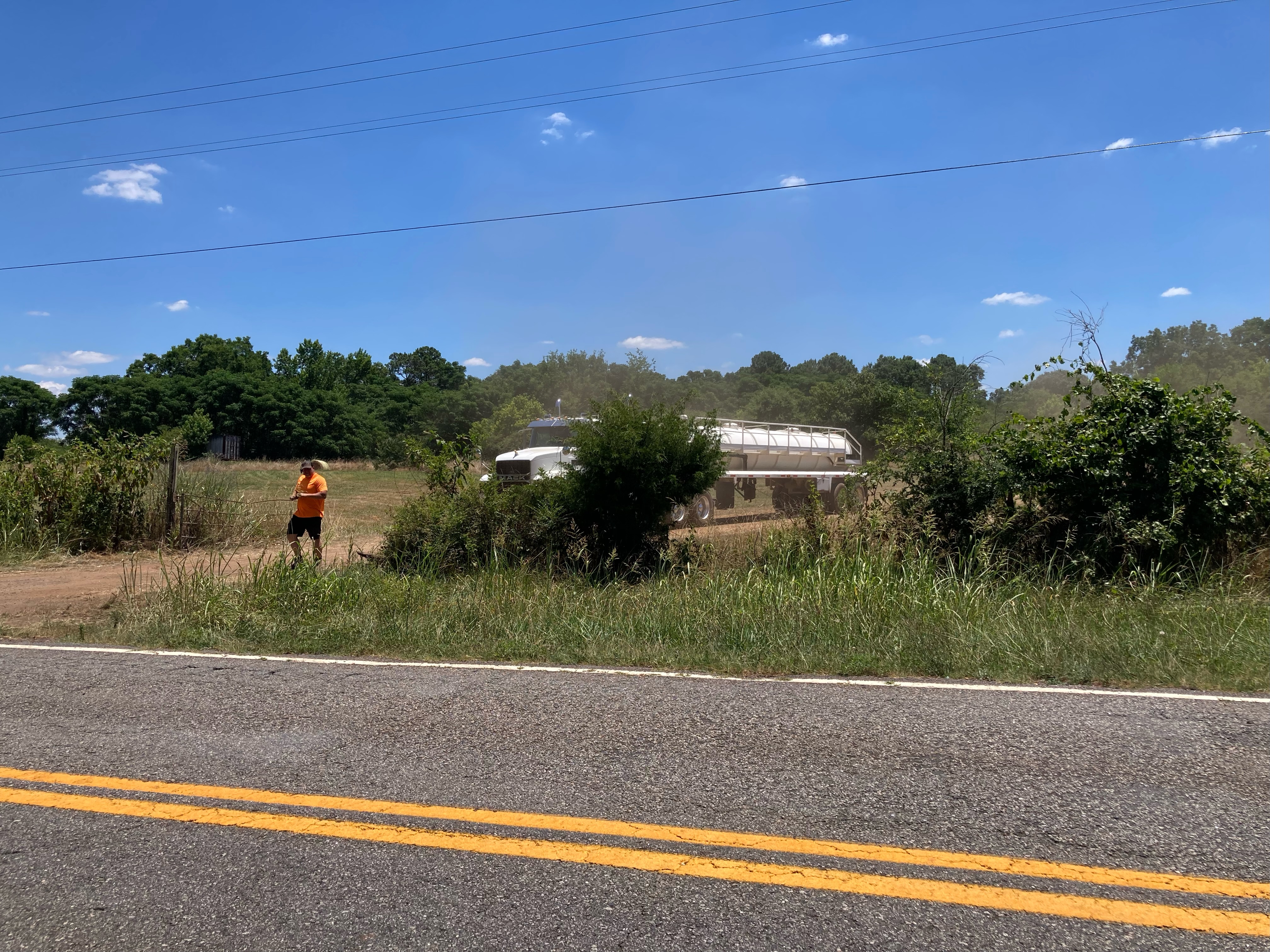
District 4 Commissioner Will Brown is investigating the contents of sludge that was spread on a farm in his district.
JB’s Farm on Wolfskin Road in Arnoldsville was the site of sludge dumping for over a month, with application beginning in early May and concluding in June, according to Georgia Department of Agriculture records.
For weeks, neighbors complained of an “intolerable” stench throughout the Lake Oglethorpe area.
“I work with dairy farms across the Southeast, so I feel like I can speak to what is a bad smell,” Brown wrote in a letter to Department of Agriculture Commissioner Tyler Harper dated July 30. “When I say some of these applications are bad, I mean it is gut wrenching. It sticks to your person, your vehicle, and the inside of people's homes for miles in some cases.”
But as the application of soil amendments have stopped at JB’s Farm, Brown’s chief concern lies within the health of damaged soil and its connectivity to surrounding water sources.
Oglethorpe County approved a sludge ordinance last summer that states soil amendment applications need to be at least 100 feet from property lines. It also gives the county power to investigate application sites and report issues to Georgia’s Department of Agriculture or Environmental Protection Division.
According to a provision within the Department of Agriculture’s supplemental restriction and prohibitions, during the amendment application period, soil must “maintain a pH within the optimum range for crop production,” (between 6.0-7.5).
Brown said in his letter that he is “almost positive” that the prescribed 174 tons of lime needed to rectify acidic soil on the farm was not applied.
“They say a lot of these soil amendments are for soil health, which is false,” he said.
Brown noted that he and others closely watched the site to see if lime was being applied, and there was no sign of any application.
In addition to detrimental pH levels, Brown expressed concern regarding the application of PFOS and PFOA chemical compounds. These compounds break down slowly and pose “potential adverse effects” to the environment, according to the U.S. Environmental Protection Agency.
“I wanted them to talk to me because (the Department of Agriculture) is obviously not doing anything to prevent disasters,” Brown said.
He alluded to a sludge-related incident in Wilkes County two years ago, where a farm was fined $5,000 for unleashing harmful chemicals into nearby waterways, killing 1,700 fish.
Both Brown and Oglethorpe County Commission Chair Jay Paul expressed their displeasure in having to process open records requests through the Department of Agriculture to obtain information about local soil amendment applications.
“We’re not even put on notification of when (soil amendments) will be coming and where,” Paul said. “When we respond to these things, it’s reactive.”
In an email to The Oglethorpe Echo, Brown wrote that “people who buy hay should think twice before buying it off of land that has had all of these heavy metals applied to it.”
“Our best defense against this type of dumping is our local landowners researching what actually is in this waste, realizing it’s not healthy for their soil, and having the gumption to turn away these waste companies,” he added.