
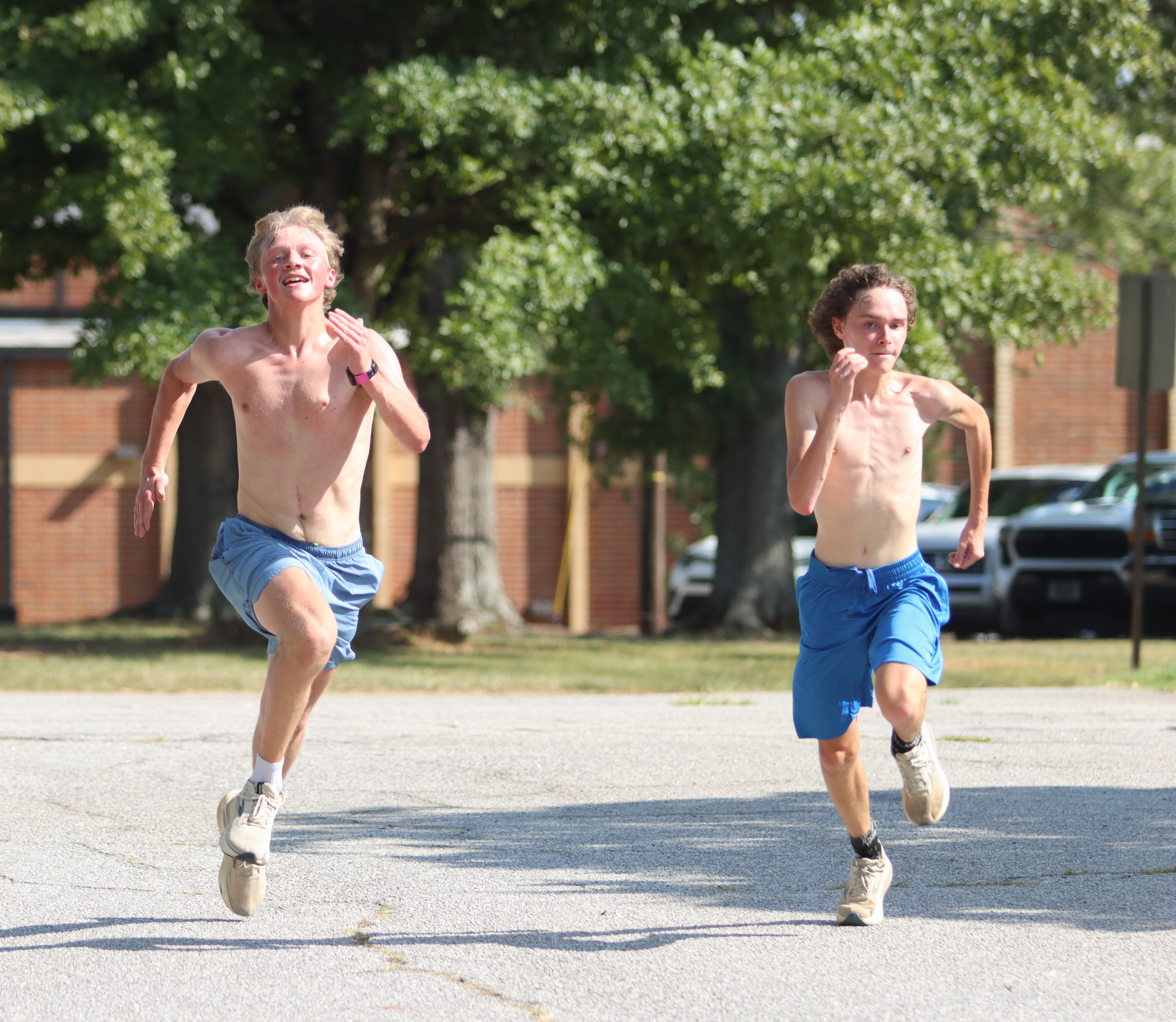
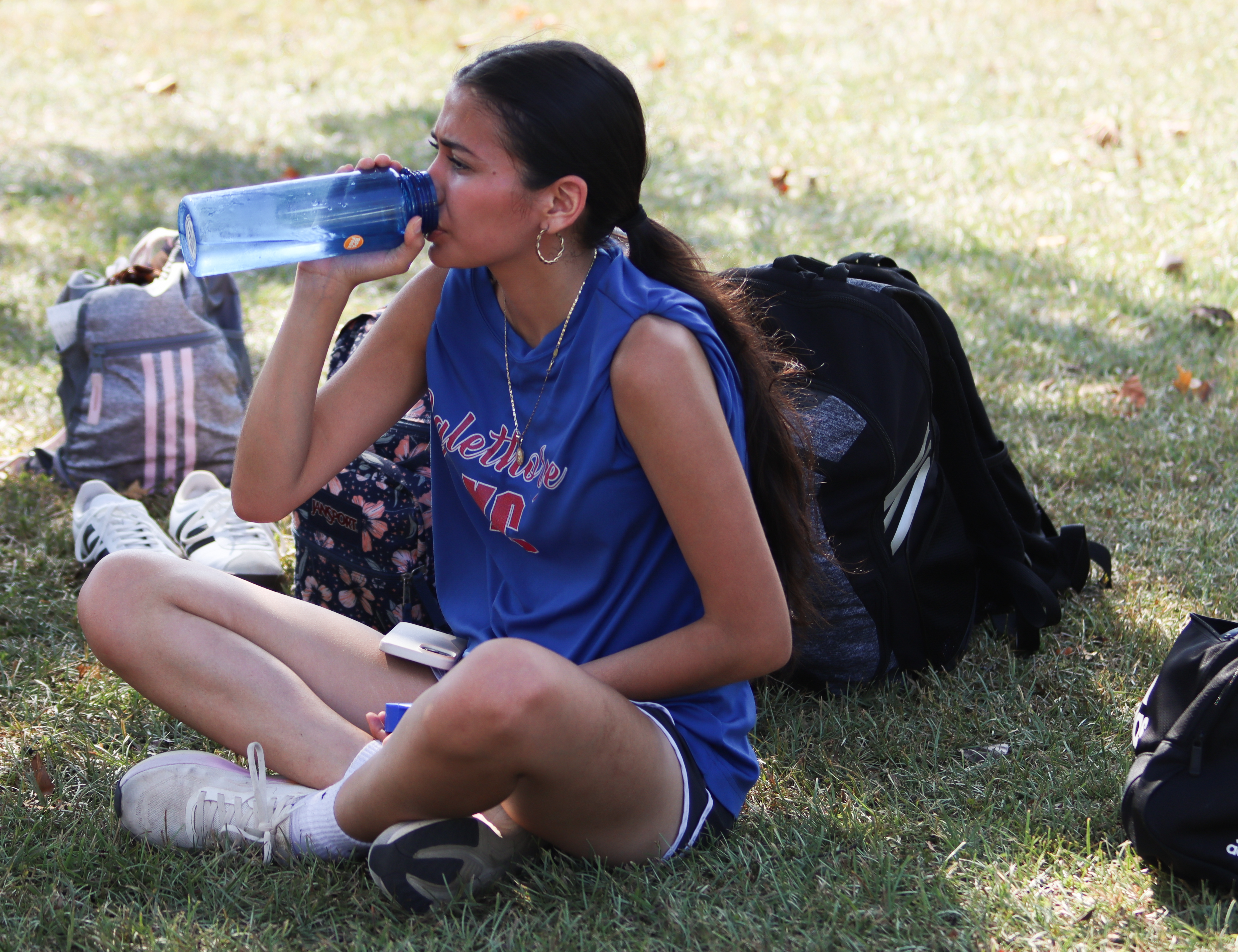
Oglethorpe County High School athletics have modified practices to keep athletes safe as the summer heat has averaged more than 8 degrees warmer than last summer. The cross country team has felt the effect of the high temperatures and the changes in training it’s caused.
“They know they’re not prepared for a race because they can’t get in the workouts they need to get in,” assistant coach Darrius Tompkins said. “They go into a race knowing they’re not as prepared as they should be.”
That’s because OCHS runners have rarely practiced outside since the beginning of the school year.
The Georgia High School Association website states sports are required to modify practices if the wet-bulb globe temperature (WBGT) reaches 87 degrees Fahrenheit or higher. If the WBGT reaches 92 degrees or higher, practices must move indoors. According to NASA, a high WBGT can cause heat exhaustion, heat stroke and increased body temperature.
Cross country coach Brandon Adams said he’s been forced to move practices inside 10 times this year. In comparison, the team only had two inside practices all last season due to thunderstorms.
This has also affected race times for OCHS runners, along with cross country runners across Georgia. Times have gone up by 30 seconds to a minute from this year compared to last year, according to data from the MileSplitGA website.
Runners are forced to practice inside if the WBGT is too high; however, they can compete in races no matter the WBGT.
Adams said there is usually a slight “decline between seasons” in race times, “but usually it’s not as much” as this year.
While many larger schools, with students who live close by, can call for morning practices to run outside, Oglethorpe County can’t because of how far students live from the school.
“The schools that can get kids there in the mornings are going to have an advantage,” Tompkins said.
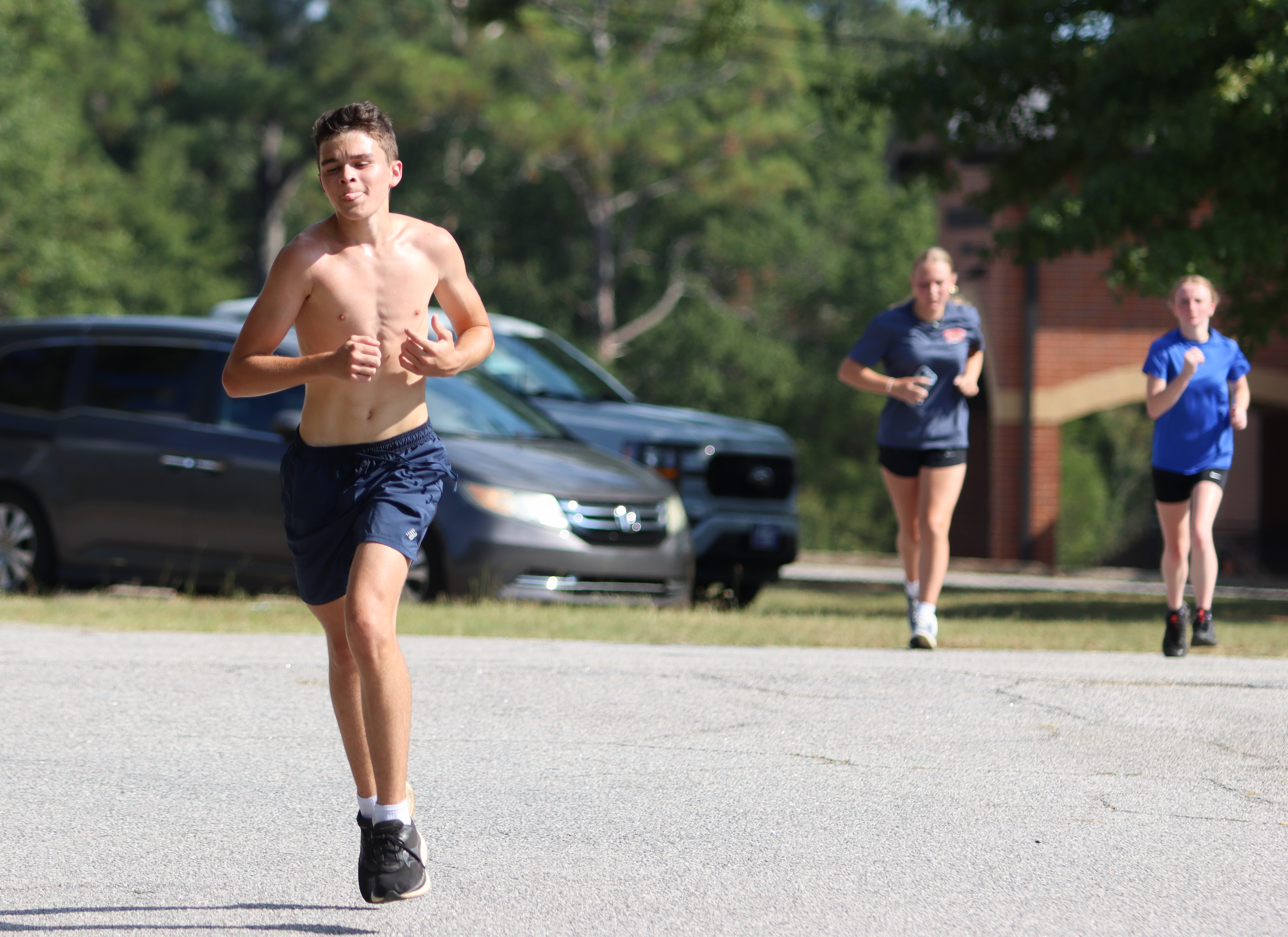
According to a clinical trial in 2012, running on concrete causes more stress on an athlete’s body than running on dirt or grass.
“It’s hard to get in quality workouts because most of the time we’re inside pounding on concrete,” Tompkins said. “It’s hard on the body, and it’s mentally tough.”
Adams said running on concrete can lead to shin splints, and it doesn’t give runners an accurate feel for an actual race.
For instance, senior Peyton Duvall’s shin splints have been bothering him.
“Running in the halls can really affect your shins, but I’m just ready for the weather to be cool again, so we can run outside,” Duvall said.