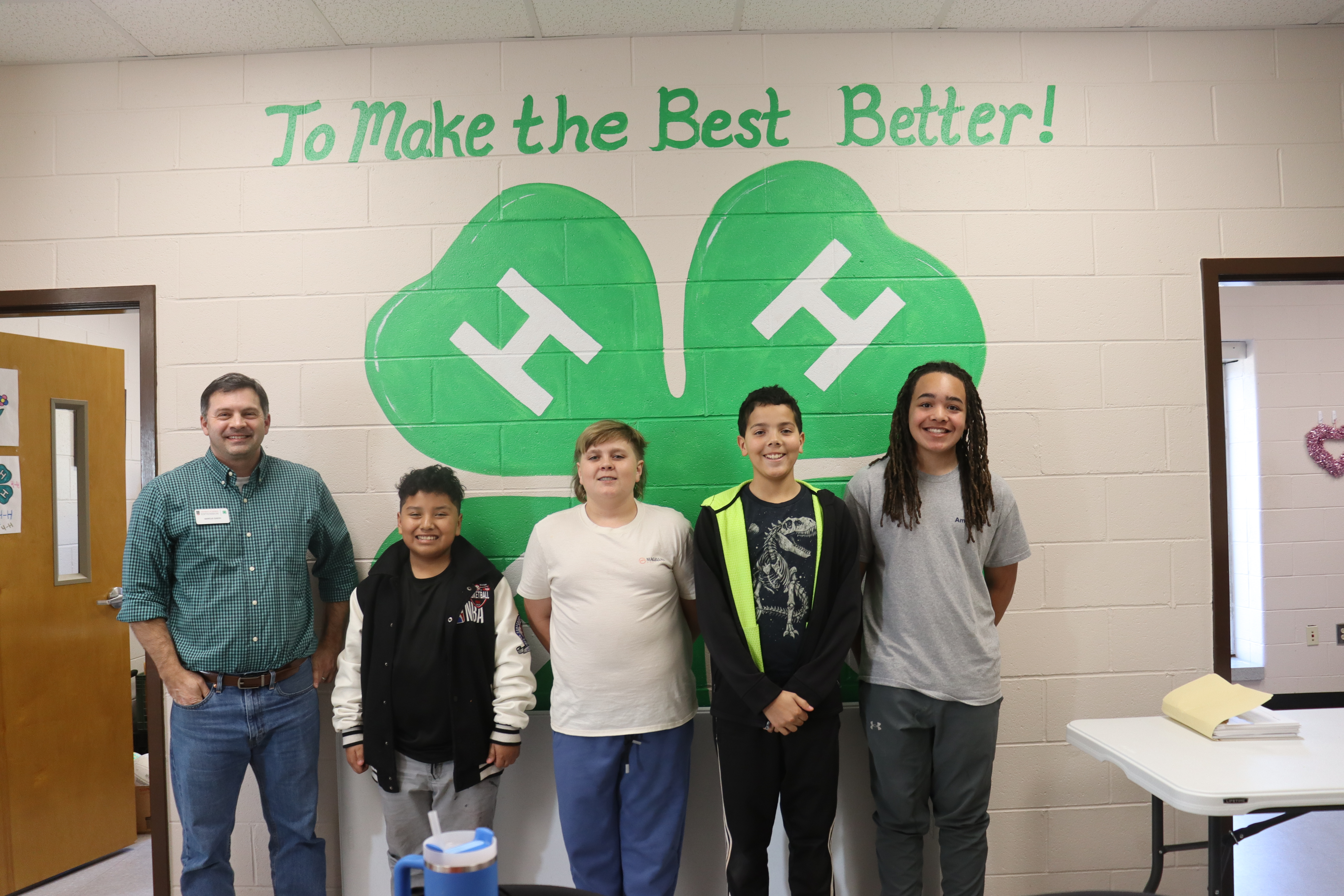
Working with poultry
The poultry practice group meets from 3:30-5 p.m. Tuesdays at the Oglethorpe County 4-H Office and is open to anyone ages 9-19.
There were no feathers scattered across the floor, and a familiar clucking was absent during poultry judging practice at the Oglethorpe County Extension Office last week.
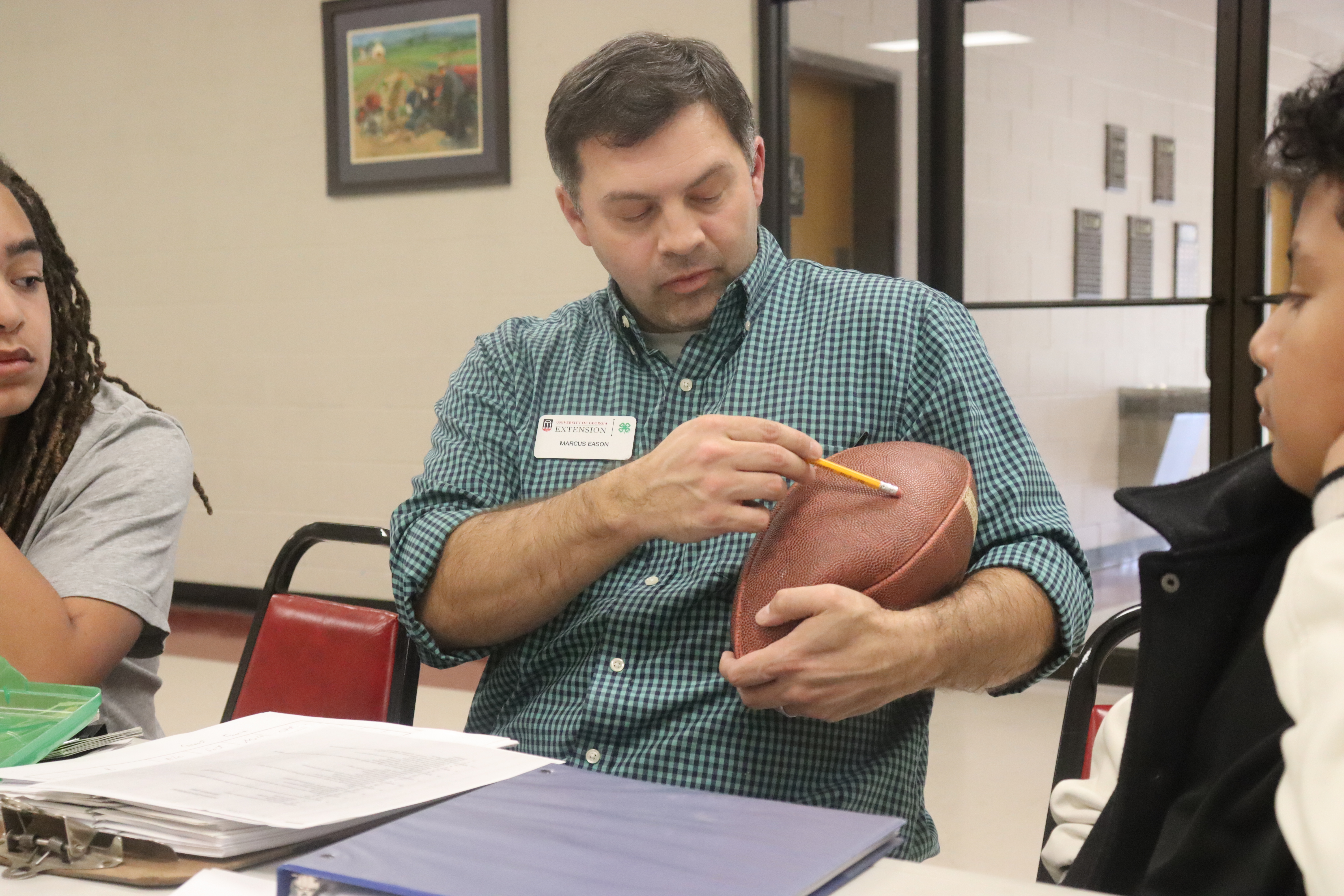
Instead, Marcus Eason, the county’s 4-H agent, cradled a deflated football under his left arm — where a white leghorn hen would usually be.
Eason lightly pressed into the featherless football, demonstrating to the three students where, on a live hen, they would need to assess factors like abdominal capacity as they prepared for the upcoming Georgia 4-H Area Poultry Judging Contest on April 24.
“I’m still having a hard time finding birds to keep here or just borrow for an extended amount of time because egg prices are up,” Eason said. “And I can definitely understand why people don’t want to spare a couple of chickens because that’s some dollars.”
In a typical season, the 4-H program would receive hens and eggs from the district development coordinator. But with avian flu concerns, the county is “on its own” this year.
“Some of these kids need to be comfortable picking up these live birds, turning them over, and feeling what they need to feel for,” Eason said. “And right now, I don’t have anything to practice with.”
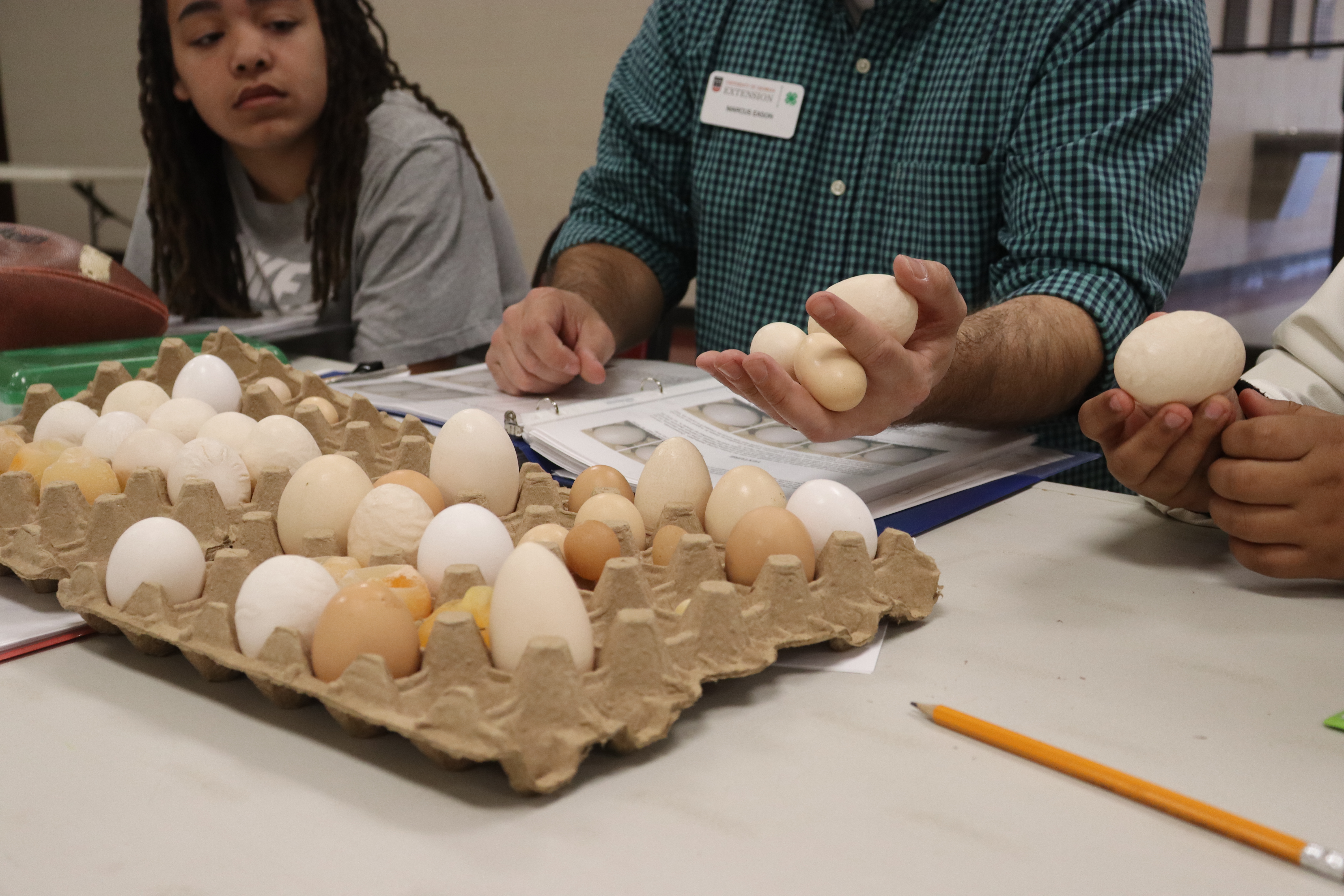
The Oglethorpe County 4-H Club is in need of white leghorn hens and misshapen or calcified eggs, the same types used in competition.
“But at this moment, we’ll take any kind of hen and eggs as well,” Eason said.
However, the lack of live birds hasn’t ruffled any feathers at poultry judging practice. Eason and his students are still hard at work preparing for the competition.
Students practice identifying a range of poultry parts, delivering oral presentations and grading various poultry and egg products, each skill preparing them for different aspects of the competition.
Some sections are clearly favored over others.
“I hate this part,” said Blane Latimer, a seventh-grader at Oglethorpe County Middle School, as practice shifted to the written exam portion of the competition. “That’s the part I’m worst at, and I’ve been doing this for three years.”
Latimer can quickly rank his white leghorn hens and flawlessly identify poultry parts, but like many of his peers, the written exam, based on the extensive National Poultry Judging Manual, remains intimidating.
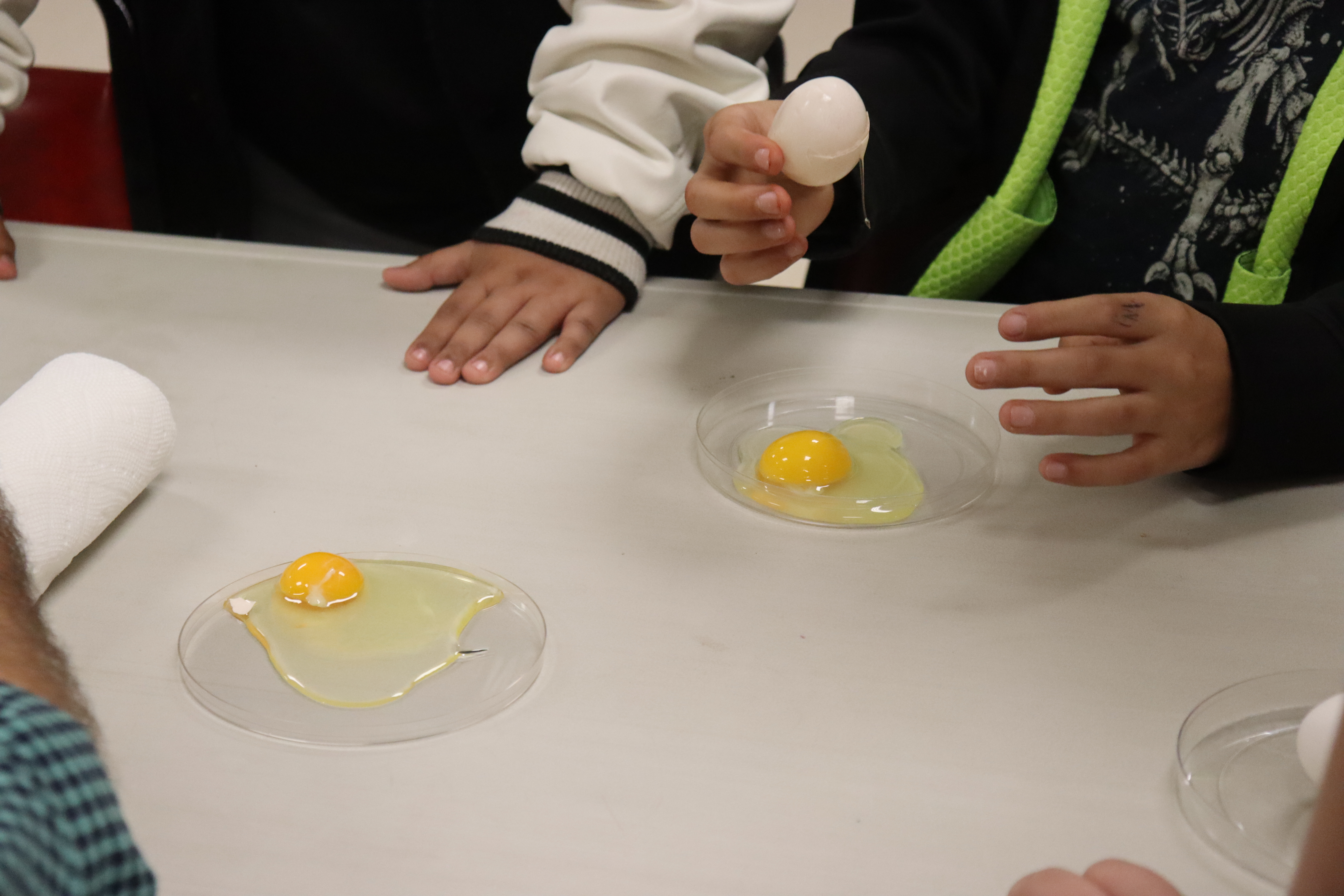
At this practice, students honed their egg grading skills, analyzing cracked eggs, air cells and calcification spots to classify a range of eggs as Grade AA, A or B.
Students also practiced their oral presentations, an essential part of demonstrating their knowledge and confidence at the upcoming competition.
“For these reasons, I place this class of white leghorn hens 1, 4, 3, 2,” they recited, attributing traits like bright shank-bleaching and glossy bright-red combs and wattles to high placement.
For the students, poultry practice is more than just a chance to learn about one of the county’s largest industries. It’s a way to connect with others who share similar interests and learn from one another.
With this year’s group averaging five students per practice, a decrease from 15 last season, there’s plenty of room for new members. Eason welcomes any student with a passion for poultry or a desire to expand their knowledge in the field.
“Northeast Georgia produces more chickens than all of the country put together. So it’s a really humongous industry here,” Eason said.
But the lessons extend far beyond poultry.
“They learn life skills, but they don’t quite realize it yet, and it doesn’t really click until maybe they’re in college or even graduated college,” Eason said. “But they’re learning stuff that will help them in the future.”