
Maggie Mobley, along with three other panelists, discuss the long-running project to document schools, especially former Black schools, within Oglethorpe County.
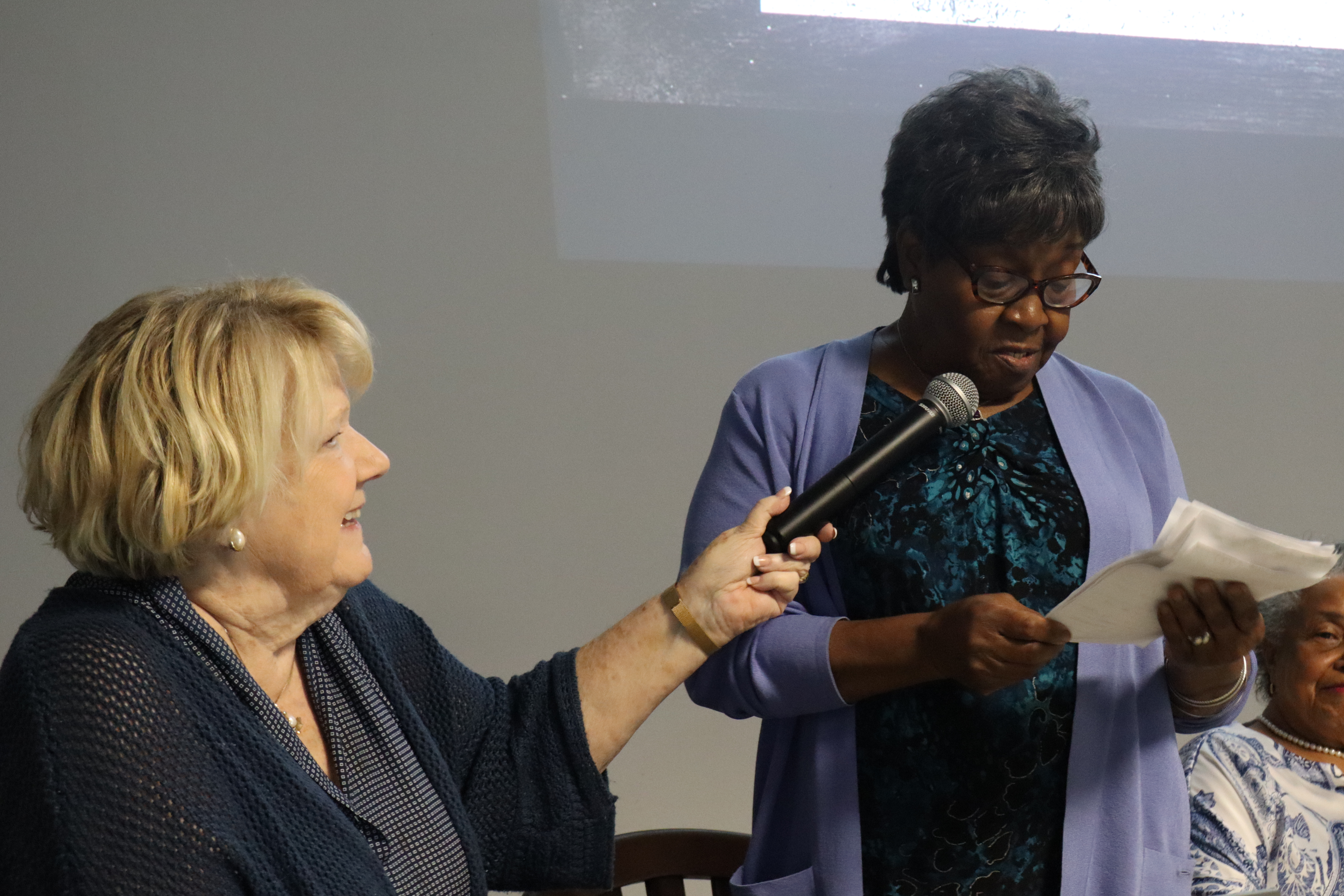
Maggie Mobley, Barbara Johnson Davenport, Willie Clarence Davenport and Carlton Sanders still remember long walks through pastures and on dirt roads, homemade lunches with preserves, and small classrooms where a single teacher taught multiple grades.
On Tuesday, they stood before a room of Oglethorpe County residents to recall those memories.
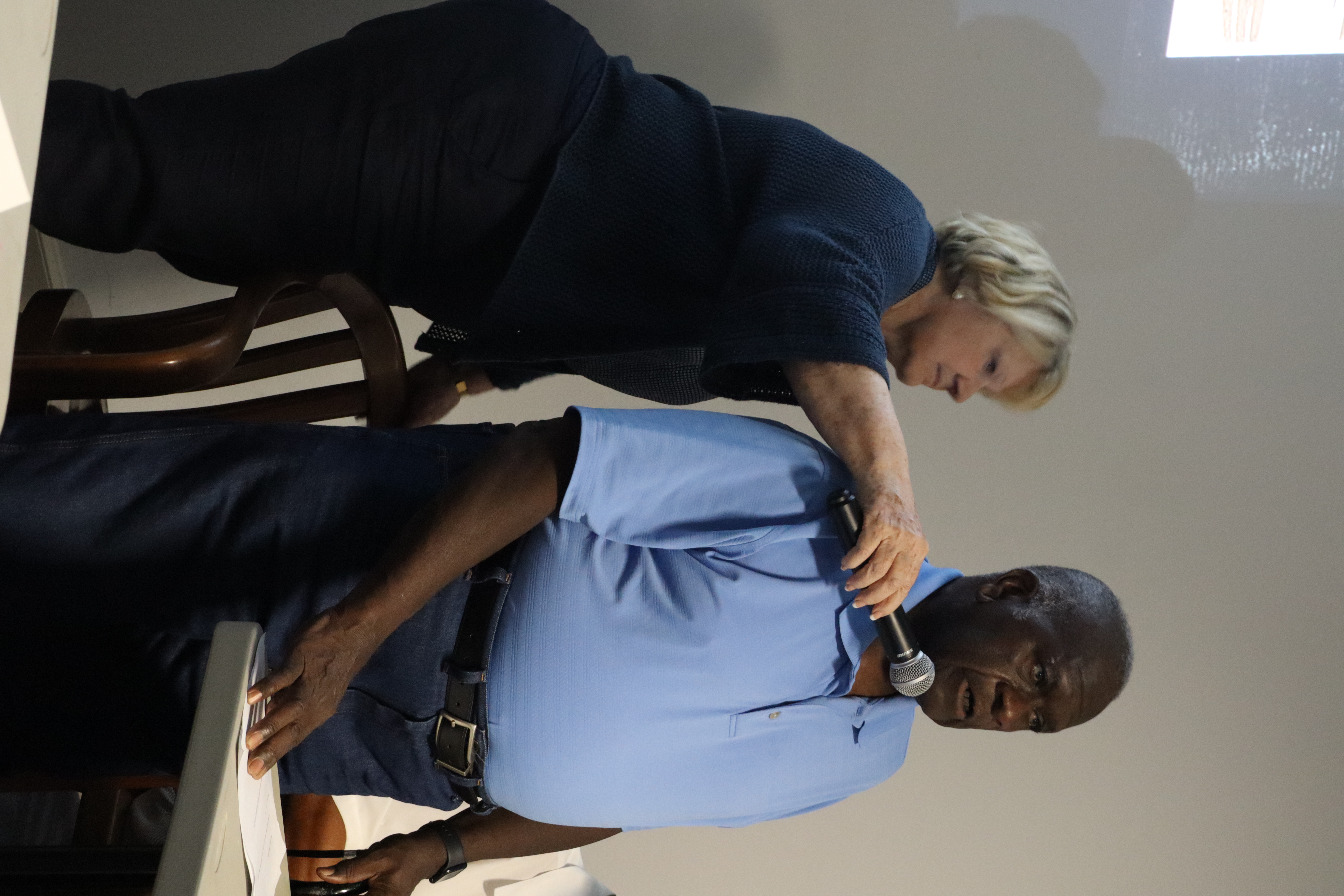
“I really think it was a blessing for us,” said Willie Clarence Davenport, panelist and former student at the Oglethorpe County Training/Consolidated School.
Historic Oglethorpe showcased new research Tuesday at the Oglethorpe County Library on the county’s Black one-room schoolhouses, highlighting 21 schools that merged into a single consolidated school in 1955.
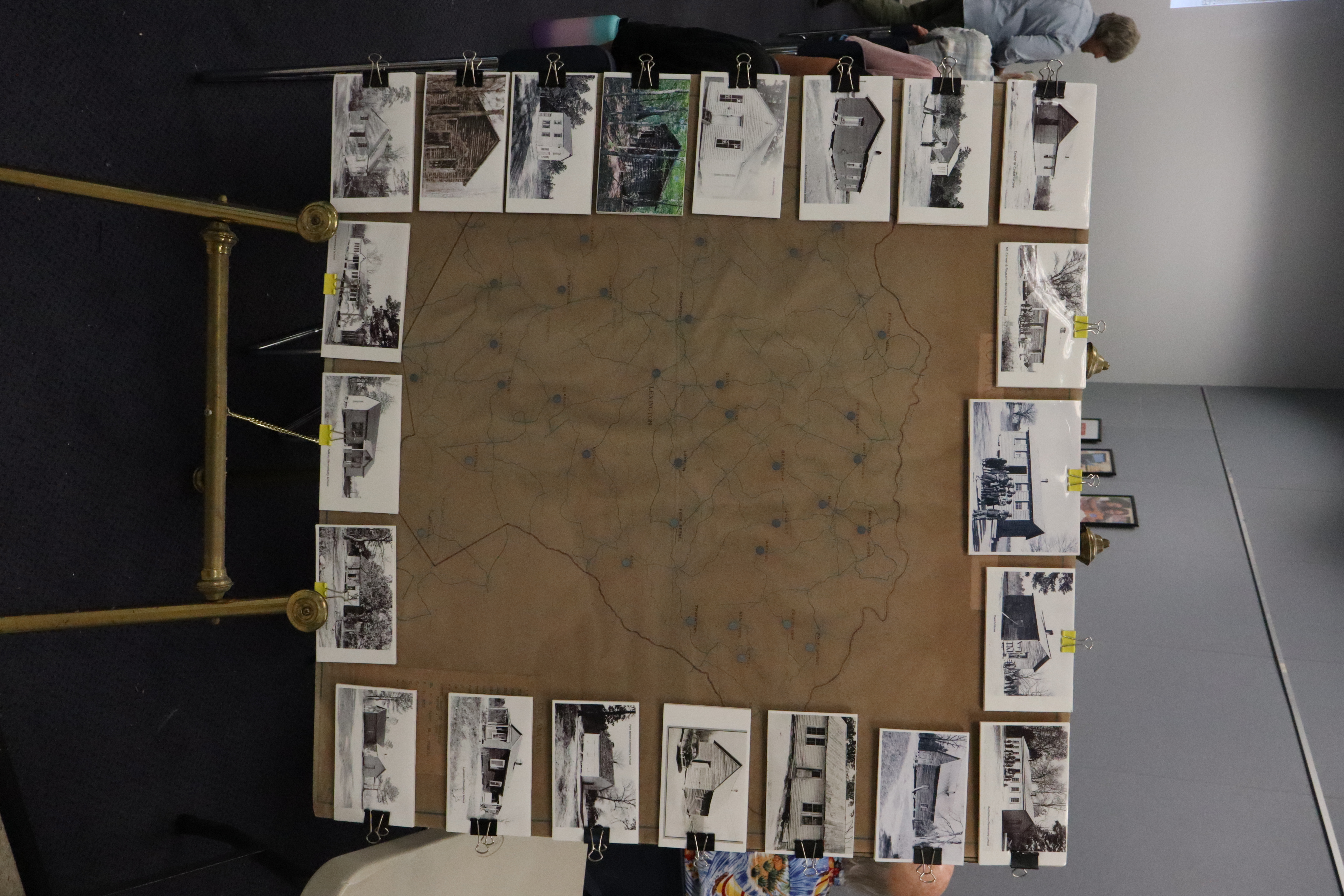
The event was part of the Digital Atlas Project, a multi-year effort to geolocate and document historic schools, churches and community landmarks throughout the county. Since its launch, the project has identified more than 200 churches and about 120 schools dating to Oglethorpe County's inception in 1794.
“I’ve been blessed,” said Sanders, panelist and former student at the Oglethorpe County Training/Consolidated School. “I’ve just been blessed with good jobs, and I’m thankful that I went to school in Oglethorpe.”
Before consolidation, many children attended these one-room schoolhouses without electricity, running water or indoor restrooms.
“We had to walk at least 2 miles,” said Mobley, Historic Oglethorpe member and former student at Cedar Grove School, which later merged with others to form Oglethorpe County Training/Consolidated School.
That consolidation brought dramatic changes.
For the first time, children had access to school buses, hot lunches, bigger classrooms with desks and teachers with broader credentials. The new consolidated school also offered electives, such as art and home economics, marking a significant shift from the rural, one-room experience.
“We had classes that we would have never had at the other school,” Mobley said. “They would play over the intercom a classical piece every morning so that we could learn that the world is bigger than what we see around us.”
With Mobley’s help, Ashley Simpson pieced together information from deeds, church minutes, photographs, aerial maps and oral histories. Sometimes, locating a school meant identifying a chimney foundation in a field or matching an old map to present-day landmarks.
“From those records, you just find a wealth of information, but you also begin to get a sense of the personalities of the people involved, what their morals were, what they valued, and sometimes their ambitions,” Simpson said.
The approximately 40 attendees of Tuesday’s program also saw slides and photographs detailing the history of the schools, along with hearing the stories from former students and families connected to them.
For Simpson and Mobley, sharing their research was about more than preserving facts on paper. It was about honoring the determination of earlier generations and ensuring their contributions remain part of the county’s collective memory.
“It is as important to me as any other history would be because it was a change that brought about a better life for us,” Mobley said.