
Simpson locates more than 120 buildings that once were places of learning
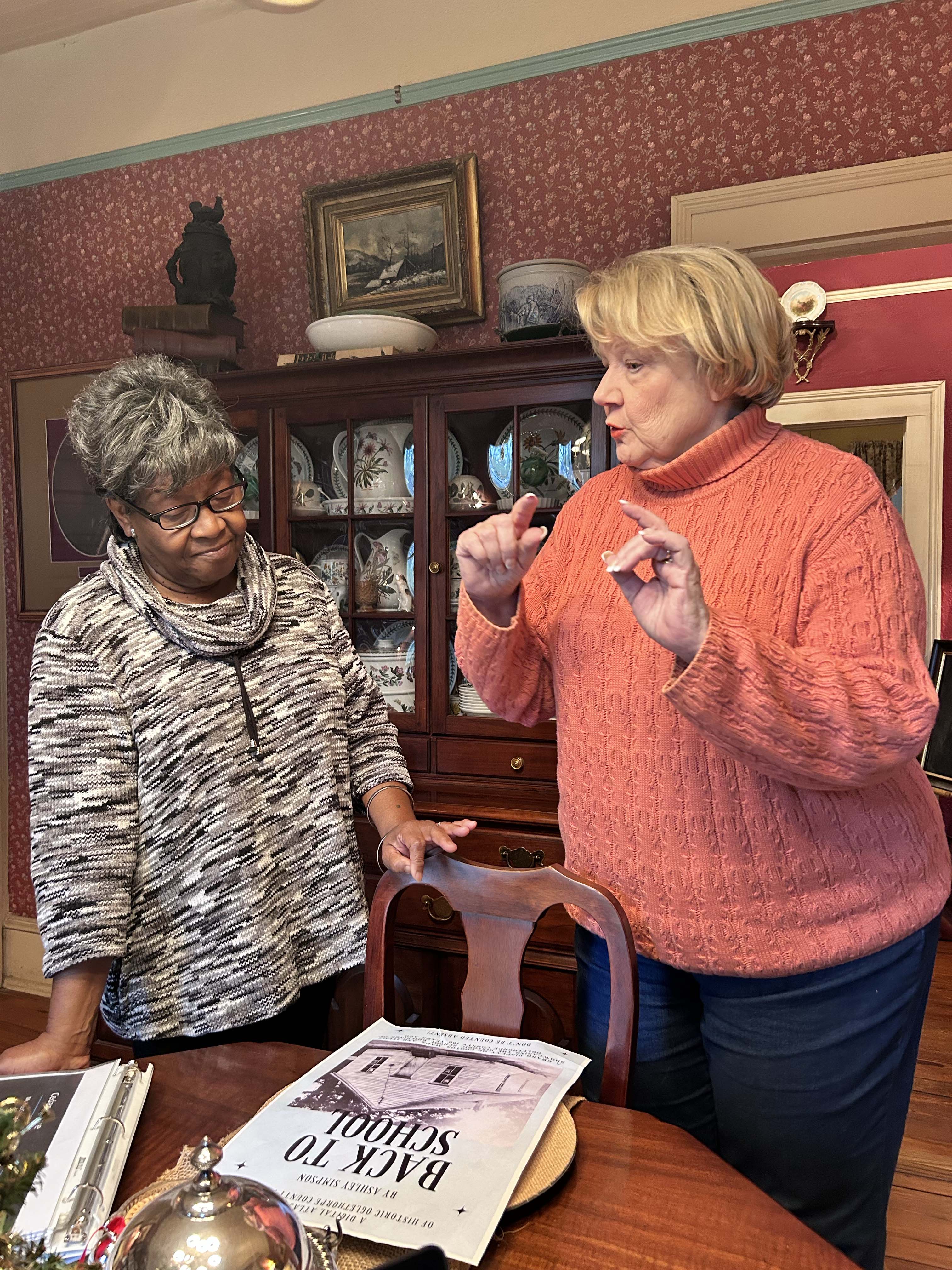
Ashley Simpson thought there were only a few historic schools and churches in Oglethorpe County when she volunteered to research them as a part of the Digital Atlas Project four years ago.
She had no idea she would uncover a wealth of little-known history.
“I was really concerned when I started on schools because I thought there was only one white school,” Simpson said. “We have since found another 60, but I did not have any idea how I would ever get any information about the Black schools.”
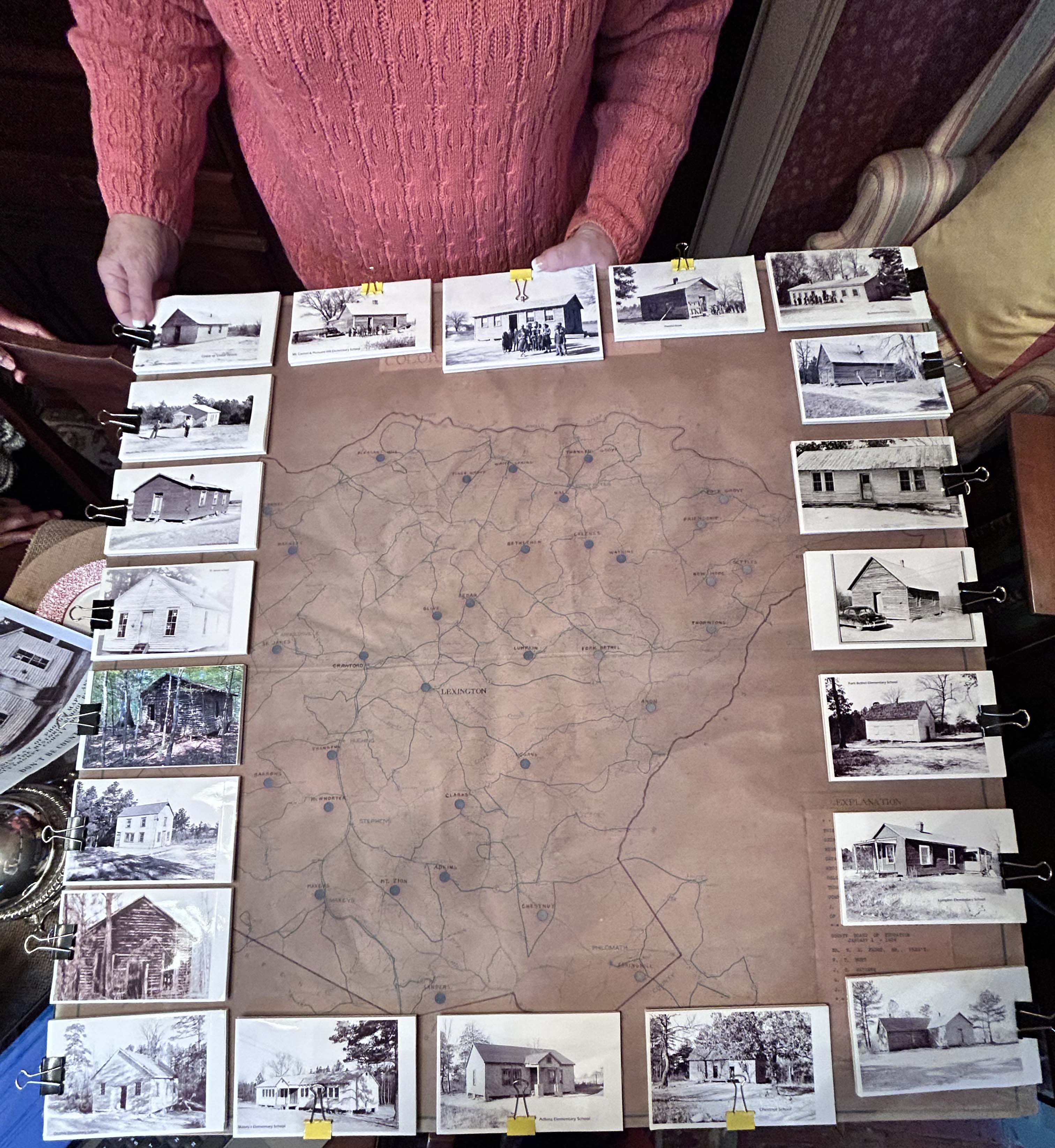
Through help from the community and word-of-mouth, Simpson was able to uncover more than 120 historic buildings that were used to educate Black and white students in Oglethorpe County — before they were consolidated into several larger buildings. Simpson estimates that roughly 80% of the information was gained through help from the community and students who attended these one-room schoolhouses.
She also found a number of boarding schools for boys, but also for girls, who were previously thought to not have attended boarding schools.
Many of the schools Simpson discovered were part of churches or on church property. The Georgia Historical Society said there are only 12 schoolhouses that were run by a church left in the state, but their numbers are incorrect, she said.
“I could probably take them to half a dozen in our county, and some of my interviews have been with people who actually sat in the schoolhouse where their chair was in first grade,” Simpson said. “That’s where I like to interview them, and they talk about the things that happened there.”
In Oglethorpe County many of these buildings still remain, with several repurposed to fit community needs.
“They would build a log structure, and it would be used for school during the week, but then it would be used for services on the Sabbath,” Simpson said. “The Presbyterians may have it the first and third Sunday, the Methodists may have it the second and fourth, and of course, the Blacks worship with the whites, so everybody was in the same structure. It was used for voting. I mean, these meeting houses were used for any number of things.”
One-room school houses
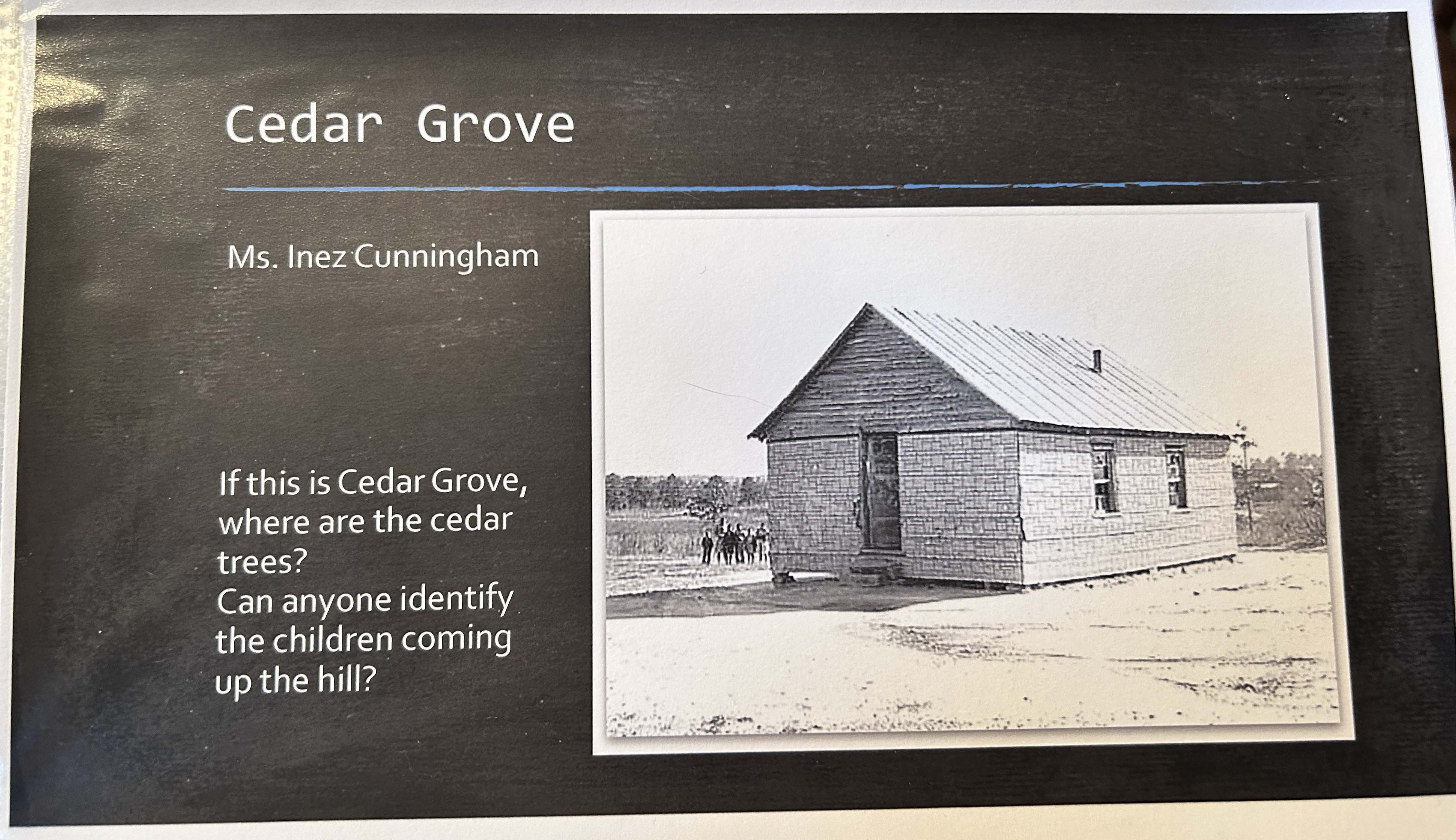
Maggie Mobley was born and raised in Sandy Cross, the oldest daughter of nine siblings. She attended a one-room schoolhouse at Cedar Grove, 2 miles from her house, before consolidation in 1955.
“It was a long walk, but we didn’t particularly mind unless it was super cold or bad weather,” Mobley said. “There were other families that would join in with us.”
The school’s teacher, Inez Cunningham, split the class into the lower and upper students. Cunningham would teach the younger students first, then the older students later in the day.
Mobley estimates that 20 students attended the school when she went there.
She finished the fourth grade at Cedar Grove and started fifth grade at the Oglethorpe County Training School, later renamed Oglethorpe County Consolidated School, in 1955.
This was a monumental change for students and teachers.
“We had supplies for one thing,” Mobley said. “Of course, there were things like the convenience of indoor plumbing and hot lunches and that thing, those kind of things like school buses … running water, electricity, all of that heat, you know, air, all of the modern things.”
“We just didn’t have that at the old little school, and one of the other things is that we met cousins that we didn't know we had,” Mobley said.
The school’s consolidation was due to Georgia’s Minimum Foundation Program, which was passed by Georgia Gov. Herman Talmadge in 1951 to eliminate one-teacher schools and bridge the funding gap for white and Black schools.
Mobley was instrumental in putting together a commemorative event in October to celebrate and remember the consolidated school. It became Oglethorpe County Primary School, which will be torn down next year as part of the plan for the new Oglethorpe County Elementary School.
Look to the future
Greg Yoder, one of the four members of the Atlas Project, said the team is discussing plans for 2025.
“Next year, we’ll be starting our fifth year of research, and we’re hopeful that at the beginning of the new year, we’ll get ready to select one of our topics that we’re doing, ie, schools, churches, mills, and a lot of other types of things, but those are some of the big categories and put together what we’re calling, at this point, pre-publication, a field guide,” Yoder said.
Mobley and others who attended these small schools throughout the county are excited about Simpson’s work.
“People just want to have that history,” Mobley said. “They want it to be in such a form that it can be preserved and passed on.”
Simpson had hoped the Atlas Project would be finished by now, but she still has plenty of research to complete on top of creating the final product online. She hopes to publish the information in a book, in addition to the Digital Atlas.
“The Atlas Project is just to locate these structures,” she said. “And then, of course, we have to do a digital map. And as you know, there are only four of us, and all self-funded. We don’t have grants or anything like that, so there’s a limit to what we can do. But our goal is to be able to have a map that’s searchable pictures, and then just some brief Information.”