
County, residents sometimes differ over maintenance of dirt, gravel roads
![Randy Gordon, a resident of Oglethorpe County’s Almond Drive, stands where the edge of Almond Drive once was on Wednesday, Feb. 5, 2025. “When they come in and scrape [the road], they keep getting further and further to the center, and the cul de sacs where the ditches used to be are covered up,” Gordon said. (Photo/Felix Scheyer)](/sites/theoglethorpeecho.com/files/2025-02/20250112_FRS_OCDirtAndGravel_10.jpg)
![A close-up shot of a culvert within Almond Drive on Wednesday, Feb. 5, 2025. Adam Nation, the Public Works Director for Oglethorpe County, explained that it was the resident’s responsibility to maintain these “driveway pipes” to ensure that water is able to pass freely between them. “I can cut the ditches, but if the water can't run through those pipes to go to the next [pipe], it's not gonna do any good,” Nation said. (Photo/Felix Scheyer)](/sites/theoglethorpeecho.com/files/2025-02/20250112_FRS_OCDirtAndGravel_11.jpg)
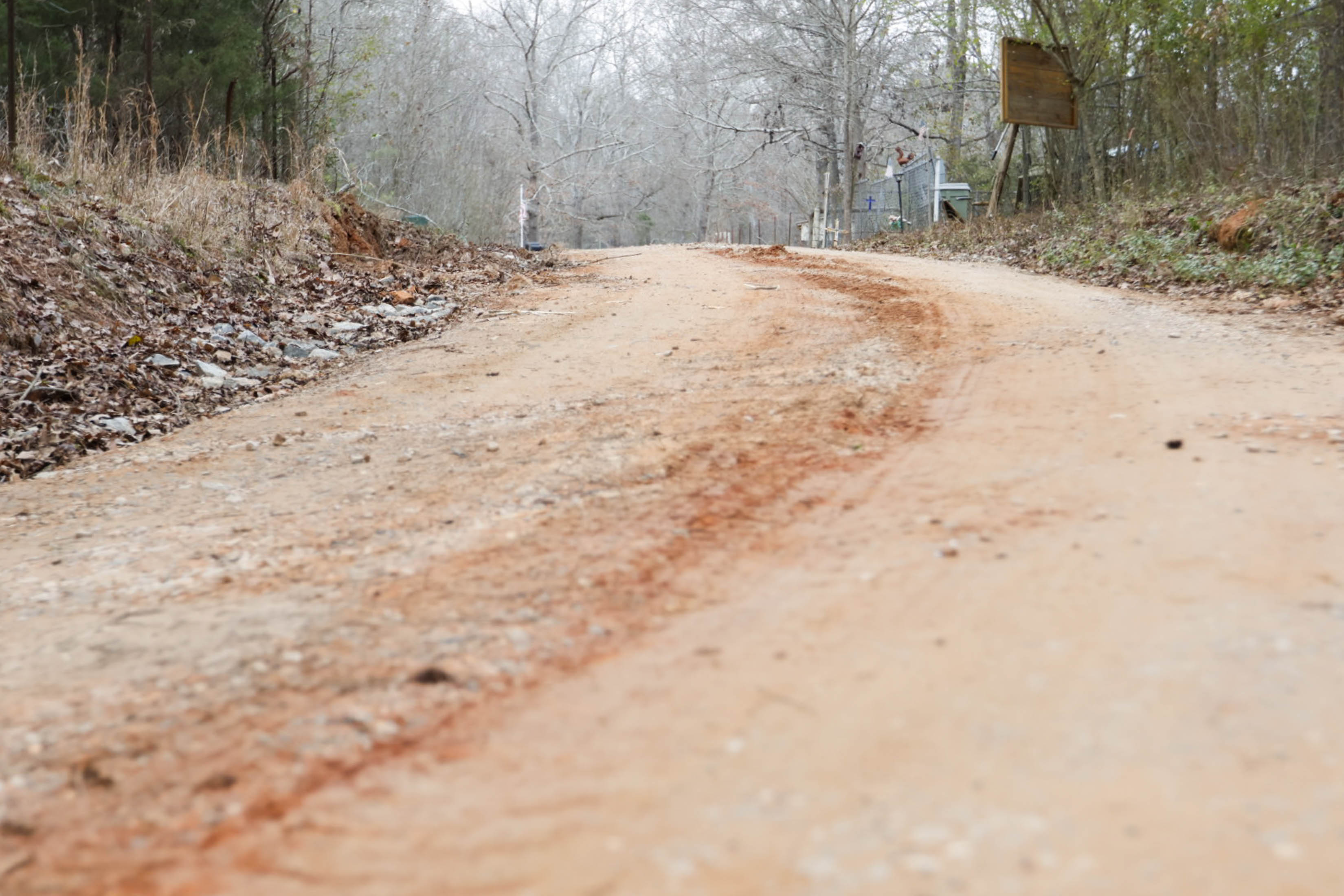
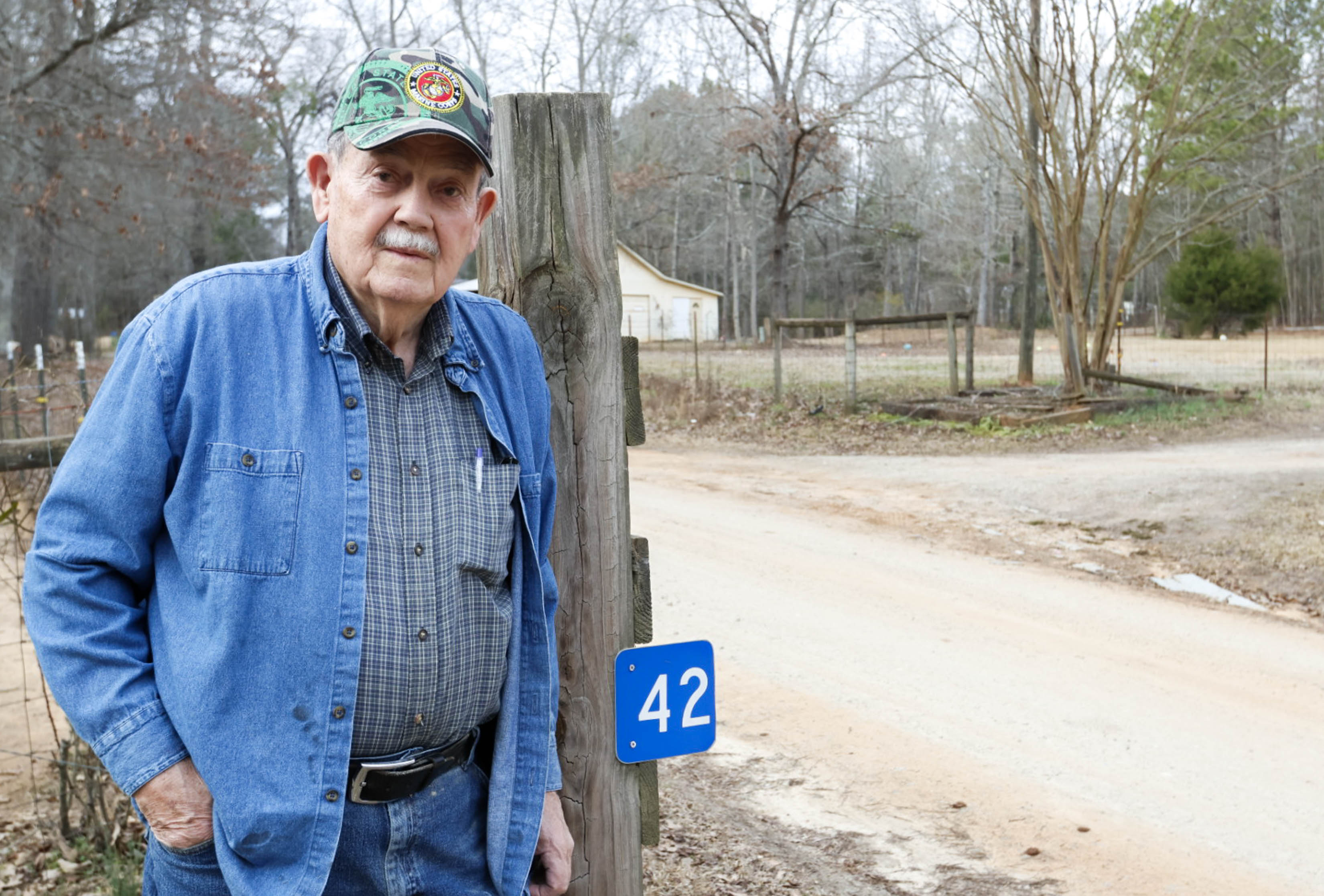
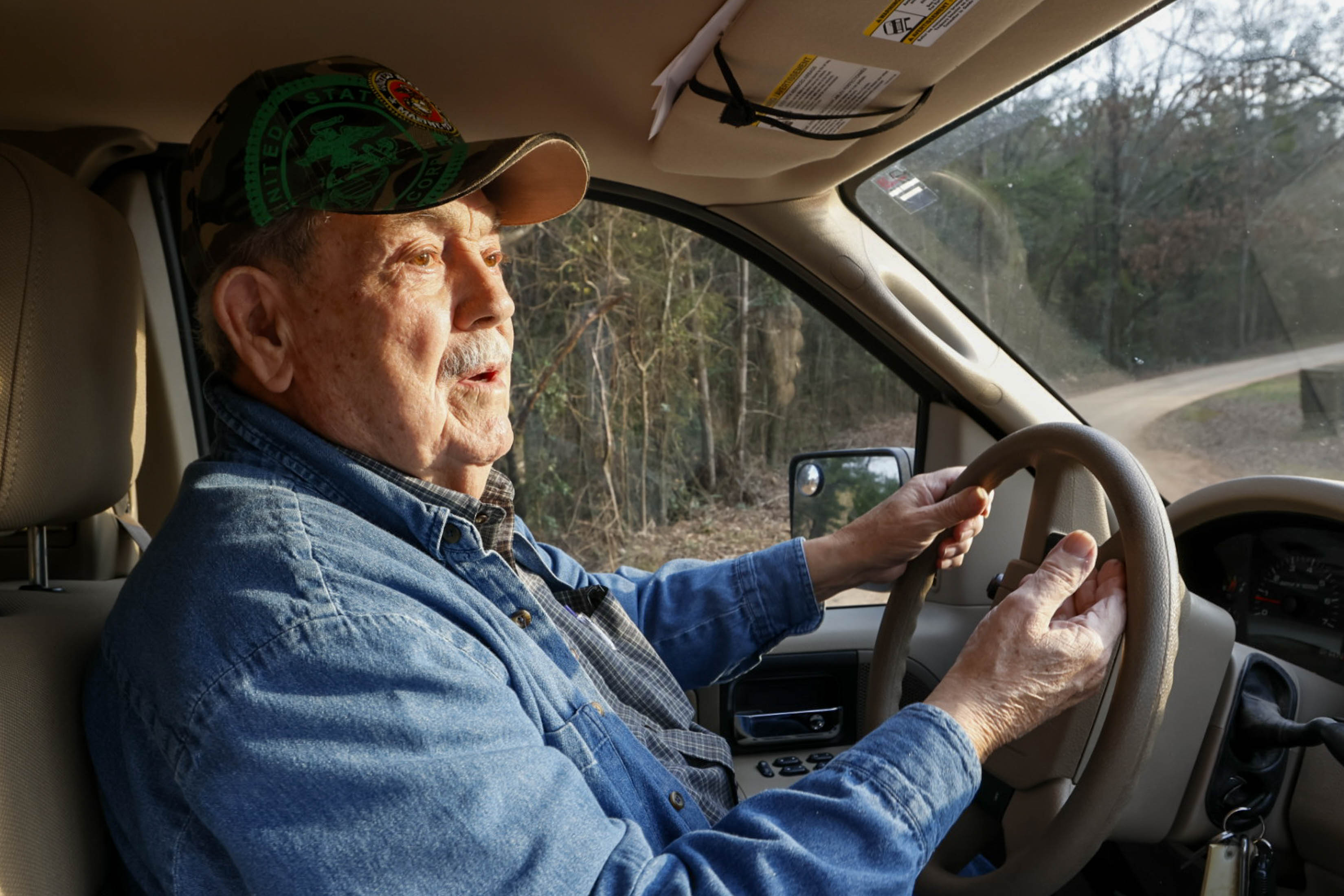
On a rainy afternoon, Randy Gordon carefully maneuvers his car down a familiar stretch of road. Potholes filled with water jolt the vehicle and thick mud threatens to trap the tires.
When Gordon moved to Almond Drive more than two decades ago, it was a gravel road. The rocks have long since washed away.
For Gordon and other Oglethorpe County residents, unpaved roads are more than just an inconvenience; they’re a constant battle. Some roads, like Almond Drive, have become so degraded that the postal service refuses to deliver mail. Others wash out frequently, leaving residents stranded after storms.
The public works department in Oglethorpe County is responsible for maintaining nearly 500 miles of county roads, half of which are paved. The other 250 miles are dirt and gravel roads.
“We say 250 paved, 250 dirt,” said Adam Nation, the county’s public works director.
He said road maintenance can be tough in an area the size of Oglethorpe County with a small team of full-time employees.
“We do all the mowing, we do all the grading of the roads, we do all of the hauling of the gravel,” Nation said. “We’re a very large county, but we have a small budget to work with, so we try to make the best with what we’ve got.”
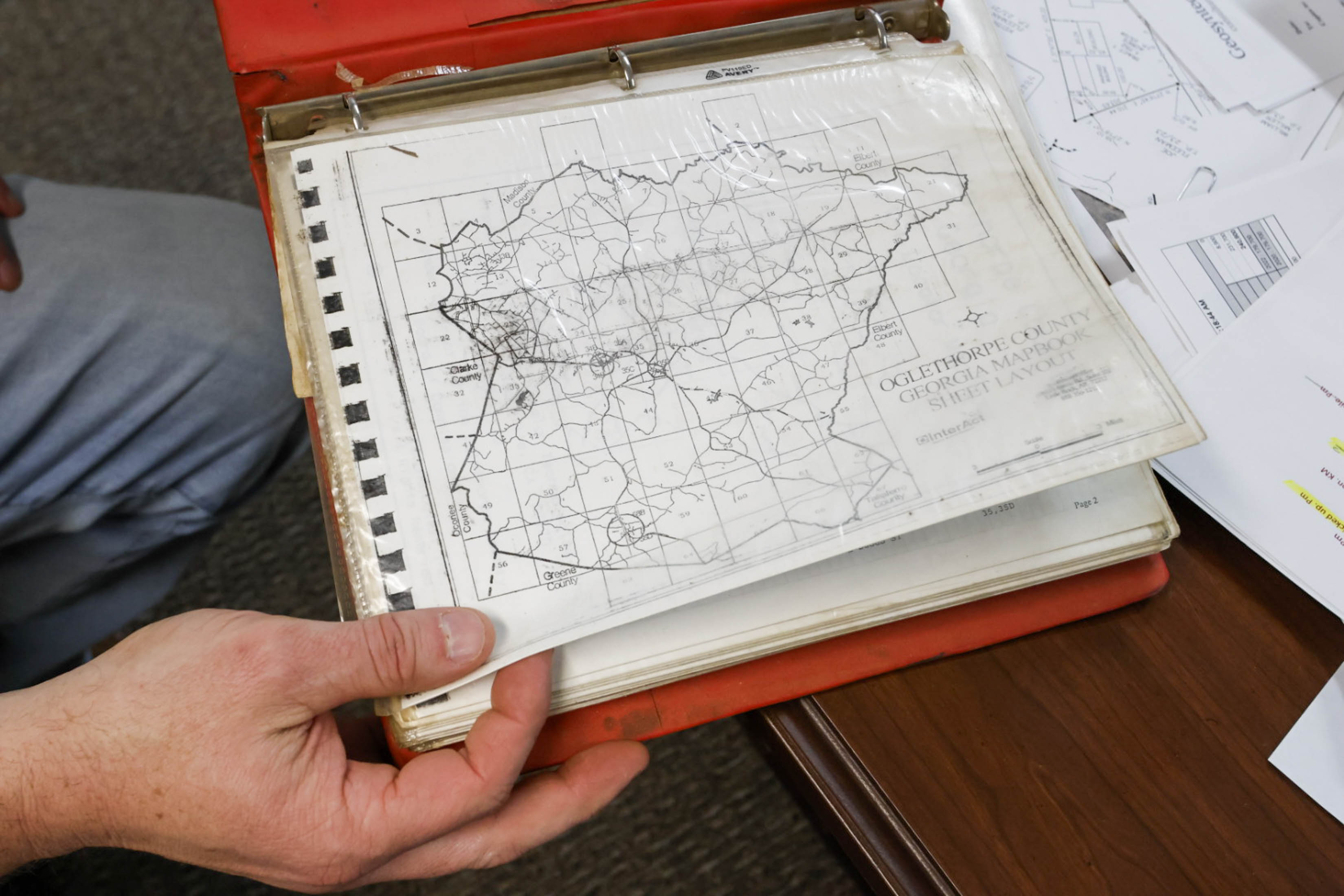
Figuring out who is responsible for maintaining these roads and solving these problems — whether the county, a group of homeowners or no one at all — can lead to frustration, conflict and costly repairs.
Public grievances
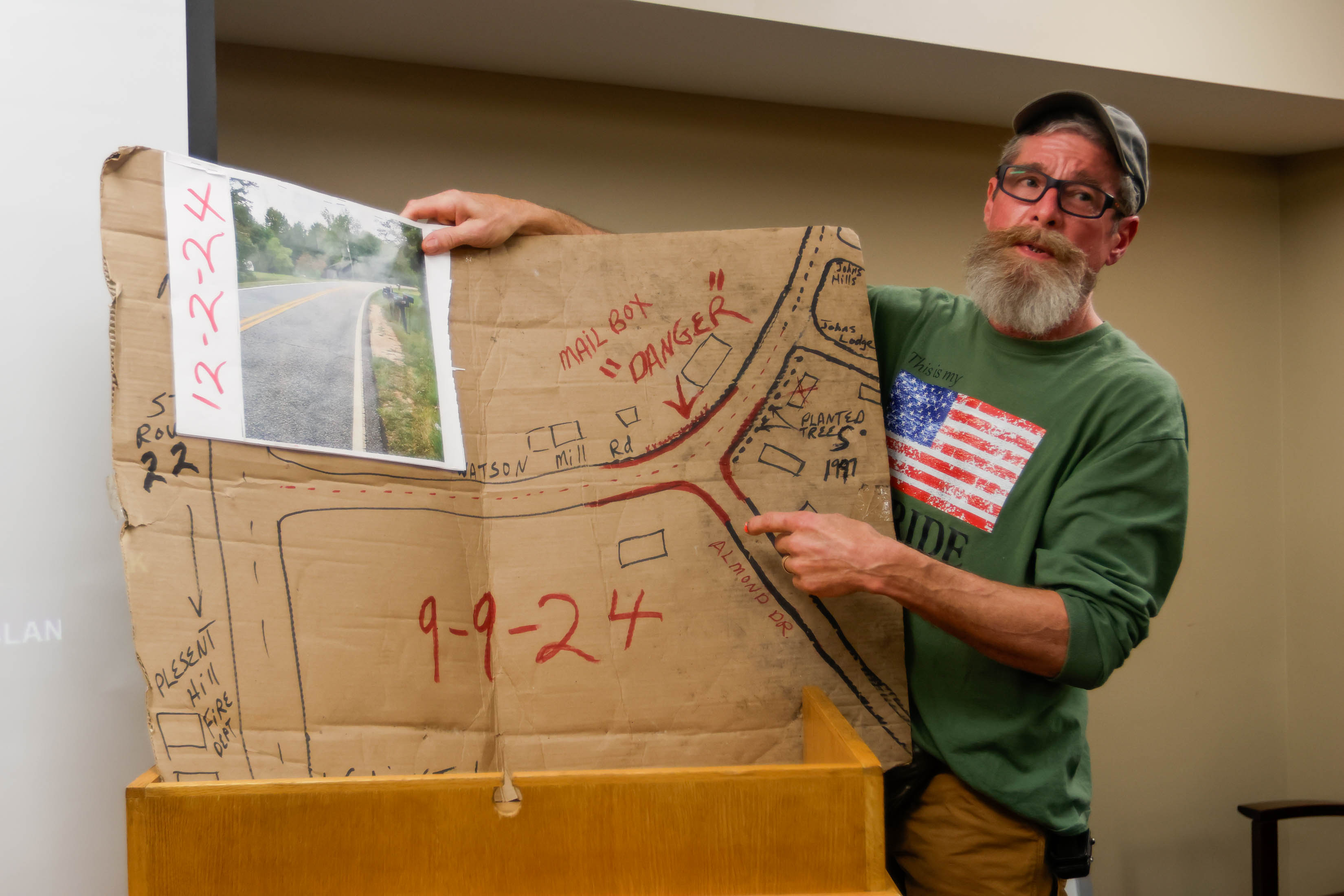
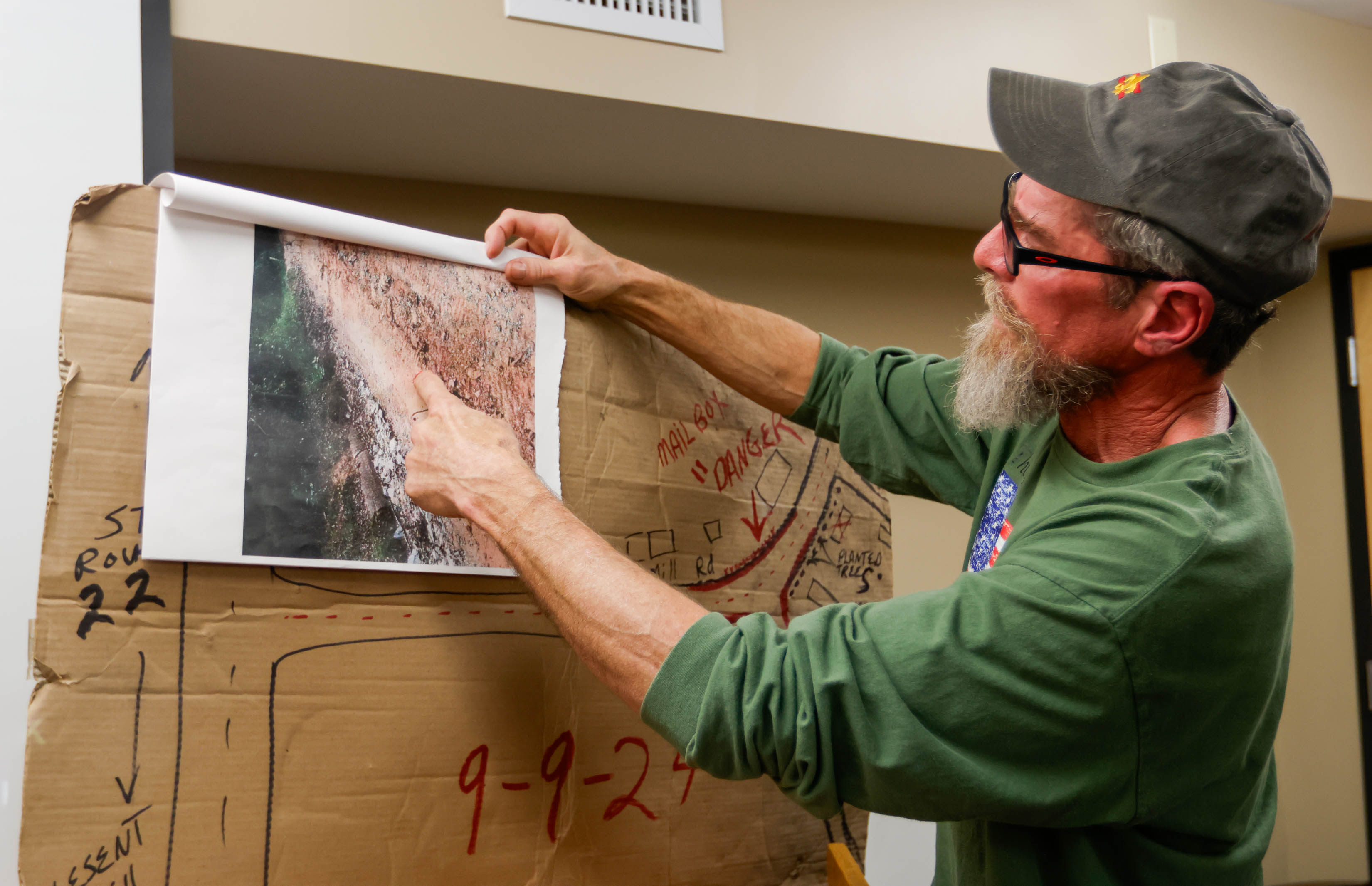
Gordon said the road conditions on Almond Drive have worsened since he first moved there. He and neighbor Brad Johns have attended several Oglethorpe County Board of Commissioners meetings since last summer to ask for help with maintenance. They said the U.S. Postal Service deemed their road unsafe, forcing residents to move their mailboxes to a curve on Watson Mill.
“People pull over here, walk across the road or have their youngins walk across the road to get their mail,” Johns said at the January meeting. “Someone’s going to die.”
In addition to mail disruptions, road maintenance efforts have sometimes resulted in damage to property infrastructure. Both Gordon and Johns said one scraping project on Almond Drive severed their internet and cell phone lines, disrupting service for weeks.
Almond Drive once belonged to Johns, but he gave it to the county several years ago.
“I maintained this road since the ’70s,” he said. “I made the road. It was (safer back then) than it is now.”
Natural problems
Frequent rain leads to runoff, creating deep ruts and washouts on dirt and gravel roads that make travel dangerous. During winter months, ice and snow weaken them by saturating the ground slowly, creating mud pits.
“The ditches we have right now are there because of the rains we’ve had,” Gordon said. “It’s just natural, a natural washout.”
Nation said weather is responsible for the majority of road deterioration.
“The thing about a dirt road, and we have hundreds of miles of dirt roads, you can grade them, but when a raindrop hits dirt, it’s moving material,” Nation said. “Over time, the roads get lower.”
Nation estimated original paving for a dirt road would cost upward of $300,000 per mile. In 2024, the total budget for the public works department was $675,000.
Who’s responsible?
The county is responsible for maintaining county roads, while homeowners are responsible for private access drives. But road maintenance isn’t always that simple.
Gordon and other Almond Drive residents noticed that culverts and driveway pipes along the road are full, preventing them from draining stormwater as intended.
Nation said he and his team are more than willing to fix ditches along Almond Drive, but until homeowners take responsibility for cleaning the culverts, the washout problem won’t be solved.
“If you have a ditch that goes to a pipe that’s completely stopped up, it’s not going to function correct,” Nation said.
On private drives, property owners share the responsibility to regrade the road, buy new gravel and scrape when needed. One property owner might accept that responsibility, but things become more complicated on private drives that lead to multiple homes. As a result, the county has an ordinance stating that no more than three residences can occupy one private access road.
“A lot of times, there’s a verbal agreement and everything’s good, and then the land gets sold,” Nation said. “The problem is, nobody technically owns the road, and nobody wants to put any time and effort or money into it.”
Gravel is expensive, sometimes costing hundreds of dollars for a full driveway’s worth.
When private roads are neglected for too long, the county has the authority to step in and either take control of the road or close it.
Jeff Sharp, the director of planning, zoning and compliance, said it’s a matter of safety.
“If it gets too rough, the ambulance can’t get down there,” he said. “It’s got to run 10 miles an hour, and somebody’s dying down there.”
But closing roads can be a double-edged sword.
Some private access drives are commonly used as shortcuts through the county. By closing them, Nation said, there is a chance emergency vehicles would have to take a different route, adding to the response time.
“If fire trucks or ambulances need to get to a certain part of the county, and you take that away, does it put other people at risk by making the route longer?” Nation added.
A way of life
Road maintenance issues aren’t unique to Oglethorpe County. In fact, Nation said these problems are unavoidable in rural areas.
“Considering the amount of people we have and the amount of resources to work with, our roads are as good as any in Northeast Georgia,” Nation said. “If you compare our roads to any roads around any other counties, for the most part, we’re proud of the shape our roads are in.”
The rain will keep falling, the gravel will keep washing away and these familiar roads will continue to need attention. Whether that responsibility falls to the county or to residents remains an ongoing battle.
Nation said he and the public works department take pride in their work, bearing in mind the most important element of road maintenance: community safety.
“The way I look at it, I have nearly 15,000 bosses,” Nation said. “Everybody pays taxes, and I listen to them. They expect it to be as safe as you can have it, and that’s where our job is.”
For Gordon, Johns, and others who call the county home, unpaved roads are worth the extra hassle. They’re part of the fabric of rural life.
“I’m an old country boy, anyway,” Gordon said. “The gravel road is good. If it’s kept up, it’s ideal.”