
Georgia Senate Bill 33, a bill aimed at capping property tax, could threaten funds for Oglethorpe County’s public schools and reduce county services. Unless vetoed by Gov. Brian Kemp by Tuesday, the bill will become law.
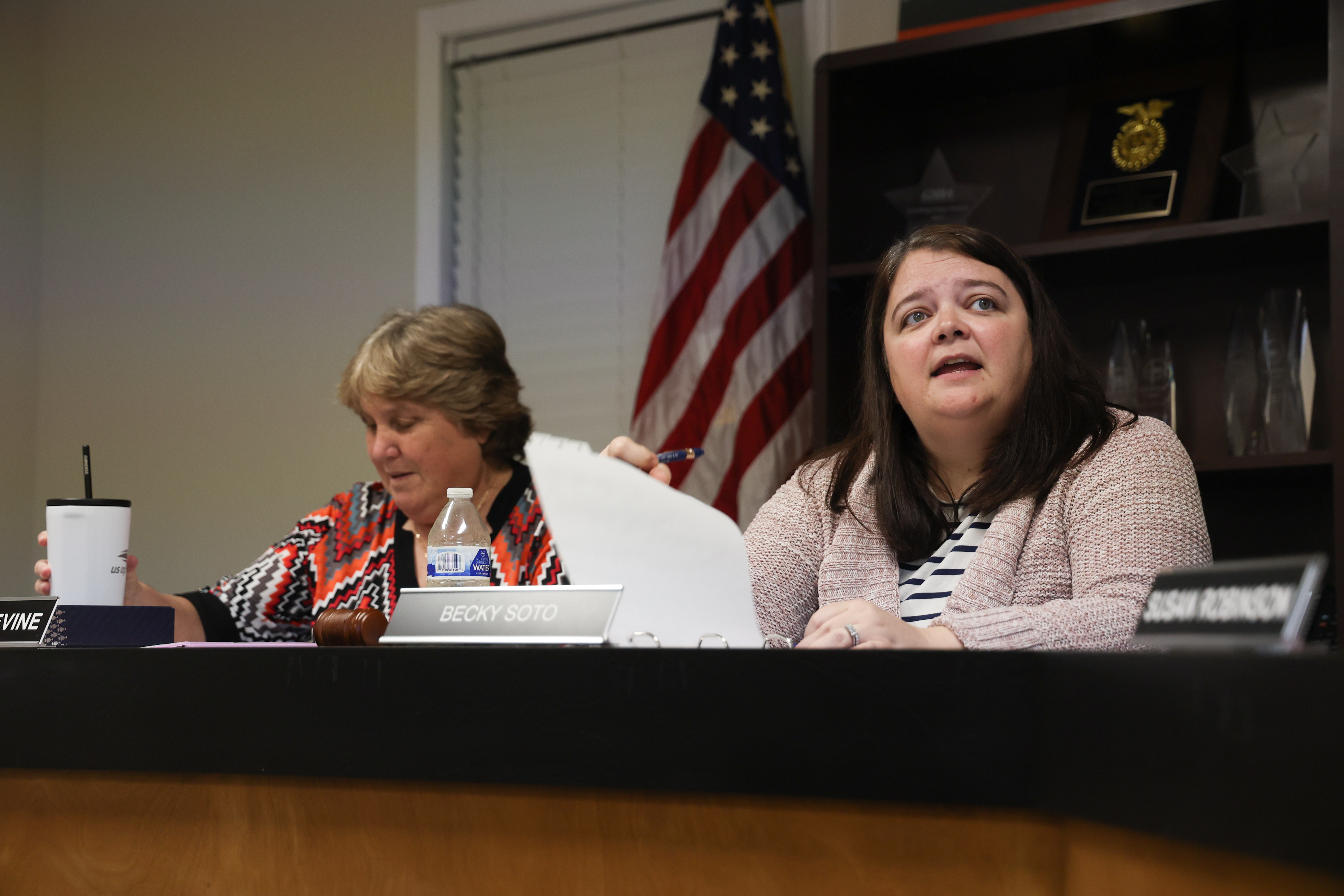
“Property taxes are not fun,” BOE chair Becky Soto said. “They are, unfortunately, a necessary mechanism for funding government operations in schools.”
About 37% of the Oglethorpe County School System’s current budget comes from property tax.
The bill would cap all local government and school district’s homestead property tax increases to the rate of inflation. Effectively, it eliminates the ability to opt out of House Bill 581, which limits annual assessment increases on a homesteaded property to the rate of inflation.
The Oglethorpe County Board of Education unanimously voted to opt out of HB 581 in 2025.
“Instead of taking the time to create something that would be both meaningful to homestead property owners — and still be able to effectively collect funds needed — I believe that the state just put something out there,” Soto said.
Soto said the bill would cap revenue for the school district at the same time that costs are rising.
Approximately 86% of the district’s budget is salary and benefits, including a state-mandated health plan, which Soto said has risen millions of dollars in cost the past four years. The school district is also subject to expenses like Georgia Power rate increases or rising gas prices for school buses.
“We have the same type of expenses as the normal, typical household — in addition to all the other things we're required to pay for,” Soto said. “There’s not a lot of fluff in our budgets.”
By capping property tax revenue, the bill would increase reliance on other revenue sources, like sales tax. The bill would introduce an optional 1% local sales tax increase, voted by referendum, to offset property tax revenue loss.
“We do not generate enough sales tax for it to have any meaningful impact,” Soto said. “In addition to that, what also is the piece of that sales tax equation is we don't have a lot of businesses, and our citizens have a lot of options to leave the county and get the goods they need to buy.”
The county’s current sales tax is 9%, with 4% coming from state sales tax and 5% from local sales taxes.
Oglethorpe County’s sales tax revenue per capita was $28.68 in 2024, making it below the state’s $69.67 average and lower than any neighboring county, according to data from the Georgia Department of Revenue and the U.S. Census Bureau.
“We don’t have the economic opportunities that some of the larger counties do,” District 5 Commissioner Tracy Norman said.
Norman said the county government was already operating under HB 581’s property tax exemption, so the schools would face the brunt of SB 33’s impact.
“County government has four other SPLOST options to raise funds — plus abilities to charge fees for use of services, like landfill and ambulance — that the schools don’t have,” Soto said. “Education is limited to one ESPLOST.”
Norman said the bill would still likely lead to county budget reductions across the board. He also said the main services that would face reductions are the senior center, road department and landfill.
Despite the county’s comparatively low sales tax revenue, Norman said it has been rising “fairly sharply” as more businesses move into the county over time.
He said Thomas Concrete, which is planning to add a location on Highway 78 in the Wolfskin-Arnoldsville area, is an example of that growth.
“By the time they pay the industrial tax, ad valorem taxes on their equipment and sales tax on the sale of that concrete, you’re probably talking an additional $150,000 to $200,000 a year into our economy,” Norman said.
Although some businesses are coming in, the county struggles to attract more.
John Robertson, a member of the county’s Economic Development Authority, said he thinks a weaker transportation system, lack of tax abatements and lower sewage capacity are the major reasons why it’s difficult to attract new business.
“If a Walmart wanted to build in Oglethorpe County, it would be hard for us to find a place that has the sewage capacity that they need,” Robertson said.
Robertson added that it’s important to balance bringing in more commerce and preserving the county environment.
“The main economic challenge is to find businesses, enterprises and individuals that can bring tax revenue to this county that does not adversely affect the beauty and nature of the place we live,” he said.