
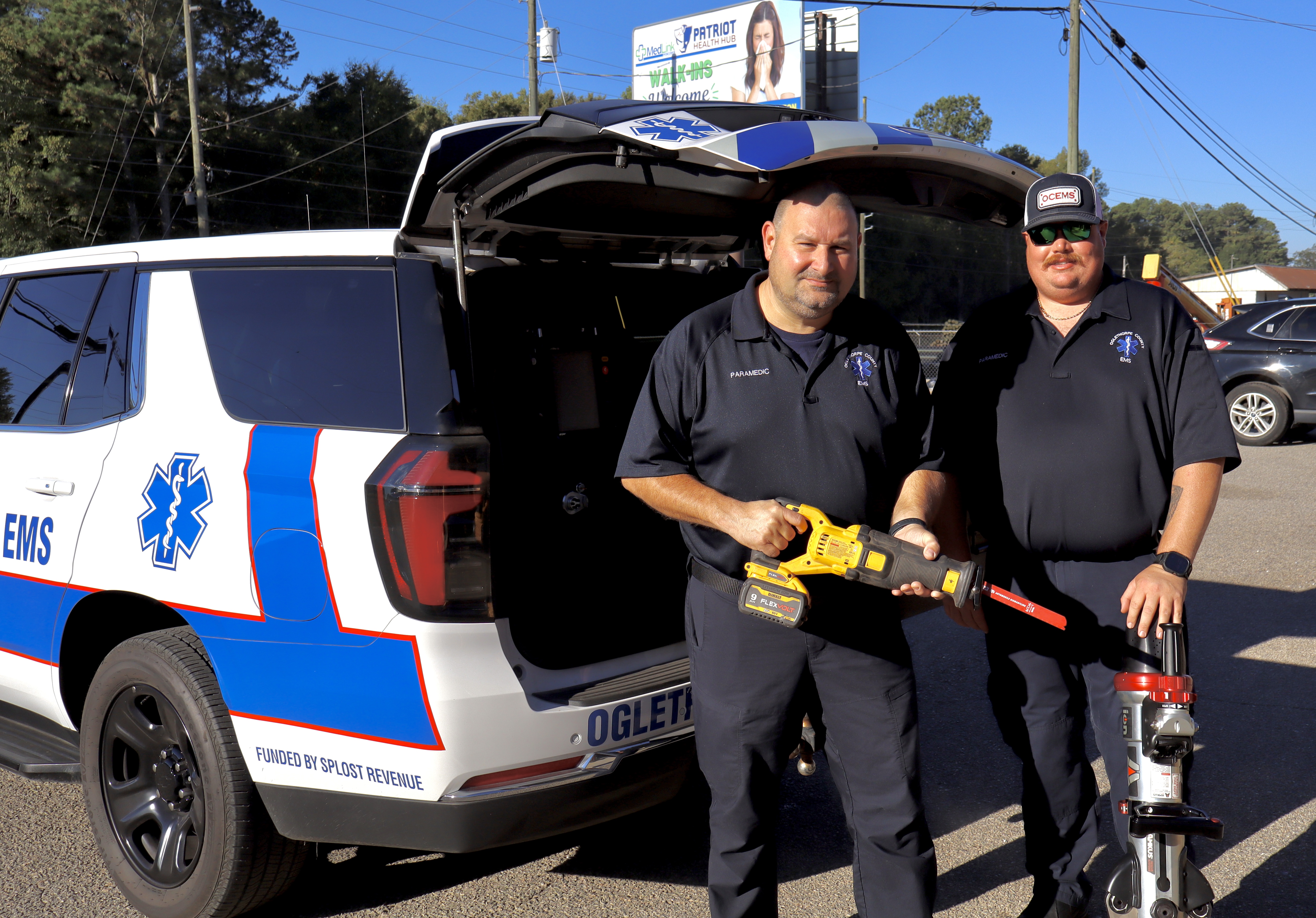
Oglethorpe County has two new emergency quick response vehicles, thanks to purchases residents, or travelers, have made in Oglethorpe County.
“All of our ambulances, and the quick response vehicles, were purchased with SPLOST money,” Oglethorpe County EMS director Josh Robinson said. “That is money that everybody contributes to, even people who pass through for football season when they stop at gas stations or get something to eat.”
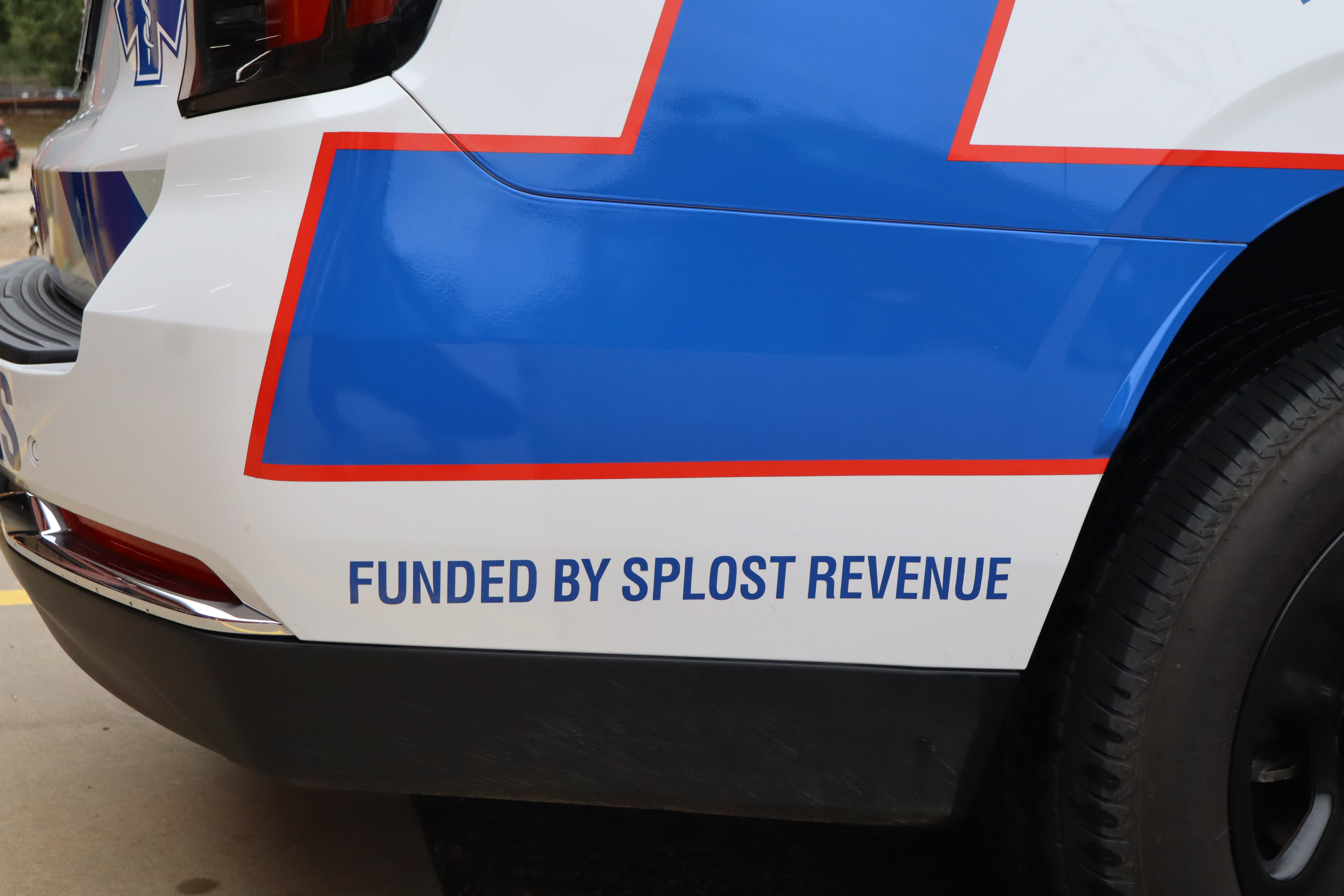
Using Special Purpose Local Option Sales Tax (SPLOST) revenue, EMS added two 2025 quick response vehicles (QRVs): a Chevy Tahoe for $59,000 and a Ford Expedition for $55,000. The units, which have “Funded by SPLOST” side decals, allow EMTs to stabilize patients while keeping full-sized ambulances open for critical transport.
“Seconds and minutes count, and 20 minutes is even a long time,” Robinson said. “Here in rural Georgia, Oglethorpe County, we need those types of things to be able to provide the care that we need to give everybody the best chance.”
Unlike standard ambulances, QRVs carry a single responder and don’t have a transport stretcher. However, they have virtually every other piece of life-saving equipment found on a full-size unit, including cardiac monitors, Lucas automatic CPR devices, IV equipment, medications and combination extrication tools.
County administrator and former EMS director Jason Lewis said sending single-responder units prevents tying up multiple ambulances on calls that don’t require hospital transport.
“When I first started in EMS back in the ’90s, essentially, as call volume went up, we threw another ambulance at it,” Lewis said. “We realized we needed to run our calls smarter. ... Staffing alone for a quick response vehicle is half the cost of an ambulance, and the vehicle itself is probably a third of the cost.”
EMS maintains five personnel each shift with two ambulances and one QRV. EMS staff said having a dedicated QRV provides relief, especially when running calls or waiting on aid from neighboring counties.
“We can get there and stabilize the patients while we're waiting,” EMS responder Heather Stanley said. “They’re also great because we can go out with med units, and if they need additional help on the truck with critical patients, we’re able to jump on the truck with them and transport them.”
The new vehicles also resolve logistical challenges for county emergency management.
Previously, Community Emergency Response Team (CERT) volunteers used personal trucks to haul Emergency Management Agency (EMA) trailers, creating liability concerns and potential delays.
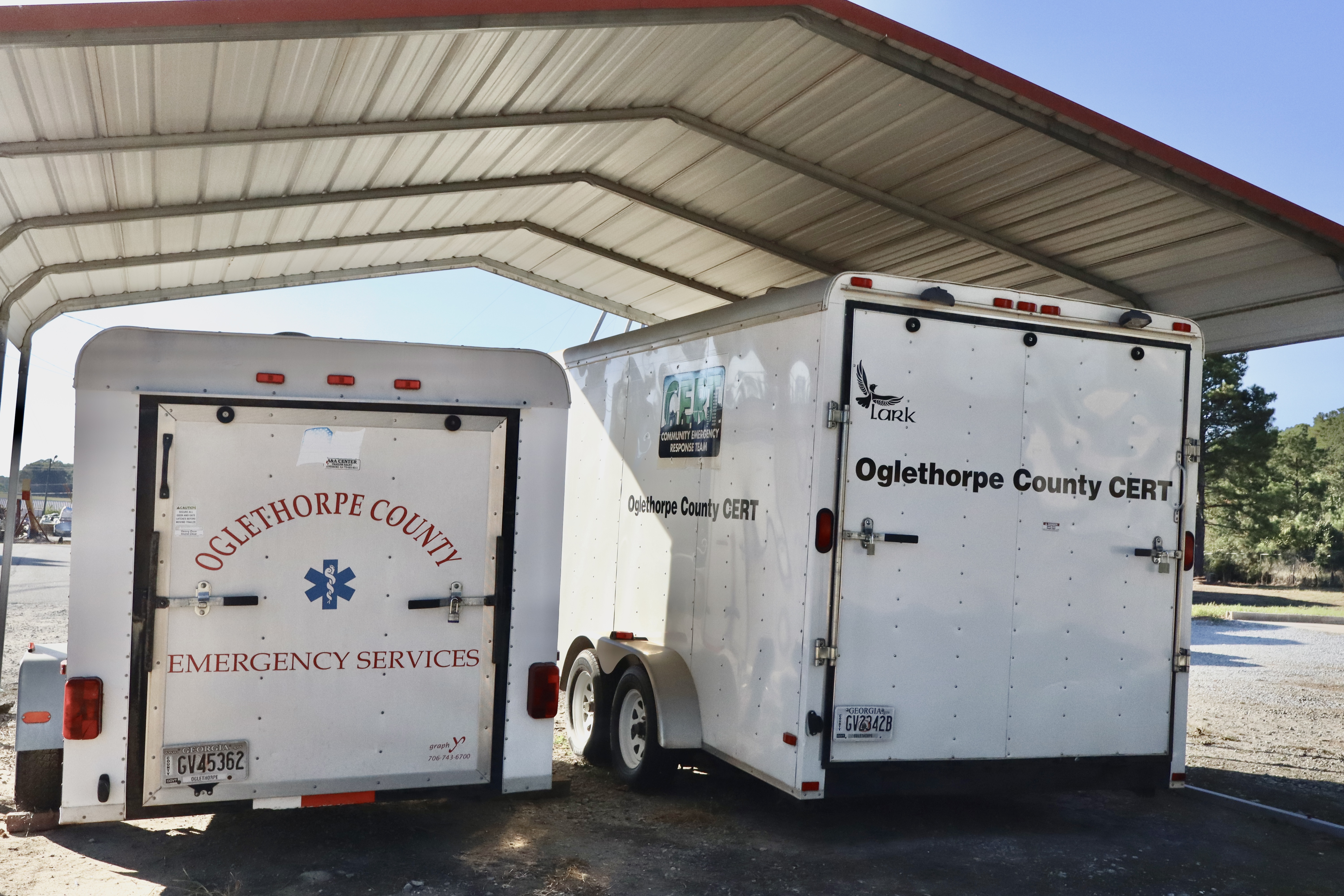
Equipped with tow packages, the QRVs can pull EMA trailers directly to scenes. These assets include the “Gator Wagon” — an off-road John Deere Gator for remote extractions like deer stand falls — and an incident management trailer that works as a climate-controlled mobile office with satellite internet connectivity.
“It’s a huge relief to be able to have these quick response vehicles paired up with the county's trailer,” EMA director Douglas Spencer said. “You're not waiting 15 or 20 minutes for volunteers to get from home or work to go get the trailer and then go find wherever they're at the scene.”
This is especially true for unincorporated and remote areas, where travel times to hospital emergency rooms in Athens can reach up to 43 minutes. In one recent emergency on Sept. 9 in the Sandy Cross area, first responders gave a field blood transfusion, using equipment and extra personnel via a QRV setup.
“Having the QRV and the supervisor being able to be an extra set of hands to help set stuff up made a difference,” Robinson said. “We're almost pretty sure he would have been close to passing away if we weren't able to give that blood transfusion in the field.”
Lewis said it’s this type of intentional use for SPLOST funds that works the best.
“SPLOST money can't be reactive spending — it's got to be planned spending, and that's the way that you get the best value for the dollar,” Lewis said. “Everything that we do is based off of a strategic plan ... prioritizing life safety equipment.”